
📱 Detailed Comparison of iPhone 18 vs. iPhone 17: Specifications, Performance, Camera, Battery, Price, and Key Differences
iPhone lineup smartphones have become some of the most anticipated tech products worldwide, not just because of the Apple brand name, but because each new generation typically brings a host of enhancements spanning performance, display, cameras, battery, artificial intelligence, connectivity, security, and the daily user experience. With the emergence of the new iPhone 18 generation, the most critical question for many users has become: Is the iPhone 18 worth the wait, or does the iPhone 17 already deliver a sophisticated experience that will last for years?
The comparison between the iPhone 18 and iPhone 17 is increasingly important because the gap between modern generations of Apple phones no longer relies solely on higher processor numbers or camera megapixel counts. Instead, it is tied to a wide array of technical details that manifest in real-world usage—such as app opening speeds, heavy gaming handling, energy efficiency, low-light image quality, video stabilization, outdoor screen brightness, 5G and Wi-Fi connection speeds, and the device's capability to run modern artificial intelligence features.
The iPhone 17 already arrives with powerful specifications, most notably a 6.3-inch Super Retina XDR OLED display featuring ProMotion technology and an adaptive refresh rate up to 120Hz, alongside the A19 chip, 48MP rear cameras, an 18MP Center Stage front camera, and advanced 4K Dolby Vision video recording. The display also delivers peak outdoor brightness of up to 3,000 nits, making content reading and device usage in bright lighting much clearer. According to Apple's metrics, video playback duration reaches up to 30 hours, with fast charging, MagSafe, and Qi2 support.
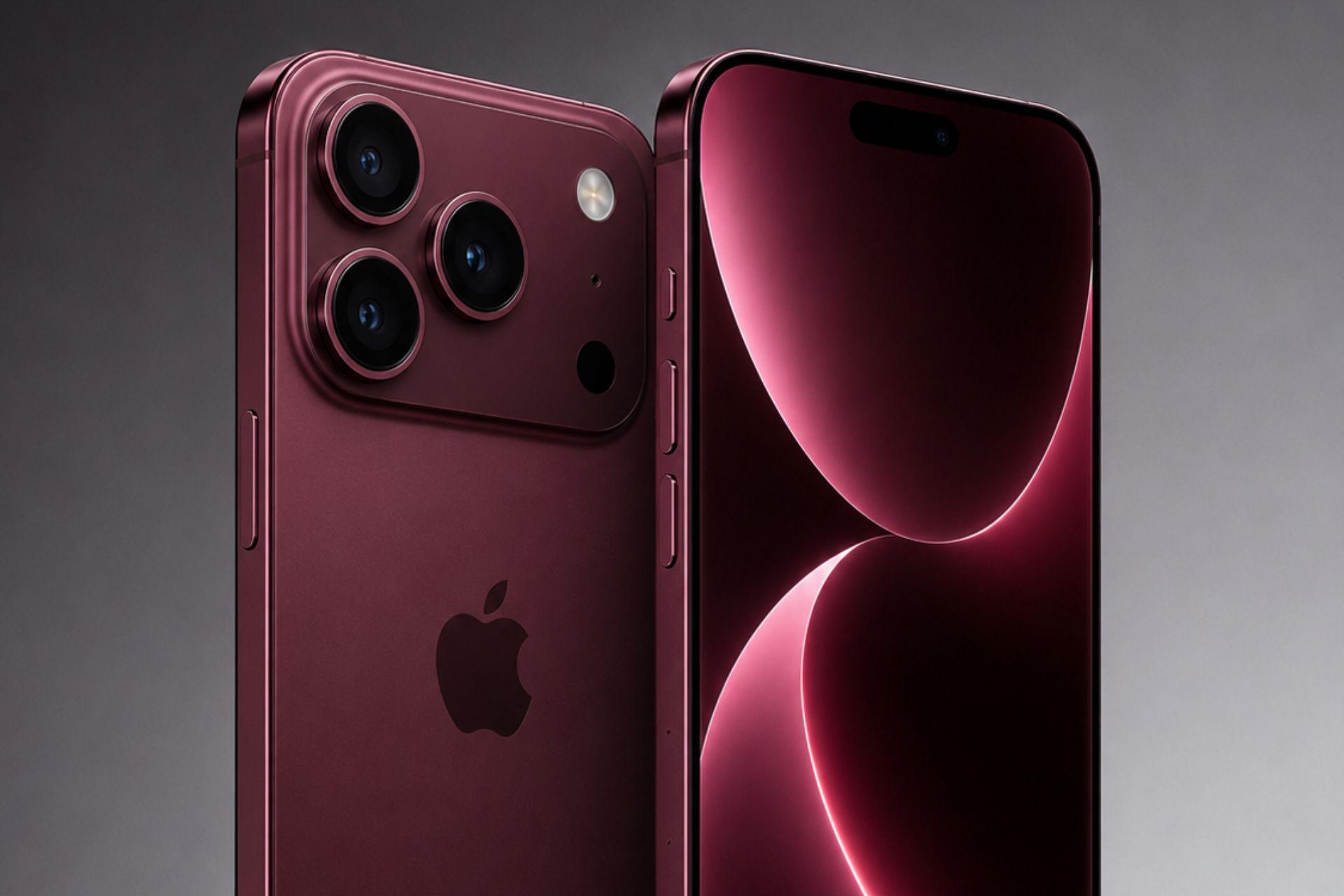
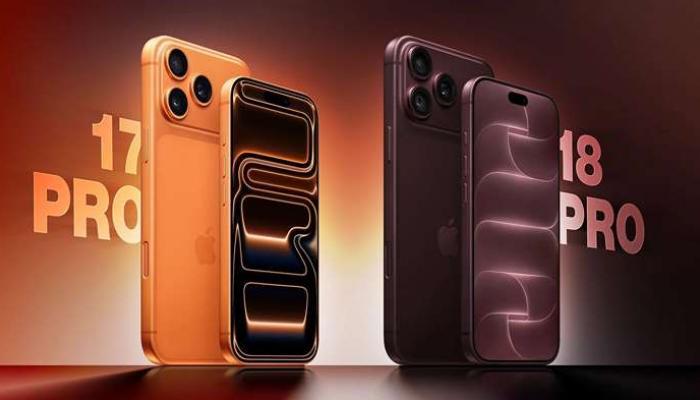
However, when moving on to the iPhone 18, a very important point must be noted before reading any comparison or specifications published online: The standard iPhone 18 has not been officially announced yet, so part of the circulating information relies on leaks, analyst reports, and expectations regarding Apple's plans for the next generation. Conversely, Apple has officially announced the iPhone 18 Pro and iPhone 18 Pro Max, meaning one must avoid confusing Pro model specifications with the anticipated specifications of the base iPhone 18 model.
The processor is expected to be one of the most vital development elements in the next generation, with reports circulating about the A20 chip for the base model, alongside expectations of increased memory, enhanced AI processing capabilities, and better energy efficiency. Some reports also point to potential upgrades in cameras, display, and connectivity technologies, though these details remain unfinalized until Apple reveals the official specifications of the device.
For this reason, this comparison does not rely merely on listing separate numbers; rather, it focuses on what these specifications actually mean for the user in practice. Increasing camera resolution, for example, does not automatically mean photos will look better in all conditions, and boosting battery capacity alone is not enough to judge battery life, because the processor, display, operating system, modem, and power management all play pivotal roles in run time.
Furthermore, the importance of specifications varies from user to user: a content creator and photographer cares more about cameras, video stabilization, and storage; gaming enthusiasts look for processor muscle, GPU capability, display refresh rates, and thermal management; while everyday users might prioritize battery endurance, charging speed, display quality, and system smoothness.
In this comparison, we will examine both the iPhone 17 and iPhone 18 individually, focusing closely on the display, processor, memory, daily performance, gaming, thermals, rear and front cameras, video recording, battery, charging speed, storage, communication networks, Wi-Fi, Bluetooth, USB-C, operating system, artificial intelligence, security, design, weight, and water/dust resistance. Finally, we will outline the most critical differences to watch out for before making a purchasing decision.
The goal is not just to see which phone carries newer specs on paper, but to understand the true magnitude of evolution between the two generations, and whether upgrading from the iPhone 17 to the iPhone 18 will offer a distinct difference in daily use or if the gap matters primarily to a specific segment of users.
Therefore, before looking at prices or making a purchase decision for either phone, it is essential to first understand the technical details of each device, as some differences can significantly impact your user experience while other upgrades might hold limited importance for the average user.
📱 iPhone 17 Pro Max — Full Technical Specifications
 "iPhone 17 Pro Max")
Important Note: Certain figures like exact battery capacity in mAh or RAM values are not traditionally displayed by Apple on their official specs page. Therefore, I will distinguish between official specifications and figures derived from external analysis and testing to avoid presenting unconfirmed metrics as official. Official specs confirm the device comes with the A19 Pro chip, a 6.9-inch display, triple 48MP rear cameras, and storage capacities up to 2TB.
1️⃣ Display — Deeper Technical Breakdown
📐 Screen Size: 6.9 inches
The iPhone 17 Pro Max features a 6.9-inch screen, making it the largest display among the iPhone 17 Pro lineup.
Resolution:
2868 × 1320 pixels
Pixel Density:
460 PPI (Pixels Per Inch).
What does 460 PPI mean?
This means pixels are tightly packed so that text and images appear with a high degree of sharpness.
The benefits are especially noticeable when:
- Reading small text.
- Viewing high-resolution photos.
- Photo editing.
- Watching video content.
- Using design applications.
- Playing games with fine visual details.
🌈 OLED Display Type
 "iPhone 17 Pro Max")
Display technology:
Super Retina XDR OLED
Supporting:
- HDR
- True Tone
- Wide Color P3
- Dynamic Island
- Always-On Display
- ProMotion
- Haptic Touch.
Why is OLED important?
Because every individual pixel controls its own illumination independently.
Consequently, when displaying black, those exact pixels can be completely turned off, helping achieve:
- Deeper blacks.
- Higher contrast.
- Better details in dark scenes.
- Lower power consumption in certain display modes.
⚡ ProMotion 120Hz
The display supports an adaptive refresh rate up to:
120Hz
Rather than a fixed 60Hz.
An adaptive rate means the phone does not need to run the display at 120Hz all the time.
It can scale the rate up when you need:
- Scrolling.
- Gaming.
- Animations.
- Fast navigation.
And scale it down when motion is limited.
This achieves a superior balance between smoothness and energy efficiency.
☀️ Brightness — A Critical Factor
 "iPhone 17 Pro Max")
The display reaches:
- 1000 nits typical brightness.
- 1600 nits peak HDR brightness.
- 3000 nits maximum outdoor brightness.
It is also equipped with an anti-reflective coating layer.
What does 3000 nits mean?
It means the phone is engineered to remain much more legible under intense sunlight.
This is exceptionally important particularly during:
- Navigation.
- Taking photos.
- Reading messages.
- Using the phone outdoors or on the beach.
- Driving and using maps.
🛡️ Screen Protection
The front glass utilizes:
Ceramic Shield 2
And the back is also protected with Ceramic Shield.
The chassis is built with aluminum.
However:
IP68 does not mean the phone is entirely immune to water damage.
The rating indicates specific resistance to water and dust under controlled testing conditions, with Apple citing a depth of up to 6 meters for up to 30 minutes in accordance with IEC standard 60529.
2️⃣ A19 Pro Processor — In Detail
 "iPhone 17 Pro Max")
🧠 Apple A19 Pro
The processor is:
Apple A19 Pro
Comprising:
- 6-core CPU.
- 2 performance cores.
- 4 efficiency cores.
- 6-core GPU.
- 16-core Neural Engine.
- Neural Accelerators embedded inside the GPU.
- Hardware-accelerated Ray Tracing.
🔥 Why is the A19 Pro Important?
The processor doesn't just care about fast app launching.
It is responsible for:
- Image processing.
- Video processing.
- Gaming.
- Artificial intelligence.
- Data encryption.
- Power management.
- Audio processing.
- Running professional applications.
🎮 Gaming
 "iPhone 17 Pro Max")
The presence of:
6-core GPU + Ray Tracing + Neural Accelerators
Means the phone can handle much more complex 3D graphics.
Ray Tracing
A technology simulating how light rays and shadows reflect within a scene.
It enhances:
- Surface reflections.
- Lighting.
- Shadows.
- Overall visual fidelity in games.
🌡️ Cooling System
One of the most significant additions to the Pro Max is the new thermal design featuring a Vapor Chamber.
The idea isn't that the phone "never heats up."
Rather, thermal energy is dissipated more efficiently away from critical processor zones.
Apple states that the new design helps achieve sustained performance up to 40% better compared to the previous generation in certain workloads, though this does not mean a uniform 40% performance hike across every single app or game.
3️⃣ RAM — A Point Requiring Precision
 "iPhone 17 Pro Max")
Here we must be very careful.
Apple does not list RAM on its official tech specs page the way Android manufacturers do.
Therefore, in a professional tech article, I advise against writing:
"Official RAM = X"
Unless you attribute the figure to an external analysis.
More importantly, the memory works seamlessly with:
- iOS.
- A19 Pro.
- Neural Engine.
- GPU.
- Apple Intelligence.
This makes the raw number alone insufficient to judge overall performance.
4️⃣ Rear Camera System — In Detail
 "iPhone 17 Pro Max")
This is where this phone differs from the standard iPhone 17.
We have:
48MP Pro Fusion Camera System
Consisting of:
📷 48MP Main
📷 48MP Ultra Wide
📷 48MP Telephoto
This triple setup makes the Pro Max a device heavily geared toward professional photography.
📷 48MP Main Camera
Specifications:
- 48MP.
- 24mm focal length.
- ƒ/1.78 aperture.
- Second-generation sensor-shift OIS.
- 100% Focus Pixels.
- 24MP and 48MP High Resolution support.
What is the benefit of ƒ/1.78?
Aperture size directly impacts the amount of light reaching the sensor.
The more light that enters, the more beneficial it is for:
- Low-light conditions.
- Night photography.
- Indoor portrait shots.
🛡️ Sensor-Shift OIS
Instead of relying solely on lens movement, the phone moves the sensor itself to assist with image stabilization.
This helps minimize:
- Hand shake blur.
- Blurry photos.
- Video jitters.
Particularly when capturing footage in low light.
🔭 Telephoto Camera
 "iPhone 17 Pro Max")
This is one of the standout strengths of the Pro Max.
Camera unit:
48MP Fusion Telephoto
Featuring:
- 100mm.
- ƒ/2.8.
- Tetraprism design.
- Autofocus.
- 3D sensor-shift stabilization.
And it supports optical-grade zooming capabilities up to 8x within the imaging system.
Why is the Telephoto lens important?
Instead of physically walking closer to a subject, you can zoom in optically.
This is useful for:
- Portrait photography.
- Concerts.
- Sports games.
- Wildlife.
- Architecture.
- Travel.
- Capturing distant details.
📸 48MP Ultra Wide
Specifications:
- 48MP.
- 13mm.
- ƒ/2.2.
- 120° field of view.
- Hybrid Focus Pixels.
It excels notably in:
Wide Photography
Such as:
- Landscapes.
- Buildings.
- Interiors.
- Large group shots.
Macro
It can also be utilized for extreme close-up macro photography.
🌙 Night Photography
)
Low-light performance relies on more than just sensor size.
There is a comprehensive processing pipeline including:
- Photonic Engine.
- Deep Fusion.
- Smart HDR.
- Night Mode.
- Image processing powered by A19 Pro.
- Image stabilization.
As a result, the final photo output is a product of Sensor + Lens + Stabilization + Computational Processing.
5️⃣ 18MP Front Camera
 "iPhone 17 Pro Max")
This is one of the very notable upgrades.
Camera unit:
18MP Center Stage
With an aperture of:
ƒ/1.9
And supporting:
- Autofocus.
- Focus Pixels.
- Center Stage.
- Portrait mode.
- Night Mode.
- Smart HDR 5.
- Photonic Engine.
- Deep Fusion.
- Dual Capture.
- Super-steady video recording.
🤳 What makes Center Stage special?
Instead of the front camera remaining locked in a tight crop, Center Stage helps keep you properly framed.
This is useful for:
- Video calls.
- Group selfies.
- Content creation.
- Moving around in front of the camera.
🎥 Dual Capture
 "iPhone 17 Pro Max")
Among the key features is the ability to record content using both the front and rear cameras simultaneously in supported scenarios.