
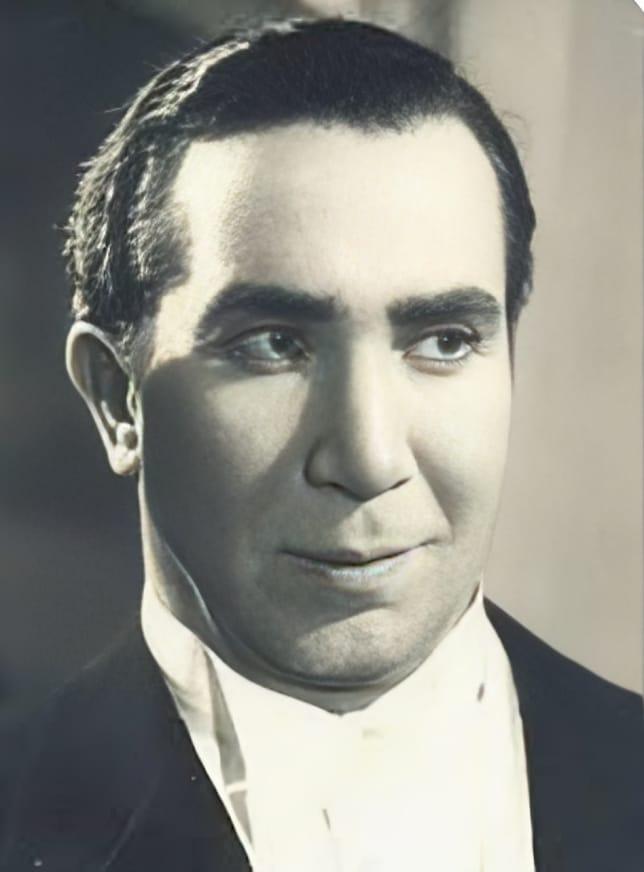
Youssef Wahbi
Youssef Wahbi
Contact
Available NowOverview
Egyptian actor, Writer, Producer, theater and film director
Description
⭐ Youssef Wahbi ⭐
(July 17, 1898 – October 17, 1982)
Egyptian actor, writer, producer, theater, and film director. He is considered one of the pioneers of cinema and theater in Egypt and the Arab world.
📌 Personal Information
Full Name: Youssef Abdullah Hodeib Wahbi Qutb
Title: The Dean of Arab Theater
Date of Birth: July 17, 1898
Place of Birth: Fayoum, Egypt 🇪🇬
Date of Death: October 17, 1982 (Age 84)
Place of Death: Al Mokawloon Hospital, Nasr City, Cairo
Cause of Death: Heart Attack ❤️
Nationality: Egyptian
Languages: Arabic (Egyptian dialect)
Years Active: 1923 – 1980
Father: Abdullah Wahbi
🎭 Artistic Career
📍 Early Life
📌 Fell in love with acting after watching the Lebanese actor Salim Al-Qardahi’s troupe in Sohag. He began performing monologues and plays at Al-Ahly Club and his school.
📌 Traveled to Italy after World War I to study acting under the Italian actor Kiantoni. He returned to Egypt in 1921 after his father’s death, inheriting 10,000 gold pounds.
📌 Joined Hassan Fayek and Aziz Eid’s troupes, but later decided to establish his own theater group due to financial struggles in the industry.
🎭 Ramses Theater and Success
📌 Established Ramses Theater Troupe in 1923, opening the Ramses Theater on March 10, 1923.
📌 The troupe staged over 300 plays, including translated and adapted works of Shakespeare, Molière, and Ibsen, as well as Arabic plays.
📌 Notable members of the troupe:
Amina Rizk
Hussein Riad
Fatma Roushdi
Zeinab Sedky
Aziz Eid
📌 Several of their plays were adapted into films, such as:
Confession Chair
Rasputin
The Green Table
📌 Youssef Wahbi was the first to introduce background music before curtain rise in Arab theater.
🎬 The "Prophet Muhammad" Film Controversy (1928)
📌 In 1928, an Iranian magazine reported that Youssef Wahbi had agreed to play the role of Prophet Muhammad ﷺ in an international film produced by a French company, sparking massive outrage.
📌 Al-Azhar’s Grand Sheikh intervened, and King Fuad threatened to revoke his Egyptian citizenship, forcing him to decline the role and publicly apologize.
🎥 Notable Films
📌 Debut Film: Zainab (1930)
📌 Some of his most famous films:
Ambassador of Hell (1945) – played the role of Satan 😈
The White Angel
Love and Revenge
Bayoumi Effendi
Children of the Poor
📌 Directed and acted in over 185 plays and 60 films, focusing on raising social awareness and fighting corruption.
💍 Personal Life
📌 Married three times, with no children.
📌 Most famous marriage:
Elena Londa (Italian actress) – divorced in 1925 due to her extreme jealousy.
📌 In his memoir "I Lived a Thousand Years", he described his romantic adventures, stating:
"I wasn't a saint, but I was a victim of temptations." 😅
🏆 Awards & Honors
🏅 Order of Arts and Sciences (First Class) from President Gamal Abdel Nasser.
🏅 State Appreciation Award in Arts (1975).
🏅 Order of Merit (First Class) from King Fuad.
🏅 Honored as Dean of Arab Theater for his contributions.
⚰️ Death
📌 Passed away on October 17, 1982, at Al Mokawloon Hospital in Cairo due to a heart attack.
📌 Remains a legendary figure in Egyptian and Arab theater and cinema.
🎭 Famous Quotes
🗨️ "The world is nothing but a grand theater."
🗨️ "Art is a message, not just entertainment."
🔥 His Artistic Legacy
📌 Played a vital role in the development of Egyptian theater, establishing professionalism and discipline in the industry.
📌 His films and plays continue to serve as a reference for future generations of artists.
🎬 Youssef Wahbi... An Eternal Legend of Theater and Cinema!

Suggested Results
Biography of the Iconic Actor Adel Emam
Amr Saad's Biography
is one of the most prominent artistic and media figures in Egypt and the Arab world.

one of the greatest actresses in Egypt and the Arab world
