
K Zero Nursery is one of the leading nurseries in New Cairo, Egypt, aiming to provide an innovative and safe educational environment for children in their early stages. The nursery offers a comprehensive educational program based on play and interactive activities as the main method for developing children's cognitive and social skills. The nursery stands out by providing specialized educational services tailored to the diverse needs of children, including physical, artistic, and academic activities aimed at enhancing both their intellectual and physical abilities. Through an interactive learning environment and modern resources, the nursery focuses on fostering a love of exploration in children and enhancing their critical thinking and creativity skills. It also aims to develop children's social skills through group activities that encourage cooperation and mutual respect.

K Zero Nursery & Preschool
Overview
K Zero Nursery is one of the leading nurseries in New Cairo, Egypt, aiming to provide an innovative and safe educational environment for children in their early stages
Description
K Zero Nursery & Preschool
🌱 About K Zero Nursery
✨ Features of K Zero Nursery
🔹 Comprehensive Educational Curriculum
The nursery follows a holistic curriculum that includes various educational activities aimed at developing children's cognitive and physical skills. This curriculum covers teaching reading, writing, mathematics, as well as artistic activities that stimulate the child's creativity, in addition to programs directed at developing emotional and social intelligence through children's interaction with one another.
🔹 Interactive Language Learning
K Zero Nursery places a strong emphasis on teaching both Arabic and English in non-traditional ways, with lessons being taught through educational games, stories, and songs. This approach helps children learn languages in a fun and natural way, enhancing their communication skills from an early age.
🔹 Physical and Sports Activities
The nursery offers a wide range of physical activities that help children develop their basic motor skills such as coordination, balance, and the ability to move in a safe environment. The nursery also provides sports facilities with playgrounds and games that encourage children to engage in physical activity continuously.
🔹 Focus on Social Skills
At K Zero Nursery, many group activities are provided to encourage children to cooperate and work as a team, which enhances their social skills such as sharing, problem-solving, and understanding others' emotions. The activities give children opportunities to work with their peers in groups, fostering a spirit of teamwork.
🔹 Modern and Safe Facilities
The nursery is equipped with the latest educational tools and facilities that ensure a safe and healthy environment for children. The highest safety standards are followed in the interior design, ensuring that all tools and activities designed for children meet the highest quality standards.
🔹 Ongoing Health Care
K Zero Nursery prioritizes children's health, with a medical team available on-site at all times to care for the children when necessary. The nursery also ensures a healthy environment by following strict hygiene and sanitation procedures for all facilities.
🔹 Teacher Training Courses
The nursery ensures that its educators are regularly trained to offer the best educational experience for children. This includes training on the latest teaching methods and the use of modern educational technologies to provide a high-quality learning environment.
📞 Contact Information for K Zero Nursery
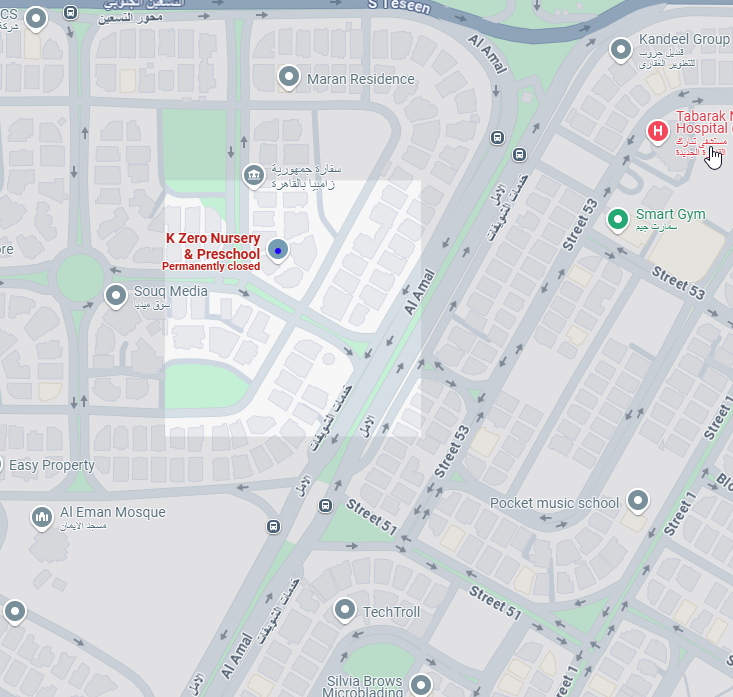
Address: 294 Al-Shouifat North, Fifth District, New Cairo, Cairo Governorate, , Egypt
Phone Number: +20 11 40022999
🎉 Conclusion
If you are looking for a safe, fun, and diverse educational environment for your child, K Zero Nursery is the ideal choice for you. With its integrated curriculum that combines academic education with recreational activities, the nursery offers children the opportunity to develop their skills comprehensively. With a specialized team and modern facilities, the nursery ensures the best educational experience for nurturing a creative and strong generation.
K Zero Nursery is not just a place for learning, but a vibrant environment that helps children grow and develop in an atmosphere filled with love and respect.
5 0Nurseries in Egypt are divided into several types based on their goals and educational content, including:
1. Educational Nurseries:
Focus on teaching children the basics of reading, writing, and languages. They often follow curricula like Montessori or the British system.
2. Developmental Nurseries:
Aim to enhance social and behavioral skills such as discipline, cooperation, and independence.
3. Religious Nurseries:
Focus on Quran memorization and teaching religious values and ethics in a conservative environment.
4. Specialized Nurseries:
Cater to specific groups such as:
Children with special needs.
Language-focused nurseries (e.g., French – German).
Art or sports-oriented nurseries.
5. Governmental and Private Nurseries:
Governmental: Low-cost and supervised by the Ministry of Social Solidarity.
Private: Run by individuals or private institutions, and vary in quality and services offered.
Tip: Choosing a nursery should be based on the quality of care, safety, and the level of individual attention given to each child.
The Egyptian law outlines several key objectives that nurseries aim to achieve, including:
1. Comprehensive Social Care:
Providing a safe and stimulating environment that takes care of the child physically, psychologically, and socially.
2. Development of Skills and Abilities:
Supporting children's talents and discovering their abilities through age-appropriate educational and recreational activities.
3. Integrated Preparation:
Preparing the child physically, culturally, psychologically, and morally in alignment with Egyptian societal values and religious identity.
4. Communication with the Family:
Raising awareness among parents and providing educational guidance to support proper parenting at home.
5. Strengthening Social Bonds:
Building a strong, interactive relationship between the nursery and the child’s family to ensure a continuous, well-rounded environment for growth and learning.
Note:
Nurseries are not just places to keep children, but they are key partners in education, laying the foundation for a strong and socially responsible personality for the child.
Nurseries have several important aspects that contribute to the child’s overall development:
1. Educational Aspect:
By providing educational and developmental activities, such as learning numbers, letters, and language basics, nurseries help children develop their cognitive skills.
2. Social Aspect:
The nursery provides a social environment that allows children to interact with their peers, learning communication skills, cooperation, and problem-solving.
3. Emotional Aspect:
Through emotional support from teachers, children learn how to manage their emotions and develop self-confidence.
4. Physical Aspect:
Physical activities help children develop fine and gross motor skills, such as running, jumping, and playing with educational toys.
5. Creative Aspect:
Creative activities like drawing, modeling with clay, and music help enhance children's imagination and boost their creative skills.
All these aspects work together to develop a well-balanced personality in children, enabling them to adapt to various aspects of life.
Here are 8 steps to ease the child’s transition to pre-school:
1. Visit the school together:
Introduce the child to the school environment beforehand so they can acclimate to it.
2. Meet new friends:
Encourage the child to meet other children so they can make new friends.
3. Role-play school:
Use school-related games at home to demonstrate the daily school routine.
4. Turn skills into games:
Make learning skills like dressing fun and engaging for the child.
5. Talk about your experience:
Share your own school experiences to create a positive image of school for the child.
6. Establish a new routine:
Set a regular daily routine to prepare the child for school.
7. Listen to your child:
Pay attention to the child’s feelings and concerns about school.
8. Create a comforting goodbye plan:
Make the child’s farewell comfortable and encouraging.
These steps help ease the child’s transition to a new stage.
Nursery is extremely important for children because it helps prepare them for the next educational stage and promotes their social and cognitive development. Through nursery, children learn how to build social relationships outside of the family, which enhances their communication and cooperation skills.
Nursery also contributes to developing critical thinking in children, helping them understand and analyze situations more effectively. It encourages a positive attitude towards learning, fostering their love for exploration and independent learning.
Additionally, nursery helps build the child’s self-confidence, which enables them to adapt better to the school environment in the future and enhances their ability to persevere and succeed.
