
✨ Bassam Ragab Opens Up About His Career
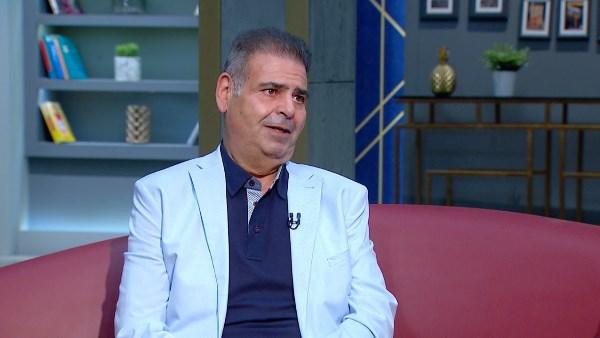
Veteran actor Bassam Ragab revisited some of the most important moments of his career during his appearance on “Wahed Men El Nas.”
🎭 The conversation went beyond his well-known television roles and explored his early theater experience, cinema career, artistic choices and family life.
Ragab also discussed his philosophy of avoiding roles that add little to his career, describing some of his periods away from the screen as a form of artistic selectiveness.
🎓 His Beginning at the Acting Institute
Ragab recalled joining the Higher Institute of Dramatic Arts without initially telling his father.
His decision marked the beginning of a professional journey that would eventually take him across theater, cinema and television.
🎭 One of his earliest major theater experiences was appearing alongside legendary actress Samiha Ayoub in the play “The Loving Minister.”
For a young actor, standing opposite such an established performer became an important learning experience.
🎬 “Darb El Moallem” and Osama Anwar Okasha
Ragab’s early cinema career included “Darb El Moallem,” directed by the late Atef El Tayeb.
The film also played an important role in connecting him with legendary writer Osama Anwar Okasha, who recommended him for “Layali El Helmeya.”
Ragab initially hesitated because he was more familiar with cinema and was concerned about the multi-camera television production system.
Eventually, he accepted the role of Essmat Sonay, opening a major new chapter in his television career.
📺 The Legacy of “Layali El Helmeya”
Ragab described the period in which major Egyptian television productions were being made as an important era for the industry.
The success of productions such as “Layali El Helmeya” was closely connected to strong scripts, large ensembles and carefully developed characters.
⭐ Ragab also highlighted the role of the production sector in giving actors opportunities and helping them reach wider audiences.
⭐ Why “Hadith El Sabah Wal Masa” Remains Popular
One of the other major productions discussed by Ragab was “Hadith El Sabah Wal Masa.”
The series continues to attract viewers whenever it is rebroadcast.
According to Ragab’s reflections, the strength of its ensemble cast and the depth of its characters helped give the series lasting appeal.
🎭 Instead of relying on one central hero, the story moves through multiple characters, families and generations.
🏡 “Hawanim Garden City”
Ragab also revisited his memories of “Hawanim Garden City” and his character Murad El Saeed.
The role was part of his broader body of work featuring refined, sophisticated and socially distinctive characters.
👑 Bassam Ragab Played King Farouk Three Times
One of the most memorable parts of the interview was Ragab’s discussion of playing King Farouk three times.
He portrayed the historical figure in:
- “Zaman El Helm El Da’e”
- “Om Kalthoum”
- “Gamal Abdel Nasser”
Although the historical figure remained the same, Ragab explained that each production required a different interpretation because each story focused on different periods and circumstances.
🔎 How He Prepared for King Farouk
Preparing for the role required extensive research.
📚 Ragab explained that when he first played Farouk, detailed material about the king’s movements, speech and mannerisms was not as easily available as it is today.
He therefore searched for available references, obtained a French documentary about the king and met Ismail Sherine at his home in Alexandria.
His goal was to understand the character beyond costumes and appearance, focusing on movement, behavior and personality.
❤️ A Memorable Meeting With King Ahmed Fouad
Ragab also recalled meeting King Ahmed Fouad in Paris.
After seeing Ragab’s portrayal of his father, Ahmed Fouad reportedly told him:
“I really thought you were my father.”
🎭 For Ragab, the statement carried particular emotional significance because it came from the son of the historical figure he had portrayed.
🎭 Playing the Villainous Mokhtar
Ragab also discussed his character Mokhtar in “Ali Clay.”
🔥 The role allowed him to explore a darker personality that differed from some of his previous performances.
Rather than relying on a stereotypical portrayal of evil, he focused on giving the character specific motivations and behavioral details.
👔 Avoiding Stereotypes
Ragab has frequently appeared as elegant and aristocratic characters.
However, he explained the importance of avoiding repetition.
✨ A similar external appearance does not necessarily mean the same character.
The real difference comes through personality, motivations, relationships and the way the character responds to different circumstances.
🎬 Why Did He Step Away From Cinema?
Ragab also spoke openly about his relationship with cinema.
His film credits include “Darb El Moallem,” “Playing With Devils,” “Love in the Fridge,” “Jeans” and “Crystal.”
Despite his strong cinematic beginnings, he experienced periods away from the big screen.
He described some of these periods as “artistic abstinence,” explaining that he did not want to accept minor roles simply to remain visible.
📺 His View of Modern Drama
Ragab also discussed the transformation of Egyptian television drama.
He reflected on the shift from large ensemble productions toward projects built around individual stars.
He also addressed the rise of short-form streaming series, including productions consisting of seven or ten episodes.
💡 For him, the format itself is not the only factor determining success. Strong writing, memorable characters and effective execution remain essential.
❤️ His Wife as the “Unknown Soldier”
On the personal side, Ragab dedicated an emotional message to his wife, describing her as the “unknown soldier” behind his life and career.
🏠 He also discussed his decision to keep professional discussions largely outside the family home, maintaining a clear separation between his artistic world and family life.
👨👧 His Daughter Farida
Ragab also spoke about his children, particularly his daughter Farida, whom he described as his weak point.