
🕊️ Reda El-Bahhat Dies at 72
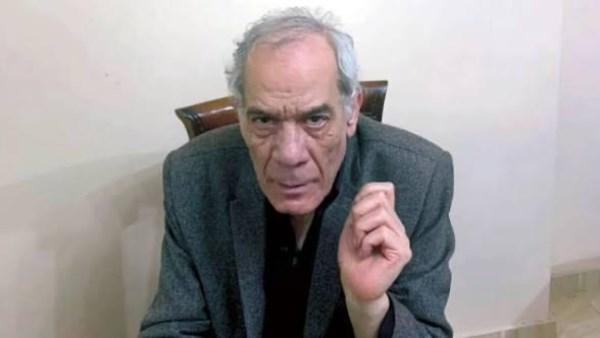
Egyptian literary circles were deeply saddened by the death of writer and novelist Reda El-Bahhat, who passed away in the early hours of the day at the age of 72 after a long illness.
His brother, Emad El-Bahhat, announced the news and asked readers and friends of the late writer to pray for him.
The funeral and condolences were scheduled to take place in the family cemetery in Mansoura, the city that remained closely connected to El-Bahhat’s life and literary identity.
💔 Following the announcement, friends, readers and members of the Egyptian cultural community expressed their condolences and remembered his distinctive literary journey.
📚 A Physician Who Chose Literature as a Second Path
Reda El-Bahhat was not only a novelist.
He was also a physician who graduated from the Faculty of Medicine in Mansoura and continued practicing medicine while developing his literary career.
His medical experience provided him with a unique perspective on human beings, suffering, fear, hope and the complicated emotions that shape people’s lives.
✨ These experiences became part of the wider human dimension of his literary work.
✍️ His Early Literary Journey
El-Bahhat initially showed an interest in poetry before gradually moving toward fiction and the novel.
He published his first novel when he was 36, later developing a body of work characterized by patience, observation and deep engagement with Egyptian society.
Rather than pursuing constant publicity, he preferred to develop his writing at his own pace.
🏆 Sawiris Cultural Award
One of the major milestones in El-Bahhat’s career was receiving the Sawiris Cultural Award.
He won the award in fiction for “An Hourglass Working with Electricity”, while his short-story collection “Winter Tales” also received the prestigious literary recognition.
🏅 These awards confirmed the significance of his literary project and brought wider attention to his distinctive approach to Egyptian fiction.
📖 “Bashaer El-Yousofi”
Among his best-known works is “Bashaer El-Yousofi,” published in 1992.
The novel explored transformations within Egyptian society and the lasting impact of political and social events.
Memory was an important element in El-Bahhat’s writing.
For him, the past was not simply something that had ended, but a force that continued to shape the present.
🌊 “The Sea Candle”
Another important work was “The Sea Candle,” which placed Egyptian rural life at the center of its narrative.
The novel drew heavily on rural traditions, customs, popular culture and human relationships.
🌾 El-Bahhat did not treat the countryside as a simple backdrop. Instead, the setting became an essential part of the characters and their conflicts.
⏳ “An Hourglass Working with Electricity”
The novel “An Hourglass Working with Electricity” became another major milestone in his career.
It explored themes involving writers, journalism, time, isolation and the search for meaning.
The novel demonstrated El-Bahhat’s interest in internal conflict and the psychological complexity of his characters.
🧠 “Winter Tales” and Short Stories
El-Bahhat also made an important contribution to Egyptian short fiction.
His collection “Winter Tales” received the Sawiris Cultural Award and reflected his ability to transform ordinary details into broader questions about people and society.
Short stories gave him another space to explore characters, memories and social contradictions.
🏡 Mansoura and His Literary Identity
One of the most distinctive aspects of El-Bahhat’s life was his decision to remain closely connected to Mansoura.
Although he spent a period in Cairo during his youth, he eventually returned to Mansoura.
📍 The city became more than his home; it became part of his literary identity.
He developed his writing away from the intense cultural competition and publicity of the capital.
🩺 The Influence of Medicine
Medicine played a subtle but significant role in El-Bahhat’s literary perspective.
Years of dealing with patients and witnessing human vulnerability gave him an intimate understanding of fear, pain, hope and resilience.
❤️ His characters were therefore rarely simple figures.
They were complex individuals shaped by memories, desires, contradictions and social circumstances.
🖋️ Literature as an Encounter With Memory
Memory was one of the central elements of El-Bahhat’s literary vision.
His writing frequently examined historical and social transformations, including the aftermath of the 1967 defeat, changing social values, rural life, political developments and religious extremism.
Rather than presenting these issues as direct political statements, he often explored them through characters and stories.
🌟 A Writer Away From the Spotlight
El-Bahhat followed a literary path that differed from the conventional pursuit of fame.
He did not make publicity his primary goal.
Instead, he remained focused on writing, medicine and his connection to Mansoura.
That independence became an important part of his public image and literary identity.
📚 A Lasting Literary Legacy
His literary legacy includes novels, short-story collections and works for children.
Among the titles associated with his career are:
🔹 Bashaer El-Yousofi
🔹 The Sea Candle
🔹 An Hourglass Working with Electricity
🔹 Human Rituals
🔹 Winter Tales
🔹 A Night for Singing
🔹 He Chose Not to Die
Together, these works reflect a literary project deeply interested in Egyptian people, society, memory and transformation.
💔 The Writer Leaves, the Books Remain
With Reda El-Bahhat’s death, Egyptian literature loses a writer who developed a distinctive voice over several decades.
The writer and physician may have passed away, but his books, characters and ideas remain available to readers.
A writer does not completely disappear when his life ends.
As long as the books are read, the characters continue to live through the imagination of new generations.
✨ This is perhaps one of literature’s greatest powers: giving writers another life through their words.
🕊️ Farewell to Reda El-Bahhat
Reda El-Bahhat leaves behind a long journey between medicine and literature, between Mansoura and the world he created through his books.
His death is an opportunity to rediscover his work and introduce new generations to a writer who devoted his career to examining Egyptian life and the complexity of the human experience.
🤍 May Reda El-Bahhat rest in peace, and may his family, friends and readers find strength in remembering the literary legacy he left behind.