
The selection of cultural figures in Abu Dhabi does not appear to be simply a way of honoring names that have left a lasting mark on history or the arts. Instead, it reflects a broader cultural vision aimed at reintroducing influential figures to new generations and transforming their lives, contributions and creative legacies into subjects for dialogue, knowledge and rediscovery. 📚✨
This approach is particularly visible in the cultural choices made in 2026, which bring together two figures from seemingly different worlds: Al-Khalil ibn Ahmad Al-Farahidi and Egyptian artist Nagat Al-Saghira. Despite the enormous difference in time between their lives, both are closely connected to the history of the Arabic language, poetry, music and Arab cultural memory.
Al-Farahidi.. When Language Becomes a Knowledge Project
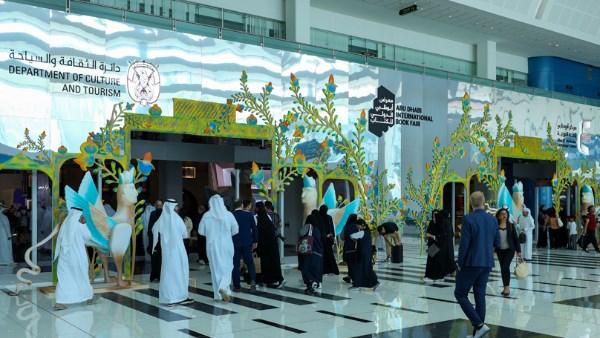
The Abu Dhabi International Book Fair selected Al-Khalil ibn Ahmad Al-Farahidi as the central figure of its 35th edition, honoring one of the most important figures in the development and systematic study of the Arabic language.
Al-Farahidi holds a significant position in the history of Arab culture because of his contributions to language studies and his foundational role in the development of Arabic prosody, the discipline concerned with the meters and structures of classical Arabic poetry.
His name is also strongly associated with Kitab al-Ayn, a landmark work in the history of Arabic lexicography.
Yet the significance of selecting Al-Farahidi goes beyond simply recalling his achievements or presenting his biography as part of a distant historical period. The concept of the “central figure” at the Abu Dhabi International Book Fair reflects a broader idea: revisiting a cultural figure’s contributions and connecting them with questions of knowledge and thought in the contemporary world.
In this sense, Al-Farahidi is not merely a historical name found in a textbook. His legacy becomes an entry point into discussions about language, poetry, knowledge and the ways in which the work of a scholar who lived centuries ago can continue to inspire new questions and conversations. 🔎
Nagat Al-Saghira.. When Poetry Reaches the Audience
Along the same cultural path, the Sheikh Zayed Book Award selected Egyptian artist Nagat Al-Saghira as its “Cultural Personality of the Year” for its 20th edition, recognizing her artistic career and influence on Arab music.
Nagat Al-Saghira’s artistic experience is particularly associated with sung poetry, making the Arabic language an essential part of her artistic identity. In her work, language was not simply a collection of words performed through music, but a space for poetry, expression and emotion.
Throughout her career, Nagat Al-Saghira became closely associated with a broad Arab artistic memory. Her selection therefore represents another example of treating a cultural figure as part of a living cultural heritage rather than simply as a name belonging to an earlier era.
The choice also reflects a wider understanding of culture—one that goes beyond books, academic knowledge and theoretical disciplines to include the arts that helped shape the emotions and memories of Arab audiences. Among these arts, music has played an important role in carrying poetry and the Arabic language to millions of listeners. 🎶
Al-Farahidi and Nagat Al-Saghira.. Different Eras, One Idea
At first glance, bringing Al-Khalil ibn Ahmad Al-Farahidi and Nagat Al-Saghira together may seem unexpected. The former was a scholar of language who established important foundations for understanding Arabic and poetic meters, while the latter belongs to the world of modern Arab music and performance.
Yet when the two choices are viewed from a broader cultural perspective, a clear connection emerges: the Arabic language and its ability to move from knowledge into creativity, from books into everyday life, and from written poetry into voice and performance.
Al-Farahidi approached language as a field that required organization, analysis and study. Nagat Al-Saghira, meanwhile, carried Arabic poetry into music, turning words, poetic structures and imagery into an artistic experience that could reach a wide audience.
The connection between the two therefore goes beyond simply selecting two prominent figures. It reflects a way of building bridges between different areas of culture and demonstrating that heritage, modernity, art and knowledge can coexist within a single cultural project. 🌟
From Honoring Icons to Rediscovering Heritage
What stands out in this model is that selecting a cultural figure does not appear to be an end in itself. Instead, it can become the starting point for a wider cultural journey.
When a figure becomes the central focus of a book fair or is highlighted through a major cultural award, their biography and body of work can open the door to lectures, performances, studies, books and public discussions.
This is where cultural heritage moves from being preserved material to becoming something that can be reread and reconsidered.
Instead of Al-Farahidi’s name remaining associated only with a fact about Arabic prosody or Kitab al-Ayn, his legacy can become an entry point for understanding the history of the Arabic language and the ways in which it developed as a field of knowledge.
Likewise, Nagat Al-Saghira’s legacy does not have to remain simply part of the history of Arab music. Her experience can encourage discussions about sung poetry, the relationship between art and language, and the role of music in shaping collective Arab memory.
This approach also gives younger generations an opportunity to discover figures they never personally experienced, while allowing them to engage with their ideas and achievements through contemporary cultural platforms.
Abu Dhabi.. A Space Where Heritage Meets the Arts
Through these choices, Abu Dhabi presents a model that brings heritage, the arts and knowledge together within one cultural space.
Culture is therefore not confined to books or museums. It becomes an experience that audiences can actively rediscover through events, discussions, performances and different forms of educational and cultural content.
This is what makes the selection of cultural figures more than a symbolic tribute. Giving a figure a central place in a cultural program gives their legacy renewed visibility and allows the questions surrounding their work to be presented to different audiences and new generations.
Ultimately, the message connecting Al-Farahidi and Nagat Al-Saghira appears to go beyond the enormous difference between their eras and fields. Cultural icons do not belong exclusively to the past. They can become starting points for creating new knowledge, rereading heritage and opening cultural conversations among generations that never lived alongside them.
Can projects like these succeed in making younger generations more connected to Arab cultural icons—not simply as names from the past, but as continuing sources of inspiration and knowledge? 💬📚