
🧠 Ghada Abdel Razek opens up about a deeply personal chapter
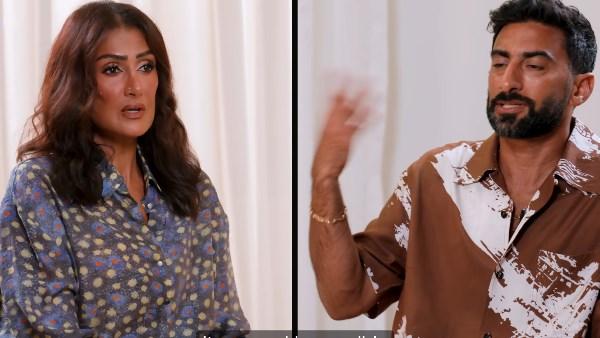
Egyptian actress Ghada Abdel Razek revealed a more vulnerable side of her personality during an emotional appearance on ABtalks, hosted by Anas Bukhash.
The actress spoke openly about her long experience with mental health struggles, including fear, depression and obsessive-compulsive symptoms, as well as her years of taking psychiatric medication.
However, her conversation went far beyond treatment.
Ghada also discussed her daughter Rotana, emotional sensitivity, death, the afterlife and a frightening experience inside a cemetery that changed her relationship with the place.
💊 Treatment began when she was 31
Ghada explained that she began psychiatric treatment when she was around 31 or 32 years old, during a period when she was going through a particularly difficult psychological phase.
She said she was prescribed medication and was initially expected to stop taking it after a period of time.
However, according to her account, her condition became more difficult at certain points, and she began increasing the doses instead of reducing them.
Eventually, she reached a point where she decided to stop taking the medication.
⚠️ Her comments describe her own personal experience and should not be interpreted as medical advice or as a recommendation to stop psychiatric medication without professional supervision.
❤️ “I became able to cry”
One of the most emotional moments of the interview came when Ghada described what she felt after stopping the medication.
She said she had been off the medication for approximately two years, later describing the period as around one year and eight months, and said she personally felt much better.
One of the changes she noticed was her ability to express emotions more freely.
She explained that she had become able to cry, something she felt had previously been difficult for her while taking medication.
✨ For Ghada, crying became more than an emotional reaction. It represented a renewed ability to connect with feelings that had been difficult to express.
👩👧 Rotana and an emotional wish
The conversation became particularly emotional when Ghada spoke about her daughter Rotana.
She said she hoped Rotana would be beside her during her final moments, just as Ghada had remained beside her own mother.
The statement reflected the depth of the mother-daughter relationship and the importance Ghada places on family during the most difficult moments of life.
She also described Rotana as exceptionally kind and well-mannered.
At the same time, Ghada admitted that Rotana’s extreme kindness sometimes worries her because she believes the world is not always as gentle as her daughter expects it to be.
❤️ Her concern reflects a familiar feeling among parents: wanting their children to remain kind while also learning how to protect themselves.
🕊️ “I always think about the afterlife”
Ghada also spoke openly about her relationship with death.
Rather than describing death as something she constantly fears, she said that she does not experience it in the traditional way and that she is always thinking about the afterlife.
Her statement, “I always think about the afterlife,” became one of the most striking lines from the interview.
Her comments suggest that her understanding of death is connected to a broader reflection on life, emotions and what comes after it.
🌑 The cemetery experience that changed everything
Ghada also recalled a disturbing experience that happened while she was going through a difficult psychological period.
She said she went to a cemetery late at night, sat there and cried until she gradually calmed down.
Once the intense emotion passed, however, she became aware of the darkness surrounding her and began imagining that she could be harmed.
She then rushed out of the cemetery in fear.
🚗 She recalled that she had even left her car open, adding another unusual detail to an already frightening experience.
The incident stayed with her and eventually created a strong psychological association with entering cemeteries.
Since then, she said, she has avoided going inside them.
🎭 Behind the strong actress is a vulnerable human being
Perhaps the most striking aspect of Ghada Abdel Razek’s conversation was the contrast between her public image and the vulnerable side she revealed.
Audiences have often seen her playing strong, powerful and sometimes intimidating characters.
On ABtalks, however, she spoke about fear, crying, emotional vulnerability, family, death and personal struggles.
That honesty gave the conversation a different dimension and allowed audiences to see the person behind the actress.
📺 Ghada continues her acting career
Despite discussing deeply personal experiences, Ghada remains active professionally.
She is connected to upcoming drama projects including “Khoyout Men Zahab”, written by Ayman Salama and directed by Ahmed Hassan, as well as “Rouh w Gasad,” written by Shady Mohsen and Amgad El Sharkawy and directed by Amir Shawky.
Her continued artistic activity comes alongside a more personal phase in which she appears increasingly willing to speak openly about the experiences that shaped her.
💬 A conversation that goes beyond celebrity news
Ghada’s interview ultimately raises questions that go far beyond entertainment.
Can people become more comfortable with themselves as they grow older?
Can expressing sadness and allowing oneself to cry become part of emotional recovery?
And how much does family influence the way a person faces fear, aging and death?
Ghada answered those questions through her own experience rather than presenting herself as an expert.
❤️ Behind every public figure is a private human story, filled with fears, memories, relationships and moments that rarely appear on screen.
💬 What part of Ghada Abdel Razek’s interview caught your attention the most?
Her mental health journey? Her relationship with Rotana? Or her perspective on death and the afterlife? 🕊️
Share your thoughts in the comments and tell us: Do you think celebrities speaking openly about mental health can help make these conversations easier for society? ❤️
🇪🇬 Fixed Closing:
Behind fame and public success are human stories that remind us how similar our emotions can be. Fear, hope, love and vulnerability belong to everyone, and every personal story deserves to be heard with understanding and compassion. ❤️✨