
🎭 Hamza El Ayly Reveals the Story Behind “Maskar” in Ibn Halal and Discusses Inclusive Representation
Hamza El Ayly’s portrayal of “Maskar” in the Egyptian series Ibn Halal was more than another acting assignment. The experience became an important part of his artistic journey and later influenced the way he looked at characters with different abilities and the details of their daily experiences.
During a panel titled “The Importance of People with Different Abilities in Cinema and Art”, held as part of the 10th Our Children International Forum for Arts for People with Disabilities, El Ayly revisited the story behind the character and revealed that “Maskar” was not originally included in the script.
🎬 “Maskar” Was Not Originally in the Script
El Ayly explained that the character of “Maskar” was not part of the original script before production began.
According to his account, the creators of the series had concerns about introducing such a challenging character because of the sensitivity and complexity involved in portraying the role.
For an actor, the challenge was not simply physical performance. It involved understanding the character’s movements, reactions and human qualities while avoiding exaggerated or stereotypical acting.
That required careful preparation and observation. 🎥
👀 How Hamza El Ayly Prepared for the Role
Before portraying “Maskar,” El Ayly said that he paid close attention to people with different abilities in everyday life, observing their movements and some of the challenges they faced.
His preparation was not limited to watching from a distance. He also drew from personal experiences within his own family.
El Ayly explained that three of his cousins have different abilities, giving him an opportunity to hear personal stories and experiences that helped him understand aspects of their lives more closely.
That combination of observation and listening became part of his preparation for the character.
🔎 “After Maskar, I Started Noticing the Details More”
El Ayly said that portraying “Maskar” changed the way he noticed details after completing the series.
The experience made him more attentive to the behavior and movements of people with different abilities and encouraged him to look beyond stereotypes.
This highlights one of the potential effects of acting: an artist may begin a project by researching a character for the screen, but the experience can also influence how they understand the real-life experiences behind that character.
❤️ Why the Role Was Particularly Challenging
The unusual development of “Maskar” made the role particularly challenging.
Since the character had not been part of the original script, its construction depended heavily on the creative process and the actor’s preparation.
Portraying a character with a particular physical or cognitive experience also carries a responsibility because audiences may develop part of their perception through what they see on screen.
Small details therefore matter — movement, tone of voice, reactions and interactions with other characters.
🎭 Every detail can influence how an audience understands a character.
♿ El Ayly Rejects the Term “People With Disabilities”
Another major point in El Ayly’s comments was his position on terminology.
He said that he does not like the expression “people with disabilities,” explaining that labels focused primarily on disability may overlook the talents, abilities and ambitions of the people being described.
The issue opens a wider discussion about language in media and entertainment and the role that terminology can play in shaping public perceptions.
At the same time, terminology preferences can vary among individuals and communities, making respect for personal preferences an important part of inclusive communication.
🌟 Millions of People and Diverse Talents
During the panel, El Ayly referred to the number of people with different abilities in Egypt as being around 15 million, while emphasizing that they possess talents and abilities across many areas of life.
His broader message was that people should not be viewed only through the lens of limitations or support needs.
Among millions of people are individuals with talents in art, sports, education, work and creative fields.
Providing genuine opportunities can therefore be as important as telling stories about challenges.
🎥 Cinema and Its Role in Social Awareness
The importance of representation in cinema goes beyond simply including characters with disabilities.
It also depends on how those characters are written, directed and performed.
A carefully developed character can be presented as a complete human being with relationships, ambitions, strengths, weaknesses and a personal story rather than being reduced to one characteristic.
This approach can help move storytelling away from stereotypes and toward more nuanced representations.
🎬 Cinema does not always need to explain an issue directly. By allowing audiences to experience a character’s story, it can encourage understanding in a different way.
🧩 The Importance of Research Before Portraying a Character
El Ayly’s experience also highlights the importance of preparation when an actor portrays a character connected to a specific human experience.
Research can involve observation, listening to people with direct experience and understanding the environment in which the character lives.
The challenge is finding a balance between artistic accuracy and human respect.
The more informed the performance is, the greater the possibility of creating a believable character without relying on clichés or exaggerated mannerisms.
🎭 Our Children Forum Opens a Wider Conversation
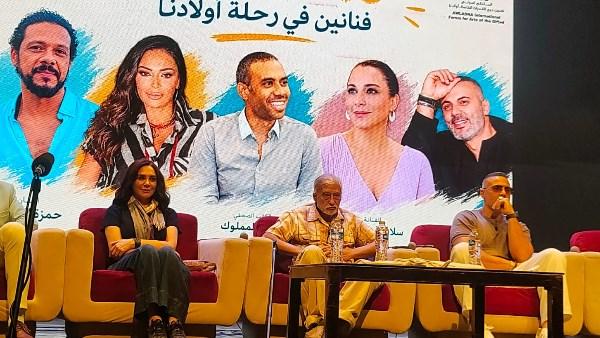
El Ayly’s comments came during the 10th edition of the Our Children International Forum for Arts for People with Disabilities, at a panel titled “The Importance of People with Different Abilities in Cinema and Art.”
The panel featured actor Ahmed Farid, actress Dalia El Behery, actress Sulaf Fawakherji and cinematographer Dr. Mohsen Ahmed, and was moderated by journalist Mahmoud El Mamlouk.
The discussion addressed representation in cinema and the arts, the importance of presenting real experiences in a human way and the need to provide greater opportunities for talented people with different abilities to participate in creative fields.
🎤 Different Artistic Perspectives
El Ayly’s comments were part of a broader discussion involving several artistic perspectives.
Dalia El Behery spoke about her wish to take part in a project dealing with the experiences of people with different abilities, while cinematographer Dr. Mohsen Ahmed announced that he would volunteer his cinematography services for free for children’s cinema projects supporting children with different abilities.
Sulaf Fawakherji also discussed her experience with roles connected to people with different abilities, adding another perspective to the conversation about representation in entertainment.
Together, these discussions expanded the panel beyond acting and toward the wider role of cinema in creating opportunities for participation and expression.
🏆 Hamza El Ayly Honored at the 10th Edition
El Ayly’s participation in the 10th edition of the Our Children Forum carried additional significance because he was among the artists honored during the current edition, alongside several prominent figures from the artistic and social fields.
His recognition and participation in the panel reflect the forum’s broader interest in highlighting artists whose experiences intersect with issues involving people with different abilities.
🌈 From “Maskar” to a Broader Message
Years after portraying “Maskar,” the role remains significant in El Ayly’s memory, but now from a broader perspective.
What began as a character that was not originally part of the script became an artistic and human experience that encouraged the actor to pay closer attention to a wider range of details.
This is one of the potential strengths of storytelling: a single character can open the door to a much larger conversation.
❤️ One character can raise a question, one artistic experience can start a discussion, and one scene can influence how someone sees another person.
📌 Fixed Conclusion
Art does more than tell stories; it can also influence how society sees people and experiences that may be unfamiliar to audiences. Hamza El Ayly’s experience with “Maskar” highlights the importance of research, preparation and respect when portraying characters with different abilities, while his comments about terminology open a wider conversation about how art and society can focus on talent, individuality and human potential. 🎭❤️
Follow us for more entertainment news, celebrity stories and the latest artistic and humanitarian events. ✨