
🎭 Khaled Diab Questions the Lack of Recognition for Enam Salousa
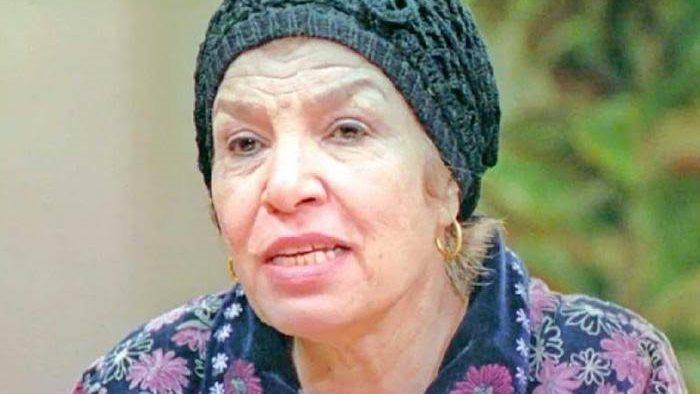
Egyptian director Khaled Diab has drawn attention to the issue of honoring veteran artists after expressing his surprise that beloved actress Enam Salousa has not yet received a major tribute reflecting the value of her long artistic career.
In a message shared on social media, Diab directly asked:
“Isn’t it time for Enam Salousa to be honored? Or do artists have to first become ‘late artists’ before they are celebrated?”
💬 Although the message was short, its meaning went far beyond a call to honor one actress. It highlighted a recurring issue in the entertainment industry: the tendency to recognize some artists very late in life—or only after their passing.
⭐ Enam Salousa: A Career Spanning Decades
Enam Salousa is widely regarded as one of the most recognizable supporting actresses in Egyptian cinema and television.
Her artistic journey began in the 1960s, and over the decades she built an extensive body of work across film, television, and theater.
🎬 She was rarely dependent on leading roles to establish her presence. Instead, she became known for her ability to transform even relatively small supporting parts into memorable characters.
This is one of the most difficult achievements in acting: creating a character that stays with audiences even when the performer is not the central star of the production.
🎥 From Theater to Cinema and Television
Salousa's career has crossed several generations of Egyptian entertainment.
She worked in theater during the early stages of her career, gaining experience that helped shape her acting style and stage presence.
She later became a familiar face in Egyptian cinema, appearing alongside generations of major stars and contributing to films that became part of the country's popular cultural memory.
📺 Television also played a major role in establishing her relationship with audiences, particularly as Egyptian drama became a central part of everyday family life.
Her ability to move between different formats helped her remain relevant for decades.
❤️ Why Audiences Remember Enam Salousa
Perhaps the most distinctive quality of Enam Salousa's career is that she never needed to be the main star of a production to become memorable.
She frequently portrayed mothers, neighbors, employees, working women, ordinary members of Egyptian society, and characters from different social backgrounds.
✨ Her strength was in the details.
A particular expression, tone of voice, reaction, or manner of speaking could make a seemingly ordinary character feel completely authentic.
That is why discussing Enam Salousa is not simply about counting the number of productions in which she appeared.
It is about recognizing an actress who built her reputation through consistency, versatility, and the ability to create believable characters.
🏆 Should Artists Be Honored While They Are Alive?
The question raised by Khaled Diab carries a deeply human dimension.
An award or tribute is not simply a trophy or certificate. For an artist, recognition during their lifetime can be a powerful message that their years of work have been seen, appreciated, and remembered.
🕊️ When recognition comes only after death, however, the meaning can change. Instead of celebrating the artist personally, the tribute becomes part of remembering someone who is no longer there to hear the applause.
This is what makes Diab's question particularly powerful.
❓ Why wait until an artist is gone before giving them the appreciation they deserved while they were still here?
🎬 Recognition During Life Has a Different Meaning
There is a significant difference between honoring an artist while they are present and honoring them after their death.
When an artist is celebrated during their lifetime, the occasion can bring together different generations.
👩🎨 Young performers can meet and learn from experienced artists.
🎭 Veteran performers can feel that their years of work have not gone unnoticed.
❤️ Audiences can personally express their gratitude to artists who have accompanied them through different stages of life.
For that reason, lifetime recognition can become an important part of preserving cultural and artistic memory.
📺 Artistic Value Is Not Measured Only by Lead Roles
One of the most important lessons from Enam Salousa's career is that an actor's value should not be measured solely by the size of their role.
Film and television productions depend on large ensembles of performers who give supporting characters depth and authenticity.
Salousa belongs to the generation of actors who could create a complete personality within a limited amount of screen time.
🎬 Her career demonstrates that true artistic influence is not always connected to being the biggest name on a poster.
Sometimes, it is the actor who appears for a few minutes and leaves the audience remembering the character years later.
🌟 A Career Known by Multiple Generations
Another remarkable aspect of Enam Salousa's career is her ability to remain recognizable across generations.
Audiences who grew up watching Egyptian cinema and television decades ago know her work, while younger viewers have also encountered her through newer productions and repeated broadcasts of classic works.
That kind of longevity is extremely difficult in an industry where trends, stars, and audience preferences change rapidly.
📌 An artist who remains recognizable and respected across several generations has built a cultural legacy that deserves serious recognition.
💬 Khaled Diab's Message Is Bigger Than One Actress
Although Diab's comments focused on Enam Salousa, the issue he raised can apply to many veteran artists who have spent decades contributing to Egyptian culture without receiving the recognition they deserve.
The problem is not necessarily a lack of talent or achievement.
Sometimes, the issue is that recognition itself needs to become more organized and consistent.
🏆 Festivals and cultural institutions can create regular programs celebrating artists with long careers.
🎭 Greater attention can be given to performers whose impact came through supporting and character roles.
📺 The industry can also use its platforms to introduce younger generations to artists who helped shape Egyptian cinema, theater, and television.
🧡 Enam Salousa Deserves to Be Celebrated
Ultimately, Khaled Diab's question leaves the entertainment community with an important issue to consider:
Do we really need to wait until an artist dies before we fully recognize their value?
Enam Salousa is more than a name in the credits of hundreds of productions. She represents a generation of Egyptian performers who helped build the artistic identity of cinema, television, and theater over many decades.
🌷 Honoring her would therefore be more than celebrating one actress. It would also mean celebrating the wider generation of artists whose work became part of the collective memory of Egyptian audiences.
Conclusion
🎭 Honoring an artist during their lifetime is not simply a gesture of appreciation—it is recognition of an entire journey of dedication and creativity.
Khaled Diab's comments about Enam Salousa have opened an important conversation: Why do we sometimes wait until artists are gone before saying the words they deserved to hear while they were still with us?
❤️ Perhaps the most meaningful tribute is one an artist can personally experience—hearing the applause, seeing the appreciation, and knowing that decades of work have left a lasting impact.
Enam Salousa deserves to hear “thank you” now—not after it is too late. 🌷🎬