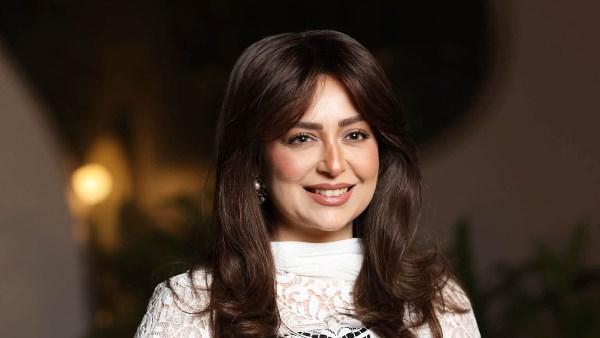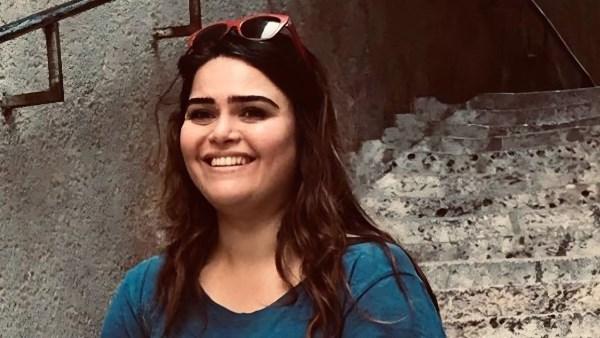

Syrian actress Nanda Mohamed has revealed new details about her journey of learning and mastering the Egyptian Arabic dialect, explaining that the process went far beyond simply memorizing Egyptian words.
For Nanda, mastering the dialect meant understanding the rhythm, emotions and natural way Egyptians communicate. 🎭🇪🇬
During a television interview, the actress discussed how her theater experience in Egypt and her daily interaction with Egyptian society helped her gradually become more comfortable with the dialect.
She also highlighted the important role her husband played in helping her prepare for roles and improve her pronunciation.
🎭 Her Egyptian Theater Beginning
Nanda explained that she began working in theater in Egypt shortly after arriving in the country, joining Al-Ma'bad Theater Company under director Ahmed El Attar.
The experience became an important part of her artistic development.
Theater gave her direct contact with Egyptian audiences and required her to deliver dialogue naturally and quickly, making it an effective practical environment for learning the dialect.
Unlike some forms of filmed acting, theater does not always allow performers to stop and repeat every line.
This helped Nanda develop a more spontaneous relationship with Egyptian pronunciation and speech patterns. 🎬
🇪🇬 The Egyptian Dialect Is More Than Words
According to Nanda, the biggest challenge was not simply pronouncing Egyptian words correctly.
The real challenge was understanding the feeling, rhythm and expression behind them.
The same Arabic sentence can sound completely different depending on how quickly it is delivered, where the speaker pauses and which words receive emphasis.
For an actress, these details can completely change the feeling of a scene.
Nanda therefore wanted to reach a point where viewers would not feel that she was simply performing an Egyptian accent, but rather that her character naturally belonged to an Egyptian environment.
❤️ Her Husband’s Important Support
Nanda spoke warmly about her husband’s role in her development, describing him as one of the most helpful people in her home life and artistic preparation.
She said:
“My husband worked with me incredibly, and he was the person who helped me the most at home.”
He would review scripts with her and correct certain words and phrases, helping her find more natural Egyptian pronunciation.
His role was not simply about correcting language.
It was about helping her understand how Egyptians naturally deliver their everyday speech.
🎵 Music and the Rhythm of Language
Nanda also explained that her husband is a musician, giving him a strong understanding of rhythm.
That background became useful because dialects are not only about pronunciation.
They also depend heavily on vocal rhythm and timing.
A sentence can be grammatically correct but still sound unnatural if its rhythm does not match the way native speakers communicate.
Through repeated practice and corrections, Nanda gradually became more comfortable with the natural flow of Egyptian speech. 🎶
🗣️ “You’ve Got It Now… You Caught the Spirit”
One of the most meaningful moments Nanda recalled was when her husband told her:
“You’re completely fine now… you caught the spirit.”
For her, the comment represented more than simply passing a pronunciation test.
It meant that she had managed to capture something deeper about the dialect.
The goal was no longer just to pronounce Egyptian words correctly, but to understand the personality and emotional rhythm behind the way Egyptians speak.
🎬 Theater as a School for Dialect
Nanda also credited her continuous theater work in Egypt and abroad with helping her improve.
Theater creates constant interaction with audiences and allows actors to hear language being used in different contexts.
Over time, expressions that initially require conscious attention can become automatic.
This is often the difference between simply knowing a dialect and actually speaking it naturally.
🌍 Between Syria and Egypt
Nanda’s experience also reflects the challenges faced by Arab performers working across different linguistic environments.
Arabic connects countries across the region, but each society has its own vocabulary, rhythm and pronunciation.
For actors, these differences can be challenging but also provide an opportunity to expand their artistic range.
Moving between dialects allows performers to build greater flexibility and take on characters from different cultural backgrounds.
💡 Why Dialect Matters to Actors
For an actor, dialect is not a minor detail.
When portraying an Egyptian character, speech can become an essential part of the character’s identity, alongside clothing, body language and movement.
Dialect can communicate age, social background, education and even emotional state.
A noticeable pronunciation mistake can therefore take viewers out of a scene, while natural delivery makes the character more believable.
Nanda’s experience demonstrates that mastering a dialect requires practice, listening, interaction and continuous training rather than simply memorizing Egyptian vocabulary.
🇪🇬 “I Live in Egypt, Not Egypt”
Nanda ended her comments with a humorous statement reflecting her relationship with Egypt after years of living and working there.
She said:
“I live in Egypt, not Egypt… Egypt and Egypt have reached an advanced stage.”
The playful comment reflects how Egyptian speech has become part of her everyday experience rather than something she only uses professionally.
Her journey began with learning Egyptian pronunciation, but eventually became a deeper attempt to understand the spirit of Egyptian speech.
✨ And perhaps that is the most important lesson for any actor working outside their original environment:
Learning the words is only the beginning.
The real challenge is learning how people feel those words.
For Nanda Mohamed, the journey seems to have moved from:
“How do I pronounce this word?”
to the much more important question:
“How would an Egyptian naturally say it?” 🇪🇬❤️
Continuation.