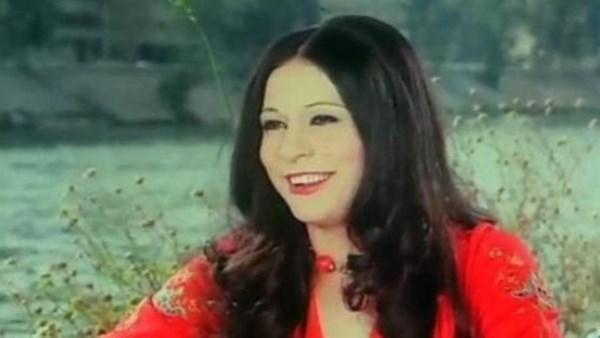

In one of her rare and deeply insightful interviews before her passing 💔, the late Egyptian icon Sohair Zaki opened up about the world of belly dance, not merely as a performance art, but as an integral part of Egyptian and Arab cultural identity with roots stretching back thousands of years.
Her reflections were far from ordinary. She aimed to correct widespread misconceptions about belly dance, particularly the ongoing debate about its origins. Sohair Zaki clearly stated that belly dance is not a foreign import, but rather a deeply rooted Egyptian art form 🌿.
She referred to ancient wall carvings and temple drawings in Egypt that depict dance movements, suggesting that dance was an essential part of social and ritual life in ancient Egyptian civilization.
According to her, belly dance evolved over centuries but preserved its core emotional essence—expression, rhythm, and connection with music 🎶—making it a uniquely Eastern art form that cannot be replicated elsewhere.
During the interview, Sohair Zaki also revealed a long-held idea close to her heart: producing a documentary-style project titled “A Day in the Life of a Dancer” 🎬. The goal was to present a realistic and human perspective of dancers’ lives beyond stereotypes and surface-level judgments.
She believed society often misunderstood dancers, seeing only the performance while ignoring the discipline, training, and emotional challenges behind the scenes.
Her vision aimed to highlight the human side of dancers—their daily struggles, dedication, and balance between personal and professional life 💃✨.
This concept reflected a forward-thinking approach to artistic documentation, long before such narratives became widely appreciated in media discourse.
Sohair Zaki rose to fame as one of Egypt’s most iconic belly dancers during the mid-20th century. She began her artistic journey in Alexandria before moving to Cairo, where her career flourished 🌟.
She later appeared in several Egyptian films starting in the 1960s, gaining recognition not only as a dancer but also as a cinematic presence alongside major stars of that era.
In the early 1990s, she retired from artistic life after marrying photographer Mohamed Amara, choosing a quieter life away from the spotlight while leaving behind a strong artistic legacy 💫.
In her final days, she suffered from severe dehydration-related health complications before passing away, marking the end of an era for one of Egypt’s most influential dance figures.
On social media platforms, especially Facebook 💬, her old interviews resurfaced and sparked renewed discussions about her views on belly dance and cultural identity.
Many users praised her vision of documenting dancers’ lives, describing it as a groundbreaking idea that could have reshaped public understanding of the profession.
Today, Sohair Zaki is remembered not only as a performer but as a cultural voice who attempted to redefine belly dance as an art form deeply connected to history, identity, and human expression ✨.