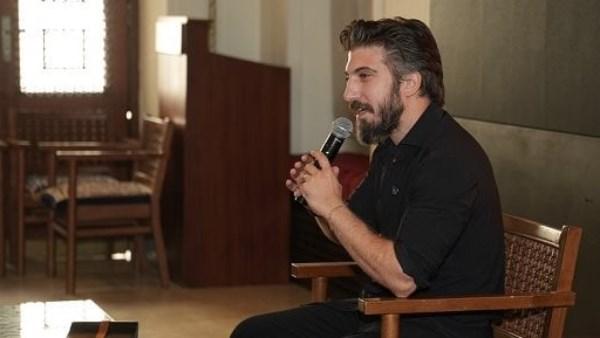

Al-Sudair Masoud Discusses the Meaning of Directing at MedFest Egypt 🎬
Filmmaker Al-Sudair Masoud took part in a masterclass held as part of the eighth edition of MedFest Egypt, titled “Exploring How to Read a Scene and Shape Its Visual Language,” with support from ESLSCA University.
During the masterclass, Al-Sudair Masoud discussed several aspects of filmmaking, focusing on how directors approach scenes and how they can build and develop their own visual language in a way that serves the artistic work and reflects the filmmaker’s vision.
Al-Sudair Masoud: What Is Directing?
Al-Sudair Masoud began his discussion with a question that may appear simple at first, yet carries a difficult answer: What is directing?
He explained that, from his perspective, directing is about making the audience see what the director wants them to see, while at the same time hiding what the director wants to keep away from them.
This approach means that the director’s role goes beyond simply transferring the events written in a screenplay onto the screen. It also involves controlling how the audience receives the scene, where their attention is directed, and how they interact with its visual details.
This vision highlights the importance of visual language in filmmaking. Choosing what appears in front of the camera and what remains outside the frame becomes an essential part of the director’s tools for shaping the story and guiding the viewer’s attention.
From Advertising to Drama.. A Different Experience
Al-Sudair Masoud also spoke about his professional beginnings, explaining that he studied directing in Beirut before working in both Beirut and Egypt. He also expressed his happiness about participating in MedFest Egypt and having the opportunity to speak with people interested in filmmaking and exchange ideas about directing and visual language.
He explained that he came from the world of advertising, where he worked for five years before moving into drama. According to Masoud, making that transition was not easy.
He pointed out that working in advertising is different from working in drama, particularly because a drama director is expected to work within what has been written in the screenplay. This creates a different set of challenges while developing and executing a project.
The Director’s Relationship with the Screenplay
Al-Sudair Masoud also addressed the relationship between the director and the screenplay, explaining that it is rare for a director to completely agree with a script.
He noted that filmmaking naturally involves discussions and differences in perspectives, which can create a degree of conflict between the director’s vision and what is written in the screenplay.
In some cases, directors may choose to reshape the work in a way that brings it closer to their own artistic vision.
According to Masoud, one of the director’s fundamental responsibilities is to shape the project in a way that suits their vision. Directing, therefore, is not limited to executing a written script. It also involves determining how that script will be presented and transformed into a complete visual experience.
Shaping Visual Language Is an Essential Part of Directing ⭐
Throughout the masterclass, the discussion of directing was closely connected to the idea of building visual language, one of the most important tools a filmmaker uses to express their vision.
A cinematic scene does not depend solely on dialogue or events. Image, framing, and the decision about what the audience sees or does not see all work together to create an experience that carries the director’s perspective.
From this standpoint, Al-Sudair Masoud’s participation in the masterclass “Exploring How to Read a Scene and Shape Its Visual Language” offered the audience an insight into his approach to working with both image and script, as well as his personal understanding of the director’s role in shaping a project.
MedFest Egypt Continues to Highlight Filmmaking Experiences
The masterclass comes as part of the eighth edition of MedFest Egypt, which features discussions and masterclasses that give audiences and cinema enthusiasts an opportunity to learn more about filmmakers’ experiences and discuss the tools involved in filmmaking.
Such sessions create space for conversations about different stages of film production, from reading and understanding a scene to deciding how it should ultimately be presented visually.
Masoud’s discussion presented directing as a continuous process of choice: choosing what the audience sees, what remains hidden, how their attention moves through the scene, and how the director can maintain a personal vision while transforming a screenplay into images.
🎬 Do you agree that controlling what the audience sees—and what remains hidden—is at the heart of directing? Share your opinion in the comments.