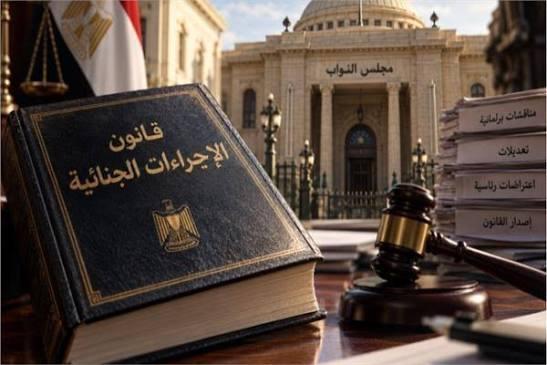

Has the New Criminal Procedure Law Abolished the Death Penalty? | Legal Consultant Ahmed Gomaa
Egypt's new Criminal Procedure Law has prompted discussion about the effect of certain provisions on penalties for serious crimes, particularly the death penalty in specific murder cases. This discussion relates to a provision allowing reconciliation in certain legally defined offenses and providing for a reduction in punishment under the applicable legal rules. However, abolishing the death penalty from Egyptian law is different from allowing a reduced sentence in particular cases under specific conditions. The new law does not generally abolish capital punishment; rather, it includes a provision that may affect the sentence in certain cases. Legal Consultant Ahmed Gomaa explains the key legal distinctions involved.
Contact Legal Consultant Ahmed Gomaa
For inquiries about criminal cases, penalties, and related legal procedures, you can contact Legal Consultant Ahmed Gomaa using the following details.
Phone: 01008192188
Address: Al-Ordonia District, Al-Massa Towers 2, first upper floor, opposite Giston Post Office, 10th of Ramadan City, Sharqia Governorate, Egypt.
.jpg)
Has the New Criminal Procedure Law Abolished the Death Penalty in Egypt?
No. The enactment of Criminal Procedure Law No. 174 of 2025 does not mean that the death penalty has been abolished from Egyptian legislation. Instead, the law includes provisions concerning reconciliation in certain offenses and the possible reduction of punishment resulting from that reconciliation.
Three different legal concepts must be distinguished: abolishing a penalty from legislation, reducing the sentence in a particular case, and changing the procedures governing a trial or the execution of a judgment. Each has a different legal basis, and a procedural amendment should not be described as a general abolition of a penalty established under criminal law.
The possibility of imposing the death penalty remains connected to the statutory provisions that prescribe it, the legal elements of the offense, criminal liability, and the applicable procedural safeguards. Therefore, describing the new law as having abolished the death penalty is legally inaccurate.
What Does Article 22 of the New Criminal Procedure Law Provide?
Article 22 of Law No. 174 of 2025 addresses the possibility of recording reconciliation between an accused person and the victim's heirs, or their specially authorized representative, in certain specified murder offenses under the Penal Code. The text permits reconciliation up to the point when a final, unappealable judgment is issued in the case.
The offenses referred to include specified offenses under Articles 230, 233, 234 in its first and second paragraphs, 235, and 236 in its first paragraph of the Penal Code. This provision does not automatically extend to every murder offense or every crime that may carry the death penalty.
Under the provision, reconciliation in the covered cases results in a reduction of punishment in accordance with Article 17 of the Penal Code, subject to the applicable legal conditions, the nature of the offense, and the procedural stage of the case.
The significance of this provision is that it may create a legal basis for changing the sentence in certain cases where the death penalty was at issue. However, it does not automatically eliminate criminal liability or necessarily result in acquittal.
How Can Reconciliation Affect the Death Penalty?
Where the statutory requirements for reconciliation are met in an offense covered by Article 22, the prescribed legal effect is a reduction of punishment under Article 17 of the Penal Code—not the abolition of the death penalty from Egyptian law.
In a case involving a death sentence, the reduction may result in another penalty, such as life imprisonment or aggravated imprisonment, depending on the applicable legal rules and the court's determination. The sentence in any individual case remains subject to the relevant legislation and its specific circumstances.
It should not be assumed that submitting a waiver or signing a reconciliation agreement will always produce the same result. The offense must fall within the statutory categories, the reconciliation must be recorded in the legally required manner, and it must be established within the procedural period permitted by the provision.
For these reasons, reviewing the case file and identifying the precise legal classification of the charge are essential to determining whether reconciliation can affect the sentence.
Which Offenses Are Covered by Reconciliation Under the New Law?
The provision does not allow reconciliation in every homicide offense without distinction. Instead, it identifies particular offenses by referring to specific articles of the Penal Code.
These include the cases covered by Articles 230, 233, 234 in its first and second paragraphs, 235, and 236 in its first paragraph, within the scope of Article 22's reference. The exact statutory provisions and facts must be reviewed before determining whether the rule applies.
The commonly used name of an offense is not enough to establish its legal classification. The classification may depend on criminal intent, the circumstances surrounding the act, and the available evidence. Reconciliation between the parties also does not automatically change the legal classification; its effect must be assessed under the provision applicable to the case.
Accordingly, determining whether a case may benefit from this rule requires reviewing the court file and the relevant legal provisions rather than relying solely on the existence of an agreement between the accused and the victim's heirs.
Does the Provision Apply to Cases in Which Death Sentences Have Already Been Issued?
The answer depends on the status of the case, whether the judgment has become final, the legal provisions that may apply, and whether the requirements for benefiting from the rule have been met.
In one case, the Court of Cassation considered the effect of Article 22 as a provision more favorable to the accused, and the death sentence was reduced following the recording of reconciliation in that case. However, the result of one case cannot automatically be extended to all death sentences. Application depends on the specific facts and procedural status of each matter.
It is also important to note that Criminal Procedure Law No. 174 of 2025 originally set a date for its provisions to take effect. That date was subsequently amended by Law No. 160 of 2026, setting October 1, 2027, as the commencement date. A separate legal question may nevertheless arise regarding the application of a substantive provision more favorable to an accused person before the law's general commencement date, subject to the applicable legal rules and relevant judicial decisions.
Therefore, determining the effect on an existing death sentence requires careful review of the judgment's date and status, the facts of the case, and the statutory provisions that may apply.
Why Is Legal Advice Important in Death Penalty Cases?
Cases in which the death penalty may be imposed require careful review of the evidence, the legal classification of the charges, the procedures followed, and the safeguards provided by law. Assessing the effect of reconciliation or a provision more favorable to the accused also requires verifying that the statutory conditions apply to the particular case.
Legal consultation can help identify relevant provisions, clarify the procedural status of the case, assess the available documents and judgments, and explain the legal options that may be considered in light of the actual circumstances.
It is not possible to determine whether a sentence can be reduced or a judgment changed without reviewing the case file. Each case has its own facts and procedural history, and final decisions remain subject to the law and the jurisdiction of the competent courts.
Contact Legal Consultant Ahmed Gomaa
If you want to understand how the new Criminal Procedure Law may affect the death penalty, or whether the reconciliation and sentence-reduction provisions may apply to a particular case, a review of the relevant legal details is an important step.
Contact Legal Consultant Ahmed Gomaa for inquiries about related legal matters.
Phone: 01008192188
Address: Al-Ordonia District, Al-Massa Towers 2, first upper floor, opposite Giston Post Office, 10th of Ramadan City, Sharqia Governorate, Egypt.