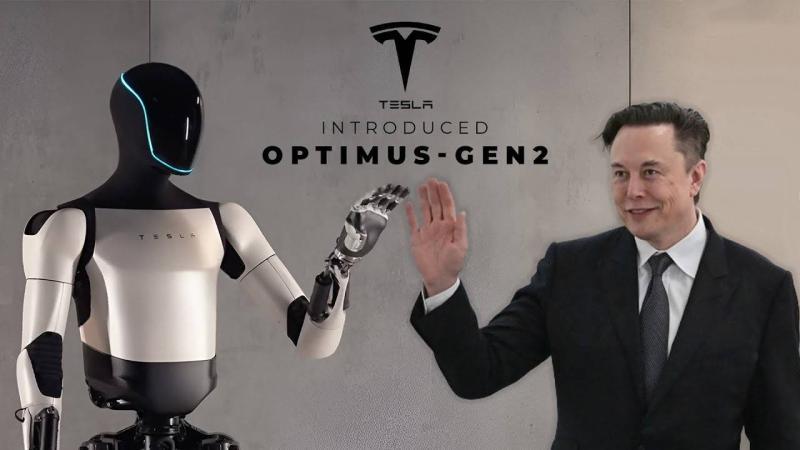

In an exciting development, Elon Musk posted a 36-second clip on platform X showing Tesla’s Optimus robot performing Kung Fu moves alongside a human instructor. The robot demonstrates high accuracy and fluidity in mimicking the instructor’s movements. At the beginning of the video, the robot and the trainer exchange a traditional greeting before engaging in a friendly training session involving a series of defensive moves, kicks, and strikes. The robot responds instantly and dynamically. At one point, the robot receives a slight push but quickly regains balance and continues performing smoothly and realistically.
In response to questions about whether the robot was remotely controlled by a human, Musk confirmed that all movements were “entirely powered by AI” with no direct human intervention. This clarification is significant because it distinguishes this demonstration from previous instances where Optimus was remotely controlled for simple tasks such as serving popcorn at Tesla restaurants. (thehansindia.com)
What makes this demonstration noteworthy is the robot’s noticeable improvement in motor balance and immediate response to stimuli. Despite the challenges robots face when performing complex movements, Optimus shows the ability to adjust its body posture, shift its center of gravity, and react to sudden forces. The video also suggests that hand or finger movements were not prominently featured, possibly indicating that this version has not yet fully integrated advanced limb technologies. (interestingengineering.com)
It’s worth noting this is not the first time Musk has highlighted Optimus’ ability to learn by watching humans without prior comprehensive programming. He has mentioned previously that the robot has learned tasks like vacuuming and sorting tools simply by observing. He also revealed that 80% of Tesla’s future value could come from the Optimus project alone, with plans to produce around 5,000 units by 2025. (techcrunch.com)
This showcase puts Tesla at the forefront of the race to develop intelligent robots capable of performing complex tasks independently and may signal a new era of human-machine interaction in daily and professional environments.