🧠 Abnormal EEG Results and Epilepsy | Dr. Hatem Anwar Ismail Clinic
If an electroencephalogram (EEG) shows irregular electrical activity, patients and their families may wonder what the results mean and whether they indicate epilepsy or require further medical evaluation.
An electroencephalogram (EEG) records the electrical activity of the brain and helps doctors evaluate certain neurological conditions, particularly when seizures are suspected or unexplained symptoms occur. However, an abnormal EEG does not necessarily mean that a person has epilepsy, and a normal EEG does not rule it out in every case.
If you are looking for a medical evaluation of your EEG results or experience recurrent episodes or symptoms that may be associated with epilepsy, you can contact Dr. Hatem Anwar Ismail Clinic to schedule an appointment and discuss your condition.
📞 For appointments and inquiries: 01282511682
💬 WhatsApp: Message the clinic on WhatsApp
🔎 What Is an Electroencephalogram (EEG)?
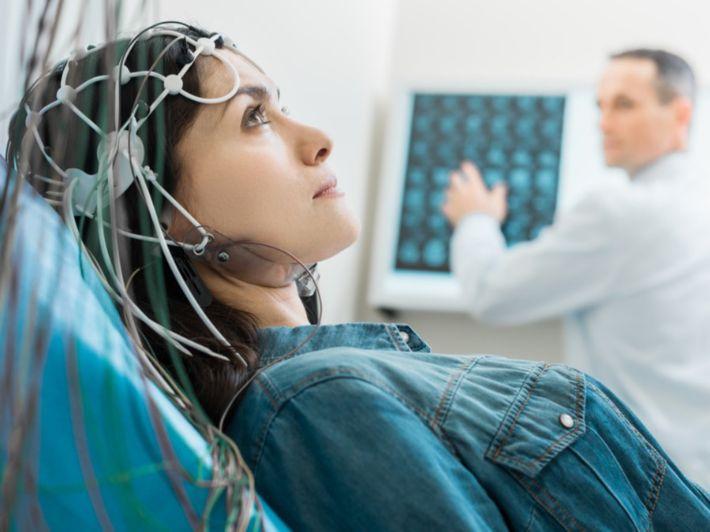
An electroencephalogram, commonly known as an EEG, is a test that records the electrical activity produced by brain cells using electrodes placed on the scalp.
Doctors may use this test to evaluate certain neurological conditions. It can be requested when a patient experiences symptoms such as temporary loss of consciousness, seizures, recurrent involuntary movements, or episodes of staring and unresponsiveness.
The interpretation of an EEG depends on the pattern, distribution, and timing of the recorded brain waves, as well as the patient's symptoms and medical history.
Therefore, an EEG result should not be used alone to diagnose a neurological condition. It needs to be interpreted alongside the clinical examination and other relevant medical information.
⚡ What Does an Abnormal EEG Mean?
An abnormal EEG may indicate changes in the brain's electrical activity, but the meaning of these changes depends on their nature and how they relate to the patient's symptoms.
Some EEG findings may support a suspicion of epilepsy, while other abnormalities do not necessarily indicate epileptic seizures.
Common types of findings include:
-
Epileptiform activity: Certain electrical patterns or discharges may support an epilepsy diagnosis when they are consistent with the patient's symptoms.
-
Nonspecific abnormalities: These may indicate changes in electrical activity but are not sufficient on their own to identify a specific condition.
-
A normal EEG: This does not definitively rule out epilepsy because abnormal activity may not occur during the recording period.
For this reason, EEG results should be interpreted by a doctor who can relate the findings to the patient's symptoms and medical history, rather than treating every abnormal finding as definite evidence of epilepsy.
🧠 Does an Abnormal EEG Mean You Have Epilepsy?
Not necessarily.
Epilepsy is a neurological disorder characterized by a predisposition to recurrent epileptic seizures. Its diagnosis depends on the nature of the episodes, the patient's medical history, and clinical assessment. EEG findings may help support the diagnosis.
However, abnormal electrical activity on an EEG is not sufficient to diagnose epilepsy in every person. Some individuals may have EEG abnormalities without a clear history of epileptic seizures.
Conversely, some people with epilepsy may have a normal routine EEG because epileptic activity does not appear during the recording.
If your EEG results are abnormal, it is important to review them with a doctor to understand their significance and determine whether they correspond to your symptoms.
🚨 What Symptoms May Require an Evaluation for Epilepsy?
Seizures can vary from one person to another. They do not always involve obvious convulsions or loss of consciousness.
Symptoms that may require medical evaluation include:
-
Recurrent convulsions or involuntary movements.
-
Brief episodes of unexplained loss of consciousness.
-
Staring spells accompanied by a lack of response.
-
Sudden episodes of confusion or altered awareness.
-
Repetitive movements that the person cannot control.
-
Unusual sensations that repeatedly occur in the same way before certain episodes.
-
Fatigue or confusion following a suspected seizure.
These symptoms do not automatically indicate epilepsy, as other conditions can cause similar episodes. An appropriate medical assessment is needed to determine the cause.
🔍 How Is Epilepsy Diagnosed When EEG Abnormalities Are Present?
Diagnosing epilepsy does not depend on EEG results alone. Doctors combine several sources of information to develop a clearer understanding of the patient's condition.
📋 Medical History and Description of Episodes
The doctor may ask about the nature of the symptoms, how long the episodes last, how often they occur, and whether they involve loss of consciousness, convulsions, or confusion.
🩺 Clinical Examination
A medical examination helps assess the patient's general neurological condition and identify signs that may help explain the symptoms.
⚡ Reviewing the EEG Results
The EEG is interpreted in the context of the patient's symptoms, with attention to the difference between epileptiform activity and other findings that may be nonspecific.
🧲 Additional Tests When Needed
Depending on the case, the doctor may request further investigations, such as magnetic resonance imaging (MRI), to look for structural causes or other abnormalities in the brain.
Based on the overall assessment, the doctor can determine whether additional tests, monitoring, or treatment may be appropriate.
🩻 What If the EEG Is Normal Despite Symptoms?
A routine EEG may be normal in some people with epilepsy because abnormal electrical activity may not occur during the relatively short recording period.
If epilepsy is still suspected, the doctor may recommend repeating the EEG, performing a sleep EEG, or using prolonged EEG monitoring, depending on the symptoms and clinical circumstances.
The doctor may also review descriptions or available video recordings of the episodes, when appropriate. However, a video alone is not sufficient to establish a diagnosis.
Therefore, epilepsy should not automatically be ruled out based solely on a normal EEG when the symptoms suggest that further evaluation is needed.
💊 Does Everyone With an Abnormal EEG Need Epilepsy Medication?
No.
Treatment decisions depend on the overall diagnosis, the nature of the symptoms, the type of EEG abnormalities, and other medical factors.
Some people with nonspecific EEG findings may not need antiseizure medication, while others may require treatment if the assessment confirms a condition that warrants it.
You should not start, stop, or change the dose of epilepsy medication based solely on an EEG result without consulting your treating doctor.
🚑 When Is a Seizure a Medical Emergency?
Some situations require urgent medical attention, particularly when a seizure is prolonged or repeated without the person regaining consciousness.
Call emergency medical services if:
-
A convulsive seizure lasts five minutes or longer.
-
Seizures occur repeatedly without the person regaining consciousness between them.
-
The person has difficulty breathing or does not recover their usual level of awareness.
-
The seizure occurs in water or causes a serious injury.
-
The person experiences their first clear seizure.
During a seizure, move dangerous objects away, protect the person's head, and do not attempt to restrain their movements or place anything in their mouth. When the convulsions stop, place the person on their side if possible and safe to do so, and monitor their breathing until help arrives.
👨⚕️ EEG Evaluation at Dr. Hatem Anwar Ismail Clinic
If your EEG report indicates irregular electrical activity, or you experience symptoms that require evaluation for possible epilepsy, you can contact Dr. Hatem Anwar Ismail Clinic to schedule an appointment and inquire about the appropriate medical assessment.
It is helpful to bring your EEG report and any previous medical tests. You may also prepare details about your symptoms, when the episodes occur, and any medications you currently take.
📞 Phone and appointments: 01282511682
💬 WhatsApp: Contact the clinic
📍 Dr. Hatem Anwar Ismail Clinic Address
41 Ain Shams Street – El-Naam Square – Helmeyet El-Zaitoun, Cairo, Egypt.
🕒 Working Hours
-
Saturday to Wednesday: 7:00 PM – 11:00 PM.
-
Thursday and Friday: Closed.
It is recommended to call ahead to confirm your appointment before visiting.
📞 Book an Appointment to Review Your EEG Results
A medical evaluation can help clarify the meaning of abnormalities found on an EEG and determine whether they are consistent with epilepsy or whether additional investigations may be needed.
To inquire or schedule an appointment at Dr. Hatem Anwar Ismail Clinic, contact the clinic by phone or WhatsApp.
📞 Phone and WhatsApp: 01282511682
📍 Address: 41 Ain Shams Street – El-Naam Square – Helmeyet El-Zaitoun, Cairo.
🕒 Working hours: Saturday to Wednesday, 7:00 PM – 11:00 PM.
This article is for general educational purposes and does not replace a medical examination. An abnormal EEG does not necessarily mean that a person has epilepsy, and a normal EEG does not rule it out in every case. Diagnosis and treatment depend on an individual medical assessment.