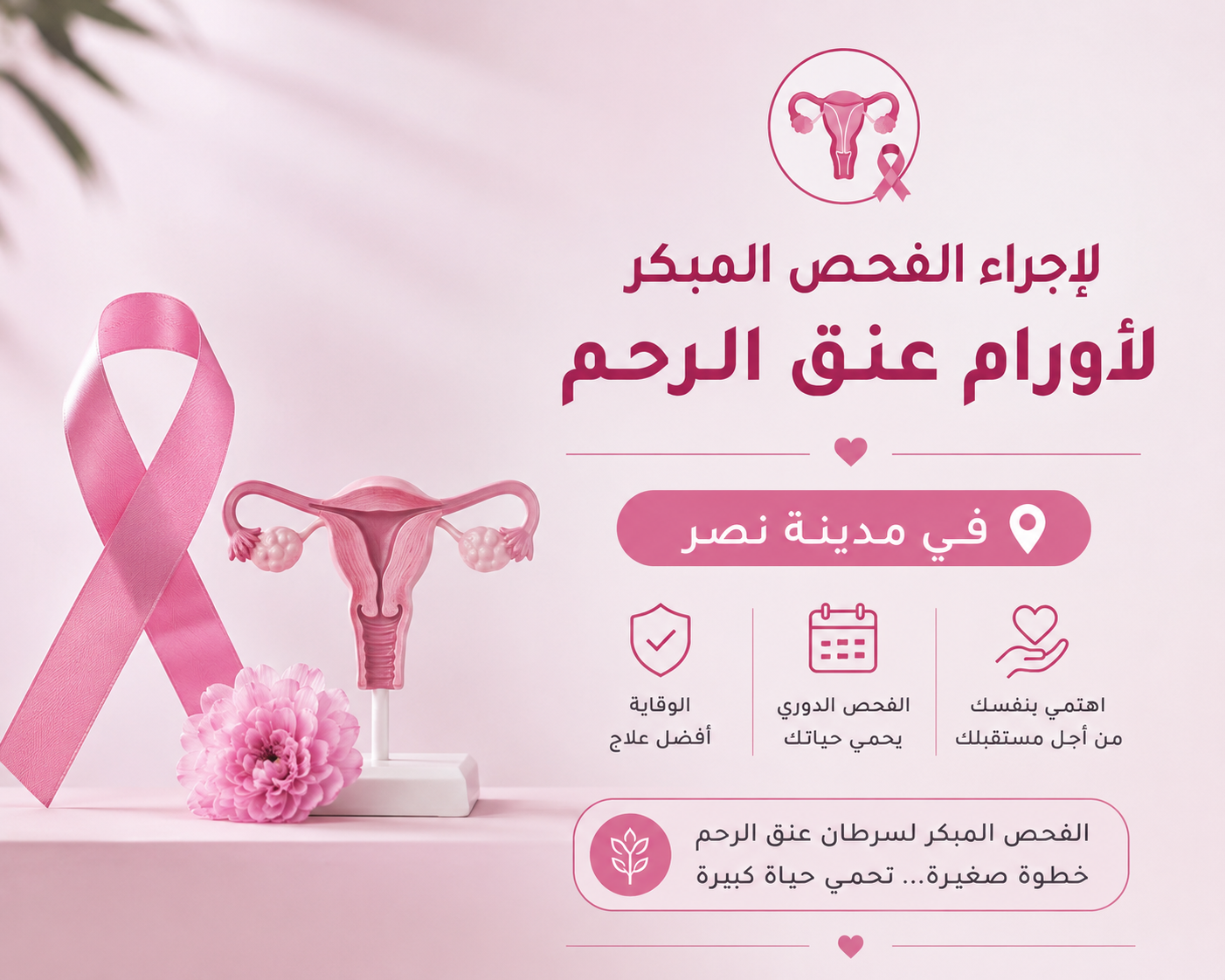

Early Cervical Cancer Screening in Nasr City with Dr. Rania El Awady, Consultant of Obstetrics and Gynecology
Early cervical cancer screening in Nasr City is considered one of the most important preventive measures that help detect abnormal changes in cervical cells before they develop into cancerous tumors. Screening usually includes the Pap Smear test and the Human Papillomavirus (HPV) test, significantly increasing treatment and recovery rates while reducing the risk of future complications.
Women's health is the cornerstone of family and community well-being, which is why prevention and early detection programs have become an essential part of modern healthcare. Cervical cancer is among the diseases that can be largely prevented through regular screening and continuous follow-up with a specialized physician.
Despite the significant advances in diagnostic and treatment methods in recent years, many women still postpone routine screening due to fear or the absence of obvious symptoms, which may result in discovering the disease at advanced stages that require more complex treatment approaches.
Therefore, early cervical cancer screening in Nasr City has become an essential healthcare service that helps women monitor their health and detect any abnormal changes at an early stage. This is one of the services provided by Dr. Rania El Awady using the latest diagnostic technologies and screening methods according to modern medical standards.
Dr. Rania El Awady strongly believes that prevention is the first step toward maintaining women's health and quality of life, and that routine screening is not only intended to detect diseases but also to provide women with reassurance regarding their health and reproductive future.
What Is the Cervix and What Is Its Function?
The cervix is the lower part of the uterus that connects the uterus to the vagina. It is an essential component of the female reproductive system and performs several vital functions that directly affect women's health and fertility.
The cervix allows menstrual blood to pass from the uterus to the outside of the body and facilitates the movement of sperm into the uterus during conception. During pregnancy, it acts as a protective barrier that keeps the baby safely inside the uterus, and during natural childbirth, it gradually dilates to allow delivery.
Despite its small size, the cervix may develop certain cellular changes that often begin very mildly and may gradually progress into tumors if not detected and treated in time. This highlights the importance of early cervical cancer screening in Nasr City as an effective preventive strategy.
What Are Cervical Tumors?
Cervical tumors refer to abnormal growth of cells in the cervix. These changes may be benign, precancerous, or cancerous, and treatment plans vary according to the type and severity of the condition.
Benign Tumors
Benign tumors are abnormal growths that do not spread to surrounding tissues or distant organs and generally do not pose a significant threat to a woman's life. However, some cases may require regular follow-up.
Precancerous Changes
This stage is one of the most important phases that can be detected through early screening, as cervical cells begin to show abnormal changes without becoming cancerous yet. This stage provides an excellent opportunity for medical intervention and prevention of disease progression.
Cancerous Tumors
Cancer develops when abnormal cells begin to grow uncontrollably and gain the ability to invade surrounding tissues and spread to other organs if left untreated.
The good news is that cervical cancer is one of the most preventable forms of cancer when regular screening and early detection are maintained.
The Difference Between Benign Cervical Tumors and Cervical Cancer
Many women mistakenly believe that any abnormal screening result automatically means cancer. However, medical evidence confirms that the majority of abnormal findings detected during early screening are not cancerous.
Benign tumors are usually localized and do not spread, whereas cancerous tumors have the ability to grow rapidly, invade nearby tissues, and spread to distant organs.
In addition, benign conditions rarely cause severe complications, while cancer requires a carefully designed treatment plan based on the stage and extent of the disease.
For this reason, early detection is one of the most important factors in distinguishing between different conditions and selecting the most appropriate treatment approach for each patient.
Stages of Cervical Cancer Development
Cervical cancer typically progresses through several stages over many years, providing physicians with a valuable opportunity for early detection before advanced disease develops.
Stage One: Mild Cellular Changes
At this stage, cervical cells begin to show minor abnormalities without causing noticeable symptoms. These changes are usually detected only through Pap smear screening and routine examinations.
Stage Two: Moderate to Severe Cellular Changes
The abnormalities become more pronounced and may require closer monitoring or simple therapeutic interventions to prevent progression.
Stage Three: Localized Cervical Cancer
Cancer cells are present within the cervix but have not spread to nearby organs. Treatment success rates are very high at this stage.
Stage Four: Local or Distant Spread
If the disease is not diagnosed early, the tumor may spread to surrounding tissues or distant organs, making treatment more complicated and challenging.
Why Is Early Cervical Cancer Screening Important?
The importance of early screening lies in its ability to detect cellular changes years before symptoms appear, giving women an excellent chance of complete recovery and successful treatment.
The benefits of early screening include:
- Detecting disease before it progresses to advanced stages.
- Increasing recovery and survival rates.
- Reducing the need for major surgical procedures.
- Preserving fertility and reproductive health.
- Reducing long-term health complications.
- Lowering treatment costs.
- Providing reassurance and peace of mind.
``` ```html
The Relationship Between HPV and Cervical Cancer
The Human Papillomavirus (HPV) is considered the primary factor associated with most cases of cervical cancer worldwide.
The virus includes more than one hundred different types, but only a limited number are classified as high-risk strains that may lead to cellular changes in the cervix over time.
It is important to understand that contracting HPV does not automatically mean developing cervical cancer. In most cases, the immune system successfully clears the infection naturally. However, persistent infection over several years may increase the risk of abnormal cervical changes that require regular medical follow-up.
Who Is More at Risk?
Several factors may increase the likelihood of developing cervical abnormalities or cervical cancer, including:
- Persistent infection with HPV.
- Smoking.
- A weakened immune system.
- Failure to undergo regular screening examinations.
- A previous history of cervical abnormalities.
- A family history of certain gynecological cancers.
- Repeated gynecological infections.
Having one or more of these risk factors does not necessarily mean that a woman will develop the disease, but it highlights the importance of regular screening and medical follow-up.
Symptoms That May Indicate the Need for Screening
In its early stages, cervical cancer usually causes no obvious symptoms. Therefore, physicians rely heavily on routine screening for early detection.
However, some symptoms should prompt immediate medical evaluation, including:
- Bleeding after sexual intercourse.
- Bleeding between menstrual periods.
- Bleeding after menopause.
- Unusual vaginal discharge.
- Persistent pelvic pain.
- Pain during sexual intercourse.
- Unusual menstrual irregularities.
These symptoms do not necessarily indicate cervical cancer, but they should never be ignored and require proper medical assessment.
What Are the Methods of Early Cervical Cancer Screening in Nasr City?
Early cervical cancer screening in Nasr City relies on a combination of advanced diagnostic methods designed to identify abnormal cellular changes before they progress into cancer.
Dr. Rania El Awady carefully selects the most appropriate screening method according to each patient's age, medical history, and risk factors.
1- Pap Smear Test
The Pap smear is one of the most important and widely used methods for detecting cervical abnormalities and early-stage cervical cancer.
During the procedure, a small sample of cervical cells is collected and sent to a laboratory for microscopic examination.
This test helps to:
- Detect early cellular abnormalities.
- Determine the severity of abnormal changes.
- Monitor women with previous cervical conditions.
- Guide treatment and follow-up decisions.
The widespread use of Pap smear testing has significantly reduced cervical cancer mortality rates worldwide.
2- HPV Testing
This test is designed to identify high-risk strains of the Human Papillomavirus responsible for most cervical cancer cases.
In many cases, HPV testing is performed alongside a Pap smear, especially in women over the age of thirty, to provide the highest diagnostic accuracy.
The results help physicians determine:
- The likelihood of future cervical changes.
- The need for closer monitoring.
- The timing of future screenings.
- The necessity for additional diagnostic procedures.
3- Clinical Examination
A clinical examination includes a complete gynecological assessment to identify any symptoms or findings that may require additional investigation.
It also provides an opportunity to review medical history, family history, and potential risk factors affecting women's health.
4- Colposcopy
Colposcopy is commonly recommended when Pap smear or HPV results are abnormal.
This procedure uses a specialized magnifying instrument that allows the physician to examine the cervix in greater detail and identify suspicious areas that may require further evaluation.
Although many women feel anxious when hearing about colposcopy, it is generally safe, simple, and completed within a short period of time.
5- Cervical Biopsy
In certain situations, a small tissue sample may be collected for further microscopic analysis.
This procedure helps physicians:
- Confirm the diagnosis.
- Determine the severity of abnormalities.
- Develop an appropriate treatment plan.
- Plan future follow-up care.
How Is a Pap Smear Performed?
A Pap smear is a simple outpatient procedure that usually takes only a few minutes and is performed safely in the clinic.
The procedure includes the following steps:
- The patient lies comfortably on the examination table.
- A small speculum is inserted to visualize the cervix.
- A small sample of cervical cells is gently collected.
- The sample is preserved and sent to the laboratory.
- The physician later reviews the results and determines the next steps if necessary.
Dr. Rania El Awady ensures that every patient understands the procedure beforehand in order to reduce anxiety and provide a comfortable experience.
Is the Screening Painful?
This is one of the most common concerns women have before undergoing screening.
Fortunately, most women experience no pain during the procedure. Some may notice mild pressure or temporary discomfort that lasts only a few seconds while the sample is being collected.
The test does not require anesthesia or complicated preparation, and patients can immediately return to their normal daily activities afterward.
When Should Screening Be Performed?
The timing and frequency of cervical screening depend on age, medical history, and individual risk factors.
Women Aged 21 to 29 Years
Routine Pap smear screening is generally recommended even in the absence of symptoms in order to detect early cellular changes before health problems arise.
Women Aged 30 to 65 Years
Women in this age group may benefit from both Pap smear and HPV testing to provide a more comprehensive evaluation.
The interval between screenings depends on previous results and individual risk factors.
Women Over 65 Years of Age
The need for continued screening is determined according to:
- Previous screening results.
- Medical history.
- The presence of additional risk factors.
- The recommendations of the treating physician.
Do All Women Require the Same Screening Frequency?
The answer is no.
The recommended screening schedule varies from one woman to another depending on several factors, including:
- Age.
- Previous screening results.
- History of HPV infection.
- Immune system status.
- Family history of gynecological cancers.
- Smoking and other risk factors.
For this reason, Dr. Rania El Awady develops an individualized screening and follow-up plan tailored to each patient's specific healthcare needs.
How Should You Prepare for Screening?
Following a few simple instructions can improve the accuracy of cervical screening results:
- Avoid sexual intercourse for 48 hours before the test.
- Avoid vaginal douches.
- Avoid vaginal creams or medications before the examination.
- Try not to schedule the test during menstruation.
- Inform your doctor about any medications you are taking.
- Inform your doctor if you are pregnant or suspect pregnancy.
These precautions help improve test accuracy and reduce the need for repeat examinations.
What Do Screening Results Mean?
Waiting for medical results can be stressful, but understanding the meaning of the findings often reduces anxiety and provides reassurance.
Normal Results
Normal findings indicate that no abnormal cervical changes were detected and that routine screening should continue according to medical recommendations.
Abnormal Results
An abnormal result does not necessarily mean cancer. In many cases, it reflects mild or moderate cellular changes that simply require monitoring or repeat testing.
Many of these abnormalities resolve spontaneously without treatment.
Positive HPV Results
A positive HPV test indicates the presence of the virus but does not mean cervical cancer is present.
Additional monitoring or diagnostic procedures may be recommended to ensure appropriate follow-up and care.
``` ```html id="k8md4s"
The Impact of Early Detection on Recovery Rates
Medical studies consistently show that detecting cervical abnormalities at an early stage significantly improves treatment success rates compared to cases diagnosed at advanced stages.
When precancerous changes are identified early, treatment can often be completed through simple and highly effective procedures without the need for major surgeries or complex therapies.
Early detection also helps:
- Preserve fertility and reproductive health.
- Reduce long-term complications.
- Shorten treatment duration.
- Lower healthcare costs.
- Improve overall quality of life.
Can Cervical Cancer Be Prevented?
Cervical cancer is considered one of the most preventable forms of cancer when appropriate preventive measures are followed consistently.
Prevention strategies include:
- Regular cervical screening.
- Receiving the HPV vaccine.
- Smoking cessation.
- Early treatment of gynecological infections.
- Maintaining a healthy lifestyle.
- Regular follow-up with an obstetrician and gynecologist.
The Role of the HPV Vaccine in Prevention
The Human Papillomavirus vaccine is one of the most important preventive tools available today, as it significantly reduces the risk of infection with the high-risk HPV strains associated with cervical cancer.
Healthcare professionals recommend vaccination at the appropriate age according to international medical guidelines.
However, it is important to understand that vaccination does not replace routine screening, and both should be considered essential components of a comprehensive prevention strategy.
The Role of Nutrition in Prevention
A healthy diet plays an important role in supporting the immune system and reducing the risk of many diseases.
Experts recommend focusing on:
- Leafy green vegetables.
- Fresh fruits.
- Foods rich in antioxidants.
- Healthy protein sources.
- Whole grains.
- Adequate water intake.
Reducing processed foods, excessive sugars, and unhealthy fats may also contribute to better overall health.
The Importance of Physical Activity
Regular physical activity supports immune function, improves circulation, and contributes to long-term health and wellness.
Exercise also helps:
- Maintain a healthy body weight.
- Reduce chronic inflammation.
- Improve sleep quality.
- Reduce stress levels.
- Enhance immune function.
Most health organizations recommend at least 150 minutes of moderate physical activity each week.
Mental Health and the Importance of Regular Reassurance
The benefits of early cervical cancer screening extend beyond physical health and include psychological well-being.
Many women experience anxiety regarding gynecological diseases and cancer, particularly if there is a family history of illness or previous experiences among relatives or friends.
Routine screening provides reassurance, reduces uncertainty, and allows women to make informed healthcare decisions with confidence.
When results are normal, women gain peace of mind. If abnormalities are detected early, treatment is often simpler and less emotionally stressful than treatment at advanced stages.
Common Misconceptions About Early Cervical Cancer Screening
I Have No Symptoms, So I Don't Need Screening
This is one of the most common misconceptions because early cervical changes usually produce no symptoms at all.
The Screening Procedure Is Painful
Most women experience little or no discomfort during screening, and the procedure is completed within only a few minutes.
An Abnormal Result Means Cancer
Most abnormal findings are not cancerous and simply require monitoring or repeat testing.
Only Older Women Need Screening
Cervical screening recommendations apply to a wide range of age groups according to medical guidelines.
The HPV Vaccine Eliminates the Need for Screening
Vaccination is extremely important, but it does not replace routine cervical screening.
The Role of Modern Technology in Early Detection
Advances in gynecology and diagnostic medicine have greatly improved the ability to detect cervical abnormalities at very early stages.
Modern technologies help:
- Improve diagnostic accuracy.
- Reduce diagnostic errors.
- Accelerate test results.
- Identify patients who require additional follow-up.
- Create more effective treatment plans.
Tips for Maintaining Cervical Health
- Attend regular screening appointments.
- Receive the HPV vaccine after medical consultation.
- Avoid smoking.
- Maintain a balanced diet.
- Exercise regularly.
- Maintain a healthy body weight.
- Treat gynecological infections promptly.
- Seek medical advice if unusual symptoms occur.
- Do not neglect routine healthcare visits.
When Should You Seek Medical Attention Urgently?
Although many symptoms may result from benign conditions, some signs require prompt medical evaluation, including:
- Bleeding after sexual intercourse.
- Bleeding after menopause.
- Frequent bleeding between menstrual cycles.
- Unusual vaginal discharge.
- Persistent pelvic pain.
- Pain during intercourse.
- Unexplained weight loss.
- Persistent fatigue without an obvious cause.
Why Do Women Choose Dr. Rania El Awady in Nasr City?
Dr. Rania El Awady is committed to providing comprehensive women's healthcare using the latest international standards in obstetrics, gynecology, and preventive medicine.
She focuses on creating a comfortable and supportive environment where patients feel safe and confident during examinations and consultations.
- Accurate diagnosis and assessment.
- Modern screening and diagnostic methods.
- Respect for patient privacy and confidentiality.
- Individualized treatment and follow-up plans.
- Preventive education and counseling.
- Continuous care after receiving results.
A Message from Dr. Rania El Awady to Every Woman
Your health deserves attention, care, and regular follow-up. Early detection is one of the most valuable investments you can make for your future health and well-being.
Do not wait for symptoms to appear. Many gynecological conditions can be treated successfully when discovered in their earliest stages.
Early cervical cancer screening in Nasr City takes only a few minutes but may make a life-changing difference in prevention, treatment, and long-term health outcomes.
Frequently Asked Questions
What Is Early Cervical Cancer Screening?
It is a group of medical tests designed to detect abnormal cervical cells before they develop into cancer.
What Is the Appropriate Age to Start Screening?
The recommended age depends on medical guidelines and individual risk factors, but screening generally begins in early adulthood.
Do Abnormal Results Mean Cancer?
No. Most abnormal findings are not cancer and simply require additional monitoring or follow-up.
Can Cervical Cancer Be Prevented?
Yes. Regular screening, HPV vaccination, and healthy lifestyle habits can greatly reduce the risk.
Is a Pap Smear Painful?
Most women experience only mild and temporary discomfort during the procedure.
How Long Does It Take to Receive Results?
Results usually become available within several days depending on the laboratory and type of testing performed.
Does HPV Vaccination Replace Screening?
No. Regular screening remains essential even after vaccination.
Contact Dr. Rania El Awady Today
If you are looking for professional early cervical cancer screening in Nasr City, do not delay taking care of your health.
Book your appointment today for a comprehensive evaluation and a personalized follow-up plan designed specifically for your healthcare needs.
Contact Information
Dr. Rania El Awady
Consultant of Obstetrics and Gynecology
📞 01113942312
📍 Address:
47 Abdel Razek El Sanhouri Street, off Makram Ebeid Street, Second Floor (Above H2O Gym), Nasr City, Cairo, Egypt.
Conclusion
Early cervical cancer screening in Nasr City represents one of the most important preventive measures for protecting women's health and identifying abnormal changes before they progress into serious disease.
Regular medical follow-up and routine screening not only improve health outcomes but also provide women with reassurance, confidence, and greater control over their future health and reproductive well-being.
```