
Flat Feet and Plantar Fasciitis in Alexandria | Dr. Abdelrahman Youssef
Flat feet and plantar fasciitis may be associated with foot and heel pain, particularly when standing or walking for long periods. Dr. Abdelrahman Youssef evaluates foot and ankle conditions to help identify the nature of the problem and the factors associated with it according to each individual case.
Dr. Abdelrahman Youssef Clinics in Alexandria: Locations and Hours
🏥 Mustafa Kamel Clinic – Roushdy
📍 Address: 402 Abu Qir Street – Roushdy, in front of Khalil El-Khayat Street, above Opel Showroom – El-Sanhoury Tower – First Floor.
🕒 Hours: Saturday, Wednesday, and Thursday from 3:00 to 5:00 PM | Monday at 8:00 PM.
📞 Booking: 01060246556 | 03/5467629
🏥 Miami Clinic
📍 Address: 270 Gamal Abdel Nasser Street, in front of Shahd El-Malika Pastry Shop and QNB Bank, Miami – Alexandria.
🕒 Hours: Saturday, Sunday, Tuesday, and Wednesday from 7:00 to 9:00 PM.
📞 Booking: 01010302668
🏥 Agami Clinic
📍 Address: Agami – Bitash, at the beginning of El-Hanafeya Street, above a Basbousa and Kunafa shop.
🕒 Hours: Monday only from 3:00 to 5:00 PM.
📞 Booking: 01021717459
💡 Please book by phone in advance before visiting the clinic. Admission and scheduling are arranged according to the order of patients physically present at the clinic.
🚨 Emergency Number Only: 0120466733
.jpg)
What Are Flat Feet?
Flat feet, also known as pes planus, is a condition in which the arch along the bottom of the foot is lower than usual or not clearly visible. It may affect one or both feet.
Flat feet may not cause problems for some people, while others may experience foot pain or fatigue, particularly after prolonged standing or walking.
Symptoms can vary from one person to another, so having flat feet does not necessarily mean that a specific treatment is required without evaluating the condition.
What Is Plantar Fasciitis?
The plantar fascia is a tissue that runs along the bottom of the foot and connects to the heel area. It helps support the foot during movement.
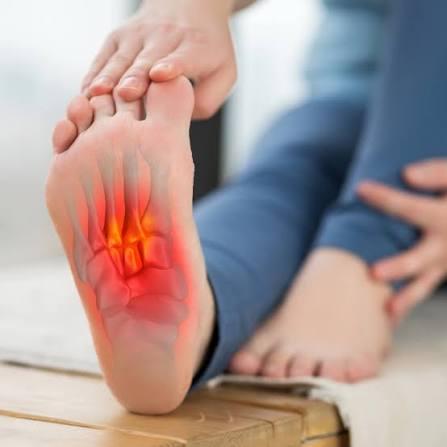
Plantar fasciitis occurs when this area becomes affected, and pain may develop around the heel or along the bottom of the foot. The pain can be particularly noticeable with the first steps after waking up or after periods of rest.
Can Flat Feet Be Associated With Plantar Fasciitis?
The way pressure is distributed across the foot can be associated with certain foot and heel problems, and flat feet may be one of the factors that affect foot mechanics.
However, having flat feet does not necessarily mean that a person will develop plantar fasciitis. Causes and contributing factors can vary from one case to another.
Therefore, identifying the cause of pain requires an evaluation rather than assuming that flat feet are the only cause.
What Does Plantar Fasciitis Pain Feel Like?
Plantar fasciitis pain may occur underneath the heel or along the bottom of the foot. It can be more noticeable when starting to walk after waking up or after sitting or resting for a period of time.
The intensity and nature of the pain can vary from person to person. Describing the symptoms, location, and timing of the pain can therefore help with evaluating the condition.
Does Every Heel Pain Mean Plantar Fasciitis?
No. Heel pain can have several possible causes, and not every case of heel pain necessarily means that plantar fasciitis is present.
For this reason, identifying the cause of pain requires an appropriate evaluation of the symptoms and the condition of the foot and ankle, particularly when the pain persists or affects walking.
When Do Flat Feet Require Medical Evaluation?
If flat feet are accompanied by persistent or recurring pain, or if they noticeably affect walking, standing, or movement, medical evaluation may be important to determine the cause of the symptoms.
Recurring heel or foot pain should also be evaluated rather than assuming that flat feet are the only cause.
How Are Flat Feet and Plantar Fasciitis Evaluated?
Evaluation depends on understanding the symptoms, the location and duration of pain, as well as examining the foot and ankle and assessing movement according to the individual case.
Based on the evaluation, the nature of the problem and the factors associated with it can be identified, and it can then be determined whether the condition requires a specific treatment approach.
Is the Treatment for Flat Feet and Plantar Fasciitis the Same?
There is no single treatment approach that is suitable for every case. Management of flat feet varies depending on the nature of the condition and whether symptoms are present. Similarly, the approach to plantar fasciitis can vary according to the severity of symptoms and the underlying problem.
Therefore, the appropriate approach is determined after evaluating each case individually.
When Should Foot or Heel Pain Not Be Ignored?
Persistent or recurring foot or heel pain should not be ignored, especially when it affects walking, daily activities, or continues without improvement.
Evaluation can help identify the cause of the problem and determine the appropriate approach instead of relying on self-diagnosis.
Flat feet and plantar fasciitis are foot conditions that may be associated with foot and heel pain. However, having flat feet does not necessarily mean that plantar fasciitis is present. Evaluating the symptoms and the condition of the foot and ankle remains an important step in identifying the cause of pain and determining the appropriate approach for each case.