
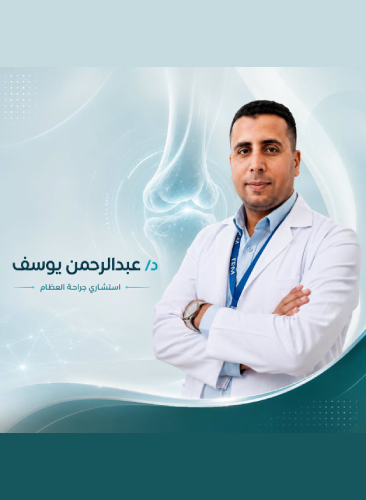
Dr. Abdelrahman Youssef
Consultant of Orthopedic Surgery, Knee & Shoulder Arthroscopy, Foot & Ankle Surgery
Contact
Available Now402 Abu Qir Street, Roushdy, in front of Khalil El Khayat Street, above Opel Showroom – El Sanhory Tower, First Floor., , Alexandria
Overview
Orthopedic, Joint and Arthroscopic Surgery in Alexandria
Description
Dr. Abdelrahman Youssef
Consultant of Orthopedic Surgery, Knee & Shoulder Arthroscopy, Foot & Ankle Surgeries
If you are looking for the best orthopedic specialist in Alexandria specializing in joint arthroscopy and sports injuries, Dr. Abdelrahman Youssef provides superior medical care for diagnosing and treating knee, shoulder, foot, and ankle conditions using the latest surgical and non-surgical techniques to restore your mobility pain-free.
🩺 Who is Dr. Abdelrahman Youssef?
Dr. Abdelrahman Youssef is a Consultant of Orthopedic Surgery, Arthroscopy, and Foot & Ankle Surgeries, and one of the leading specialists in treating sports injuries, musculoskeletal disorders, and joint conditions in Alexandria. He is distinguished by his deep expertise in performing precise arthroscopic procedures for knee and shoulder joints, as well as repairing damaged ligaments and tendons to help patients return to their active lives.
Dr. Abdelrahman is dedicated to applying the latest globally approved treatment protocols, providing accurate clinical diagnoses, and offering continuous personal follow-up for every case—whether requiring non-surgical conservative treatment or advanced surgery for deformity correction and complex fracture fixation.
🏥 Medical Specialties & Arthroscopic Surgeries
We provide a comprehensive range of specialized medical services with the highest efficiency:
- •
Arthroscopic anterior and posterior cruciate ligament (ACL/PCL) reconstruction.
- •
Arthroscopic meniscal repair and resection.
- •
Knee cartilage smoothing and early friction management.
- •
Arthroscopic rotator cuff tendon repair.
- •
Treatment of recurrent shoulder dislocation & instability.
- •
Treatment of frozen shoulder stiffness and adhesion release.
- •
Correction of foot deformities, flatfoot, and toe alignment.
- •
Treatment of chronic ankle ligament & tendon injuries.
- •
Surgical fixation of complex foot and ankle joint fractures.
- •
Fixation of complex and compound fractures body-wide.
- •
Treatment of tendon ruptures and muscle injuries for athletes.
- •
Management of hip and knee joint osteoarthritis via injections.
- •
Arthroscopic grafting and replacement of damaged cartilage.
- •
Treatment of early and advanced knee osteoarthritis.
- •
Therapeutic injections and stem cell therapy for joints.
- •
Correction of bunions (Hallux Valgus) and hammertoes.
- •
Treatment of congenital and acquired toe deformities.
- •
Joint reconstruction for toes using modern techniques.
- •
Fixation of foot bone fractures with screws and plates.
- •
Management of comminuted and complex ankle fractures.
- •
Post-fracture rehabilitation with advanced recovery programs.
- •
Early diagnosis of diabetic and neuropathic Charcot foot.
- •
Foot joint fusion and progressive deformity correction.
- •
Long-term monitoring to prevent complications and ulcers.
- •
Treatment of chronic heel pain and heel spur inflammation.
- •
Targeted shockwave therapy and PRP plasma injections.
- •
Minimally invasive endoscopic heel spur resection when needed.
- •
Endoscopic treatment of chronic Achilles tendonitis.
- •
Debridement of fibrosis and endoscopic Achilles release.
- •
Surgical correction of heel bump (Haglund's deformity).
- •
Keyhole procedures with minimal surgical incisions.
- •
Rapid recovery and return to physical activity in record time.
- •
Minimal post-operative pain and scarring using endoscopy.
🏢 Alexandria Clinics Details & Schedule
Address: 402 Abou Qir Street - Rushdy, in front of Khalil El-Khayyat Street, above Opel Showroom – El-Sanhoury Tower - 1st Floor.
Hours: Saturday - Wednesday - Thursday (3:00 PM to 5:00 PM) | Monday (8:00 PM).
Booking Numbers: 01060246556 | 03/5467629
Address: 270 Gamal Abdel Nasser Street, in front of Shahd El-Maleka Sweets & QNB Bank, Miami – Alexandria.
Hours: Saturday – Sunday – Tuesday - Wednesday (7:00 PM to 9:00 PM).
Booking Number: 01010302668
Address: El-Agami - El-Bitash, beginning of El-Hanfeya Street, above Basbousa & Konafa shop.
Hours: Monday only (3:00 PM to 5:00 PM).
Booking Number: 01021717459
💡 Prior phone reservation is required before visiting the clinic. Patient turn and admission follow the actual physical arrival sequence.

News & Articles
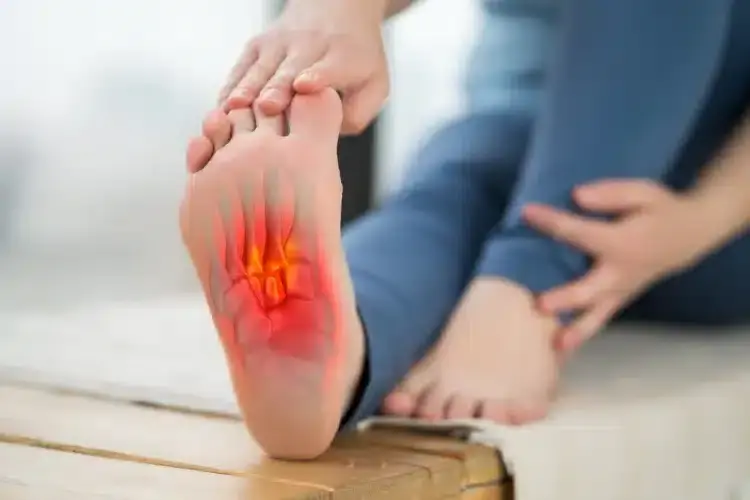
Learn about the causes and symptoms of flat feet, available diagnosis and treatment options, and when surgery may be needed with Dr. Abdelrahman Youssef, Consultant Orthopedic Surgeon and Foot & Ankle Specialist in Alexandria.
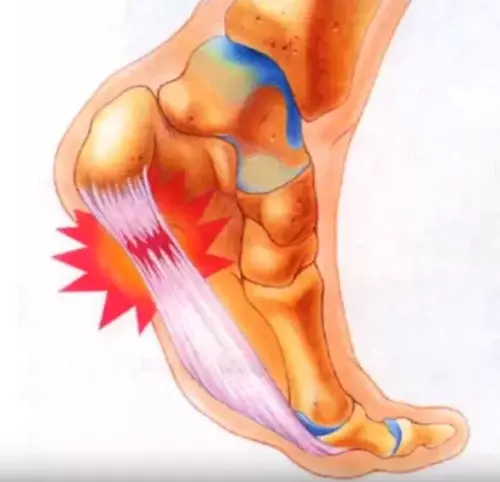
Learn the difference between plantar fasciitis, heel spurs, and Achilles tendinitis, including symptoms, pain locations, and when medical evaluation is needed with Dr. Abdelrahman Youssef in Alexandria.
Learn about the relationship between flat feet and plantar fasciitis, the causes of foot and heel pain, and when medical evaluation may be needed with Dr. Abdelrahman Youssef.
Bone pain can result from several causes, including:
- Injuries such as fractures or contusions.
- Osteoporosis or vitamin D deficiency.
- Arthritis or bone infections.
- Overexertion or intense physical activities.
- Other diseases such as tumors or infections.
Orthopedic surgery is a medical procedure used to fix fractures and injuries affecting bones and joints. This surgery helps in realigning the bones or replacing damaged joints, which aids in restoring mobility and relieving pain.
The ACL is one of the ligaments in the knee that helps stabilize the joint. If torn due to a sports injury, it can be treated through knee arthroscopy, where the arthroscope is used to repair the damaged ligament without fully opening the knee.
When a bone fractures, it is realigned into its proper position using surgery or a cast, depending on the type of fracture. If the fracture is complex, screws or plates may be used to stabilize the bone until it heals. After surgery, physical therapy is followed to rehabilitate the bones and joints.
Arthritis is a condition that causes swelling and pain in the joints and can be due to cartilage damage. If the condition is severe, it may be treated by replacing the damaged joint with a prosthetic device, such as in knee or hip replacement surgery.
A torn knee cartilage can happen due to an injury or sudden movement. If the tear is significant, it is treated with knee arthroscopy, where the damaged parts of the cartilage are removed using precise techniques without the need for a large incision.
Spinal surgery is used to fix vertebral or intervertebral disc problems that may cause back pain. If there is a herniated disc or spinal stenosis, treatment may involve removing the damaged part of the disc or bone, helping relieve pain.
A shoulder sprain can occur due to a sudden movement or heavy lifting. In some cases, shoulder arthroscopy may be needed to repair damaged tendons or ligaments. This is done through a small incision using precise tools to fix the shoulder without the need for major surgery.
Joint replacement surgery is needed when a joint becomes too damaged due to conditions like arthritis or osteoarthritis. In this surgery, the damaged joint is removed and replaced with a prosthetic joint to improve movement and reduce pain.
Sports injuries include ligament tears or muscle injuries. Orthopedic surgery is used to fix these injuries using techniques like arthroscopy to repair ligaments or damaged tissues, helping athletes return quickly to their activities.
Bone lengthening surgery is used to treat shortened limbs or bone deformities. In this surgery, a part of the bone is gradually separated using a special device to lengthen the bone until it reaches the desired length.
Knee pain can occur due to several factors, such as injuries (like sprains or ligament tears), arthritis (such as osteoarthritis), or excess weight, which places additional pressure on the joint. Sports activities or repetitive movements can also contribute to pain.
Treatment depends on the cause: if the injury is mild, rest and physical therapy may be sufficient to alleviate the pain. Cold or hot compresses can help reduce swelling, and if inflammation is present, the doctor may recommend pain-relieving or anti-inflammatory medications. In more severe cases, surgery or joint injections may be required.
