
Plantar Fasciitis vs Heel Spur vs Achilles Tendinitis: What Is the Difference?
Does heel pain mean you have a heel spur? Or could the problem actually be plantar fasciitis or Achilles tendinitis? 🤔
The truth is that heel pain can have several causes. Some conditions may produce similar symptoms, but the location, nature, and timing of the pain can help distinguish between them.
If you have persistent pain in your heel or foot, you can book an appointment with Dr. Abdelrahman Youssef for an appropriate medical evaluation.
📞 Appointments and Inquiries
🏥 Mostafa Kamel (Roushdy) Clinic
📍 Address:
402 Abu Qir Street - Roushdy, in front of Khalil El-Khayat Street, above Opel Showroom – El-Sanhory Tower - 1st Floor.
🕒 Appointments:
Saturday - Wednesday - Thursday from 3:00 to 5:00 PM
Monday at 8:00 PM
📞 Booking:
01060246556
03/5467629
🏥 Miami Clinic
📍 Address:
270 Gamal Abdel Nasser Street, in front of Shahd El-Maleka Patisserie and QNB Bank, Miami – Alexandria.
🕒 Appointments:
Saturday - Sunday - Tuesday - Wednesday from 7:00 to 9:00 PM
📞 Booking:
01010302668
🏥 Agami Clinic
📍 Address:
Agami - Bitash, at the beginning of El-Hanafiya Street, above a basbousa and kunafa shop.
🕒 Appointments:
Monday only from 3:00 to 5:00 PM
📞 Booking:
01021717459
What Is the Difference Between These Three Conditions?
Although plantar fasciitis, heel spurs, and Achilles tendinitis can all cause pain around the heel, they are not the same condition.
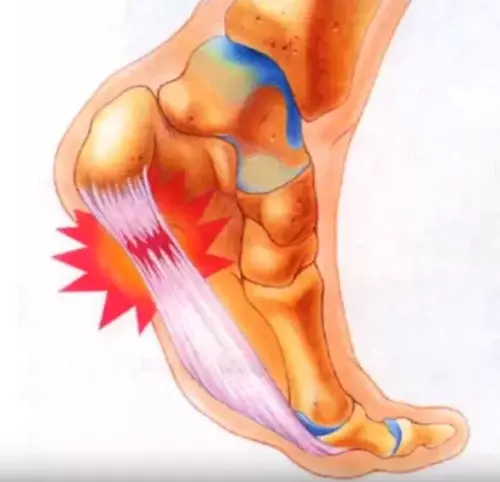
Plantar fasciitis involves the tissues along the bottom of the foot, while the Achilles tendon is located at the back of the ankle and connects the calf muscles to the heel bone.
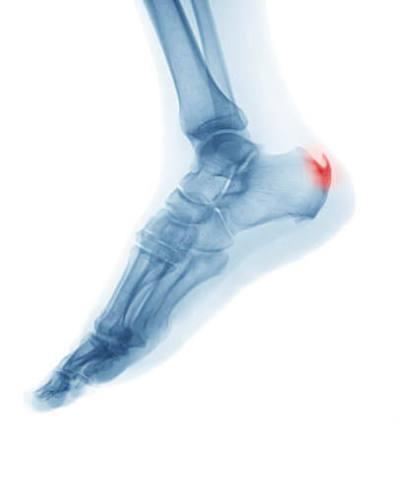
A heel spur, on the other hand, is a bony growth that may develop around the heel bone. It can be present in some people without actually being the source of their pain.
First: What Is Plantar Fasciitis?
The plantar fascia is a strong band of tissue that runs along the bottom of the foot from the heel toward the toes. It helps support the arch of the foot and absorb some of the impact during walking.
When this area is exposed to repeated stress or increased load, pain can develop around the bottom of the heel and foot.
What Does Plantar Fasciitis Pain Feel Like?
Common features include:
- Pain underneath the heel, which may extend along the sole of the foot.
- Pain that is particularly noticeable during the first steps after waking up.
- Pain after sitting or resting for a long period.
- Pain that may improve somewhat with movement and then return or worsen after prolonged standing or walking.
- Tenderness when pressure is applied to the underside of the heel.
Second: What Is a Heel Spur?
A heel spur is a small bony growth that may develop on the heel bone and can often be detected through an X-ray.
However, an important misconception should be corrected: having a heel spur does not necessarily mean that it is the cause of heel pain.
A heel spur may be present in people who do not have pain, while a person with plantar fasciitis may not have a heel spur. Therefore, simply seeing a spur on an X-ray is not enough to determine the cause of pain.
For this reason, evaluating heel pain depends on the symptoms and physical examination, not on imaging alone.
Third: What Is Achilles Tendinitis?
The Achilles tendon is the large tendon at the back of the ankle that connects the calf muscles to the heel bone.
When the tendon is exposed to repeated stress or overuse, it may become painful, causing discomfort at the back of the heel, which can sometimes extend toward the ankle or lower leg.
What Are the Symptoms of Achilles Tendinitis?
Symptoms may include:
- Pain at the back of the heel.
- Pain or stiffness around the Achilles tendon.
- Pain extending toward the ankle or lower leg.
- Increased pain during activities or movements that place stress on the tendon.
- Pain or difficulty when standing on the toes in some cases.
Plantar Fasciitis vs Achilles Tendinitis
The difference can often be simplified by looking at the location of the pain:
| Condition | Most Common Pain Location | Typical Pain Pattern |
|---|---|---|
| Plantar fasciitis | Bottom of the heel and sole of the foot | Often worse with the first steps in the morning or after rest |
| Heel spur | Around the heel bone | May be present without symptoms and does not necessarily explain the pain |
| Achilles tendinitis | Back of the heel, sometimes extending toward the ankle and calf | Usually related to the tendon and aggravated by certain activities and movements |
This distinction is important because similar heel pain does not mean that all of these conditions require the same approach or treatment.
What Can Cause Heel Pain in These Conditions?
Several factors may increase the risk of foot and heel problems, including:
A Sudden Increase in Activity
Increasing walking, running, or exercise too quickly can place additional stress on the tissues of the foot and tendons.
Prolonged Standing and Walking
Standing for long periods, particularly on hard surfaces, can increase the load placed on the feet and heels.
Excess Weight
Excess body weight places additional stress on the feet and heels and may be associated with plantar fasciitis.
Unsuitable Footwear
Shoes without adequate cushioning or proper arch support may increase stress on the foot, particularly during prolonged walking or standing.
Tight Calf Muscles or Achilles Tendon
Tight calf muscles or an inflexible Achilles tendon may increase stress on the plantar fascia and can be associated with pain underneath the heel.
Does Every Heel Pain Mean You Have a Heel Spur?
No.
This is one of the most common misconceptions about heel pain.
The presence of a heel spur on an X-ray does not automatically mean that it is the source of the pain. Therefore, the diagnosis should not depend on the X-ray alone.
The pain may be related to plantar fasciitis, an Achilles tendon problem, or another cause of heel and foot pain. A doctor can determine the most likely cause by assessing the symptoms and examining the foot and ankle.
When Should You See a Doctor?
Medical evaluation is recommended when heel pain is severe, getting worse, recurring, or affecting your ability to walk and perform normal daily activities.
You should also seek medical advice if the pain continues despite appropriate rest and self-care, or if symptoms such as tingling or loss of sensation develop.
Sudden severe pain after an injury, especially when accompanied by swelling, a popping or snapping sound, or difficulty walking, requires prompt medical evaluation to rule out a more serious injury such as an Achilles tendon rupture.
Why Should You Avoid Self-Diagnosing Heel Pain?
Pain around the heel can have several causes, and some symptoms may overlap between different conditions.
Identifying the exact location of the pain, when it appears, what makes it worse or better, and combining this information with a physical examination can help determine the underlying cause and the appropriate treatment approach.
Dr. Abdelrahman Youssef in Alexandria
If you have heel or foot pain, you can book an appointment at one of Dr. Abdelrahman Youssef’s clinics in Alexandria:
📍 Mostafa Kamel (Roushdy)
402 Abu Qir Street - Roushdy, in front of Khalil El-Khayat Street, above Opel Showroom – El-Sanhory Tower - 1st Floor.
📍 Miami
270 Gamal Abdel Nasser Street, in front of Shahd El-Maleka Patisserie and QNB Bank, Miami – Alexandria.
📍 Agami – Bitash
At the beginning of El-Hanafiya Street, above a basbousa and kunafa shop.
Conclusion
Heel pain is not a single diagnosis. It may be related to the plantar fascia, the Achilles tendon, or a heel spur that appears on an X-ray without necessarily being the source of pain.
The main distinction starts with the location, nature, and timing of the pain, but an accurate diagnosis requires appropriate medical evaluation.
If heel pain is affecting your movement or keeps coming back, do not postpone medical evaluation to identify the cause and determine the appropriate approach.