Kidney Stone Treatment with Laser and Flexible Ureteroscopy in Mohandessin | Advanced Minimally Invasive Care with Dr. Ahmed Atef Khallaf

Dr. Ahmed Atef Khallaf offers advanced diagnosis and treatment of kidney stones using the latest laser and flexible ureteroscopy techniques, selecting the most appropriate treatment plan for each patient to ensure optimal results and a faster recovery.

  Sat , August 01 2026 / 01:38 PM Updated At: 2026-08-01 13:38:48


By: Dr. Ahmed Atef Khallaf

Kidney Stone Treatment with Laser and Flexible Ureteroscopy in Mohandessin | Advanced Minimally Invasive Care with Dr. Ahmed Atef Khallaf

Kidney stones are among the most common urological conditions and can cause severe pain that significantly affects a patient's quality of life, especially when the stones move into the ureter or block the urinary tract. Thanks to major advances in urological surgery, laser lithotripsy and flexible ureteroscopy now provide a safe, precise, and minimally invasive solution for removing kidney stones without the need for traditional open surgery in most cases.

Dr. Ahmed Atef Khallaf offers advanced diagnosis and treatment of kidney stones using the latest laser and flexible ureteroscopy techniques, selecting the most appropriate treatment plan for each patient to ensure optimal results and a faster recovery.


What Are Kidney Stones?

Kidney stones are hard deposits of minerals and salts that form inside the kidneys. They can range in size from tiny crystals to large stones that occupy a significant portion of the kidney.

Kidney stones commonly develop due to:

  • Inadequate water intake.
  • High concentrations of minerals and salts in the urine.
  • Genetic predisposition.
  • Recurrent urinary tract infections (UTIs).
  • Certain chronic conditions such as gout.
  • Excessive consumption of salt and animal protein.

Symptoms of Kidney Stones

Small kidney stones may not cause noticeable symptoms. However, when a stone moves or blocks the urinary tract, symptoms may include:

  • Severe pain in one side of the back or flank.
  • Pain radiating to the lower abdomen or groin.
  • Blood in the urine.
  • Burning sensation during urination.
  • Frequent urination.
  • Nausea and vomiting.
  • Fever when infection is present.

When Do Kidney Stones Require Treatment?

The decision to intervene depends on several factors, including:

  • Stone size.
  • Stone location.
  • Degree of urinary obstruction.
  • Severity of pain.
  • Presence of infection.
  • Kidney function.

Small stones may pass naturally with conservative treatment, while larger stones often require minimally invasive procedures such as laser lithotripsy and flexible ureteroscopy.


What Is Flexible Ureteroscopy?

Flexible ureteroscopy is an advanced minimally invasive procedure in which a thin, flexible scope is inserted through the natural urinary tract without any surgical incision until it reaches the ureter and kidney.

Once the stone is located, laser fibers are used to break it into tiny fragments, which are either removed immediately or left to pass naturally through the urine.

This technique is considered one of the most effective modern treatments for kidney stones, particularly those located inside the kidney or upper ureter.


Benefits of Laser Kidney Stone Treatment

Compared to traditional surgery, laser lithotripsy with flexible ureteroscopy offers several advantages:

  • No surgical incisions.
  • Less postoperative pain.
  • Faster recovery.
  • High success rates.
  • Precise access to kidney stones.
  • Reduced risk of bleeding.
  • Ability to treat multiple stones during one procedure.
  • Suitable for stones in difficult-to-reach locations.

Who Is a Candidate for Flexible Ureteroscopy?

Flexible ureteroscopy is commonly recommended for patients with:

  • Small to medium-sized kidney stones.
  • Upper ureteral stones.
  • Stones that failed shock wave lithotripsy (ESWL).
  • Patients who are not suitable candidates for open surgery.
  • Multiple kidney stones.

The most appropriate treatment option is determined after a comprehensive evaluation and diagnostic testing.


Procedure Steps

1. Diagnosis

The evaluation typically includes:

  • CT scan.
  • Ultrasound.
  • Urinalysis.
  • Kidney function tests.
  • Blood tests.

2. Anesthesia

The procedure is usually performed under general anesthesia.

3. Flexible Scope Insertion

The flexible ureteroscope is passed through the urinary tract to reach the kidney without making any external incision.

4. Laser Stone Fragmentation

The stone is fragmented into very small pieces using a specialized laser.

5. Completion of the Procedure

A temporary ureteral stent may be inserted if necessary to facilitate urine drainage during recovery.


Is the Procedure Painful?

Patients do not experience pain during the procedure because it is performed under anesthesia. Afterward, discomfort is generally mild compared with traditional surgery and can be effectively managed with medication.


How Long Does the Procedure Take?

The procedure typically takes 30 to 90 minutes, depending on:

  • Stone size.
  • Number of stones.
  • Stone location.

Recovery After the Procedure

Most patients can expect:

  • Discharge from the hospital on the same day or the following day.
  • Return to work within a few days.
  • Gradual return to normal daily activities according to the physician's recommendations.

Can Kidney Stones Return?

Yes. Kidney stones may recur if the underlying causes are not addressed.

Dr. Ahmed Atef Khallaf provides a comprehensive prevention plan that includes:

  • Increasing daily water intake.
  • Reducing salt consumption.
  • Following a healthy diet.
  • Treating the underlying causes of stone formation.
  • Regular follow-up with imaging and laboratory tests.

Tips to Prevent Kidney Stones

  • Drink 2.5–3 liters of water daily.
  • Reduce dietary salt intake.
  • Limit excessive animal protein consumption.
  • Eat plenty of fruits and vegetables.
  • Treat urinary tract infections promptly.
  • Schedule regular follow-up visits if you have a history of recurrent kidney stones.

Why Choose Dr. Ahmed Atef Khallaf?

Dr. Ahmed Atef Khallaf is committed to providing advanced kidney stone treatment using the latest laser and flexible ureteroscopy techniques. Every patient receives a personalized treatment plan based on accurate diagnosis, ensuring high success rates, minimal surgical intervention, and rapid recovery.


Book Your Appointment Today

If you are experiencing kidney stone symptoms or are looking for advanced minimally invasive treatment, schedule your consultation with Dr. Ahmed Atef Khallaf.

📍 Mohandessin Branch
9 Abdel Hamid Lotfy Street, off El Batal Ahmed Abdel Aziz Street, Mohandessin, Giza, Egypt.

📞 Phone

  • 01206666199
  • 01143477710


Aug 09
علاج تصبغات الوجه في المهندسين

Discover effective treatments for facial pigmentation in Mohandessin with Dr. Qamaria Tarek, a specialist in dermatology, laser, and non-surgical aesthetics. Learn about the causes of facial pigmentation, dark spots, and modern treatment options for achieving a more even-looking complexion.

Aug 09
دكتور أسنان في دشنا قنا

Yakout Dental Center in Dishna, Qena provides comprehensive dental and oral surgery services, including dental treatment and cosmetic dentistry, orthodontics, dental implants, restorations, root canal treatment, and pediatric dentistry, with a focus on proper examination and patient follow-up.
Aug 09
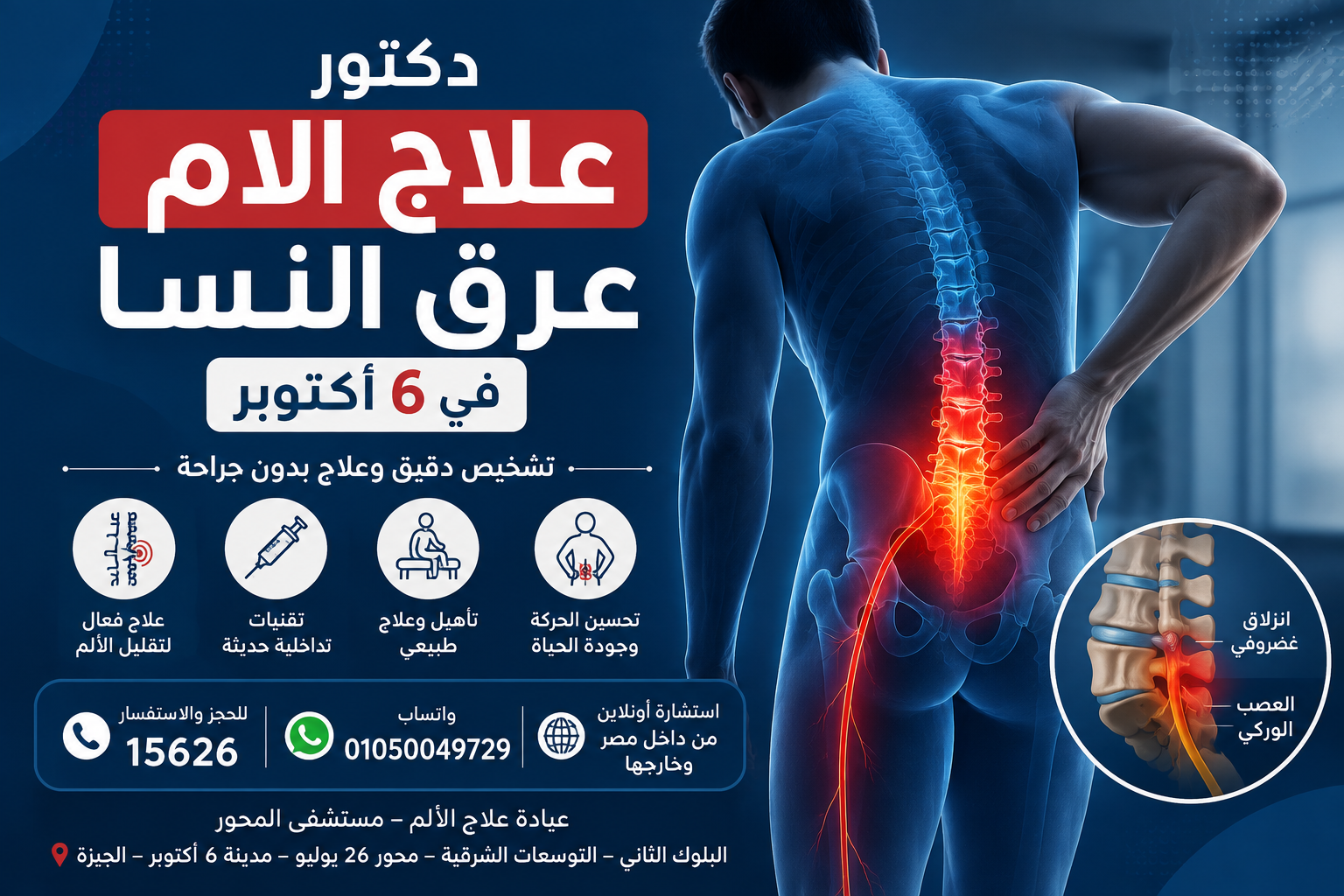
 علاج عرق النسا في 6 أكتوبر

Learn about Dr. Mohamed Yousry’s specialized services for sciatica treatment in 6th October, including accurate diagnosis and suitable non-surgical pain management options

Aug 09
علاج آلام الكتف في 6 أكتوبر بدون جراحة

Learn about non-surgical shoulder pain treatment in 6th of October City with Prof. Mohamed Yousry, a specialist in treating shoulder, joint, and nerve pain using advanced pain management techniques tailored to each case.
