Minimally Invasive Microsurgical Removal of Lumbar Disc Herniation in Tanta | Dr. Yasser Gharaba
Learn about minimally invasive microsurgical lumbar disc herniation removal, when surgery may be needed, and the potential benefits of this technique.
By: Dr. Yasser Ghoraba
Minimally Invasive Microsurgical Removal of Lumbar Disc Herniation | Prof. Dr. Yasser Gharaba in Tanta and Qutur
📞 For appointments and inquiries with Prof. Dr. Yasser Gharaba:
Tanta Clinic: 01026967228
Qutur Clinic: 01093579761
Lumbar disc herniation is a condition that may cause lower back pain, with symptoms sometimes extending into the leg when one of the nerves exiting the spine is affected. For patients who require surgery, minimally invasive microsurgical removal of a herniated lumbar disc is one of the techniques used to reach and remove the portion causing nerve compression through a limited surgical approach compared with some traditional procedures.
The need for surgery and the appropriate surgical technique depend on the clinical examination, severity of symptoms, imaging results, and the patient's response to non-surgical treatment.

What Is Lumbar Disc Herniation?
Between the vertebrae of the spine are discs that help absorb shock and allow the spine to move.
A disc herniation can occur when part of the disc's inner material moves out of its normal position and may put pressure on a nearby nerve.
The effects of a herniated disc vary depending on its location, size, and the nerve involved.
What Are the Symptoms of Lumbar Disc Herniation?
Symptoms vary from one patient to another and may include:
-
Lower back pain.
-
Pain extending from the back into the leg.
-
Numbness or tingling in the leg or foot.
-
Weakness in certain leg muscles.
-
Increased pain with certain movements or physical activity.
-
Difficulty performing some daily activities in more severe cases.
Not every patient experiences all of these symptoms.
When Does a Herniated Disc Require Surgery?
Not every case of lumbar disc herniation requires surgery.
Some cases may improve with medication, physical therapy, and modification of daily activities according to the doctor's assessment.
Surgery may be considered when symptoms persist or are severe, or when there is clear nerve compression and non-surgical treatment does not provide the required improvement.
In some cases, progressive neurological weakness or severe symptoms may require more prompt surgical evaluation.
What Is Minimally Invasive Microsurgery?
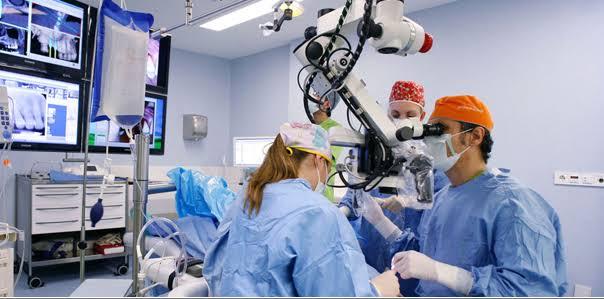
Minimally invasive microsurgery uses a surgical microscope to provide a magnified and detailed view of the targeted area while accessing the herniated disc.
The goal is to remove the portion causing nerve compression while limiting disruption to the surrounding tissues as much as possible.
The size and approach of the procedure vary according to the location of the disc herniation, the patient's condition, and the nature of the nerve compression.
How Is Lumbar Disc Herniation Removed Using a Microscope?
The level of the herniated disc is identified through clinical examination and appropriate imaging before surgery.
During the procedure, the surgeon reaches the affected area through a limited surgical opening and uses the microscope to clearly visualize the tissues and nerves.
Once the herniated portion responsible for nerve compression is identified, it is carefully removed to relieve pressure on the affected nerve.
The exact surgical technique varies depending on the level and size of the herniation and the type of nerve compression present.
What Are the Potential Benefits of Microsurgical Treatment?
When appropriately indicated, minimally invasive microsurgery may offer several potential benefits, including:
A Limited Surgical Approach
The affected area can be accessed through a limited surgical opening compared with some traditional surgical approaches.
Detailed Visualization
A surgical microscope provides magnification and a clear view of the targeted tissues and nerves.
Limited Handling of Surrounding Tissues
The technique aims to reach the source of the problem while minimizing disruption to surrounding tissues as much as possible.
Relief of Nerve Compression
The primary goal of removing the herniated portion is to relieve pressure on the affected nerve when that pressure is responsible for the patient's symptoms.
Can Every Herniated Disc Be Treated Microsurgically?
Not necessarily.
The choice of surgical technique depends on the location and size of the herniation, the degree of nerve compression, the patient's symptoms, and overall health.
Some cases may require a different surgical approach depending on the nature of the problem.
Therefore, the appropriate technique cannot be determined from imaging alone. The imaging findings must be considered together with the clinical examination and symptoms.
What Tests May Be Needed Before Surgery?
Evaluation begins with a clinical examination and a review of the patient's symptoms and medical history.
The doctor may request an MRI of the lumbar spine to identify the location of the herniation and determine its effect on the nerves.
Additional medical tests may also be required before surgery depending on the patient's health, the type of anesthesia, and the planned procedure.
What Happens After Lumbar Disc Surgery?
After surgery, the patient is monitored according to their condition and the type of procedure performed.
Gradual movement may be encouraged according to the doctor's instructions, while the patient follows the recommended recovery guidelines.
The time required to return to normal activities varies from one patient to another depending on overall health, occupation, and response to surgery.
Can a Herniated Disc Return After Surgery?
A disc herniation can recur in some cases, either at the same level or at another level of the spine.
For this reason, following postoperative instructions is important. Patients should also pay attention to movement, sitting posture, and lifting techniques and return to physical activity gradually according to medical guidance.
When Should You Seek Prompt Medical Evaluation?
Severe or worsening symptoms associated with lumbar disc herniation should not be ignored.
Certain symptoms, including progressive muscle weakness, loss of bladder or bowel control, or numbness in the groin or saddle area, require urgent medical evaluation.
Prof. Dr. Yasser Gharaba
You can contact Prof. Dr. Yasser Gharaba for evaluation of lumbar disc herniation and discussion of appropriate treatment options, including whether minimally invasive microsurgical treatment may be suitable when surgery is required.
📍 Tanta Clinic
Tanta – Al-Maared – Intersection of Al-Bahr Street and the Agricultural Road – next to Harissa Olad Rezk.
Working hours: Sunday, Tuesday, and Thursday, from 6:00 PM to 8:00 PM.
📞 For appointments and inquiries: 01026967228
📍 Qutur Clinic
Qutur Station – Al-Sa'a Square – Habsa Tower.
Working hours: Saturday, Monday, and Wednesday, from 6:00 PM to 8:00 PM.
📞 For appointments and inquiries: 01093579761
Conclusion
Minimally invasive microsurgical removal of lumbar disc herniation is a surgical option for selected patients whose herniated disc causes nerve compression and does not respond adequately to non-surgical treatment.
Choosing this approach depends on accurate diagnosis, clinical examination, imaging findings, the nature of symptoms, and the patient's overall condition.
A specialized evaluation is therefore essential to determine whether surgery is appropriate and which technique is best suited to the individual case.
Female cosmetic surgery may be an appropriate option for some women experiencing aesthetic changes or physical discomfort in the intimate area. Learn about the importance of medical evaluation and available options with Dr. Khaled El-Dakhakhny in Cairo.

Discover cosmetic filling services at Z Dental Clinic with Dr. Abdelrahman Zayed, a dentist in Minya El Qamh, for restoring and treating teeth while maintaining a natural-looking smile.
Anal bleeding may result from hemorrhoids, anal fissures, or other conditions affecting the colon and rectum. Learn about the main causes and warning signs that require medical evaluation with Dr. Mohamed Safwat in Cairo.

Learn about Invisalign clear removable aligners, their benefits, uses, suitability, and the importance of following the treatment plan with Dr. Islam Safwat in Tanta.
