
Urologist and Kidney Stone Specialist in Ismailia | Dr. Mohamed Rabie
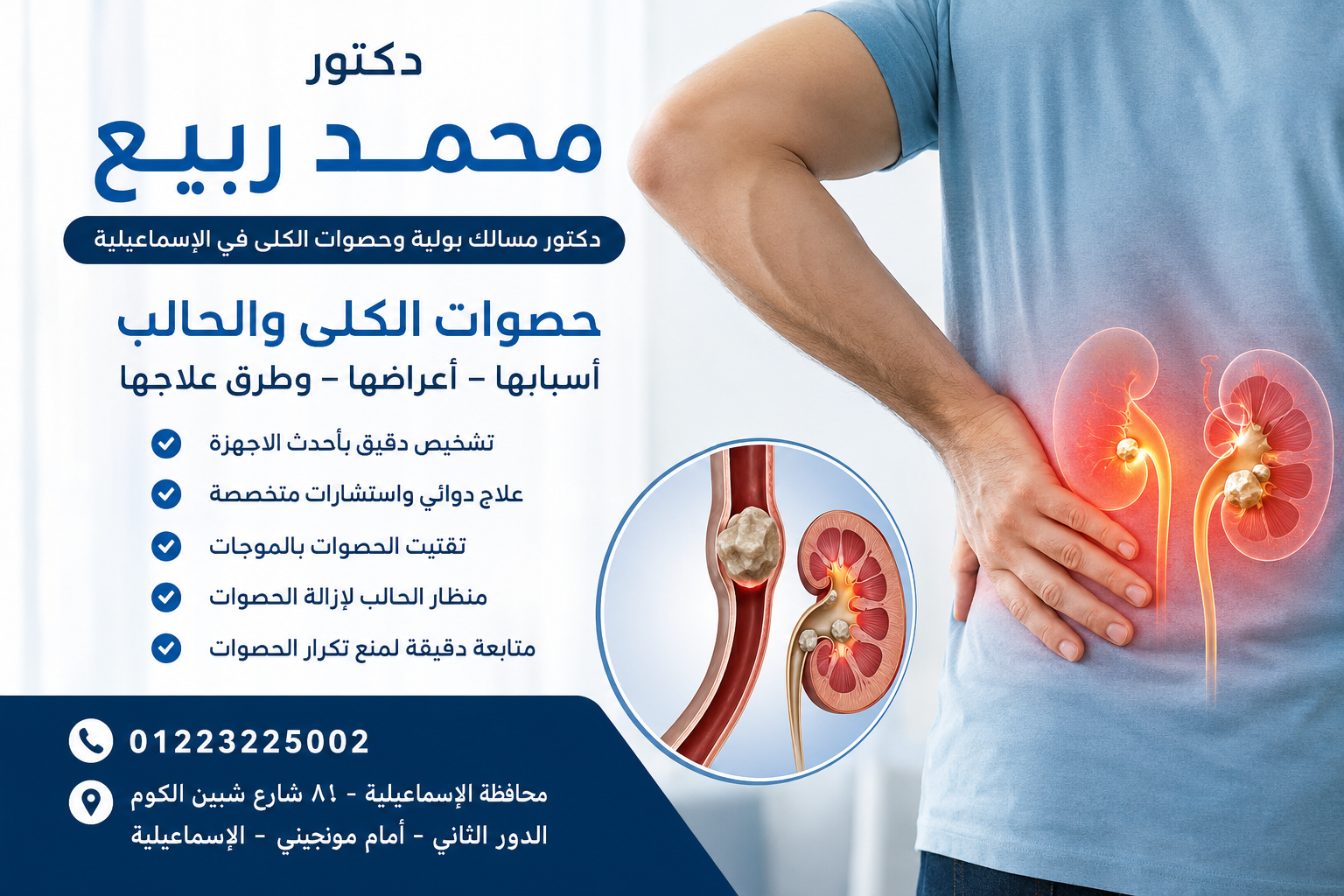
Kidney and ureter stones are among the common conditions affecting the urinary system. They may cause sudden and severe pain, especially when a stone moves from the kidney into the ureter. Early diagnosis helps determine the stone’s size and location and choose the most appropriate treatment approach.
If you are looking for a urologist and kidney stone specialist in Ismailia, you can contact Dr. Mohamed Rabie for evaluation and diagnosis of kidney and ureter stones and to determine the appropriate tests and treatment plan according to each patient’s condition.
Contact Number: 01223225002
What Are Kidney and Ureter Stones?
Kidney stones are hard deposits formed from certain minerals and salts found in urine inside the kidneys. A stone may remain in the kidney or move into the ureter, the tube that carries urine from the kidney to the bladder.
Kidney and ureter stones vary in size, location, and number, so symptoms and treatment options may differ from one case to another.
What Are the Symptoms of Kidney and Ureter Stones?
The symptoms of kidney and ureter stones vary depending on the size and location of the stone. Common symptoms may include:
-
Pain in one side of the back or lower abdomen.
-
Pain that may extend to the groin area.
-
Pain or a burning sensation during urination.
-
Increased need to urinate.
-
Difficulty urinating in some cases.
-
Changes in urine color or blood in the urine.
-
Nausea or vomiting associated with the pain.
-
Fever or chills, which require prompt medical evaluation.
These symptoms do not necessarily mean that a kidney stone is present. Diagnosis depends on a medical examination and the tests recommended by a urologist.
How Are Kidney and Ureter Stones Diagnosed?
Diagnosis of kidney and ureter stones begins with evaluating the symptoms and medical history. Depending on the case, the doctor may recommend several tests, including:
Urinalysis
A urine test can help detect blood in the urine and certain signs that may be associated with urinary tract infections or stone formation.
Blood Tests
The doctor may request certain blood tests to evaluate kidney function and other indicators related to the condition.
Imaging and Diagnostic Scans
Appropriate imaging tests can help determine the location, size, and number of kidney stones, as well as evaluate their effect on the urinary system. The doctor determines the most appropriate imaging test based on the symptoms and the patient’s condition.
Treatment of Kidney and Ureter Stones
Treatment of kidney and ureter stones depends on several factors, most importantly the size and location of the stone, associated symptoms, and whether there is urinary obstruction or complications.
In some cases, the doctor may recommend observation, appropriate medications, and specific fluid intake instructions. Other cases may require a medical procedure to break up or remove the stone.
Depending on the condition, treatment options may include:
-
Stone fragmentation using the appropriate technique for the case.
-
Ureteroscopy to break up or remove certain stones.
-
Other procedures determined by the urologist based on the size and location of the stone and the patient’s condition.
Do All Kidney Stones Require a Medical Procedure?
Not necessarily. Some small stones may pass naturally, while other stones may require medical intervention because of their size, location, persistent pain, urinary obstruction, or complications.
Therefore, the treatment plan varies from one patient to another, and it is not recommended to rely on one treatment method for all cases of kidney and ureter stones without proper medical evaluation.
When Do Kidney and Ureter Stones Require Urgent Medical Evaluation?
Prompt medical evaluation is recommended when severe symptoms occur, such as:
-
Severe or persistent pain.
-
Fever or chills.
-
Significant difficulty urinating.
-
Severe urinary symptoms.
-
Persistent or recurrent symptoms.
-
A previous history of kidney or urinary tract problems.
Some cases associated with urinary obstruction or infection may require urgent medical intervention. Therefore, medical evaluation should not be delayed when concerning symptoms are present.
Urologist and Kidney Stone Specialist in Ismailia | Dr. Mohamed Rabie
If you are looking for a urologist and kidney stone specialist in Ismailia, you can contact Dr. Mohamed Rabie for consultation and evaluation of kidney and ureter stone cases, as well as determining the appropriate diagnostic tests and treatment plan for each case.
📍 Clinic Address in Ismailia
Ismailia Governorate
81 Shibin El Kom Street
Second Floor
In Front of Monginis
Ismailia, Egypt
📱 For Appointments and Inquiries
Dr. Mohamed Rabie — For the evaluation and treatment of urological conditions and kidney and ureter stones in Ismailia.