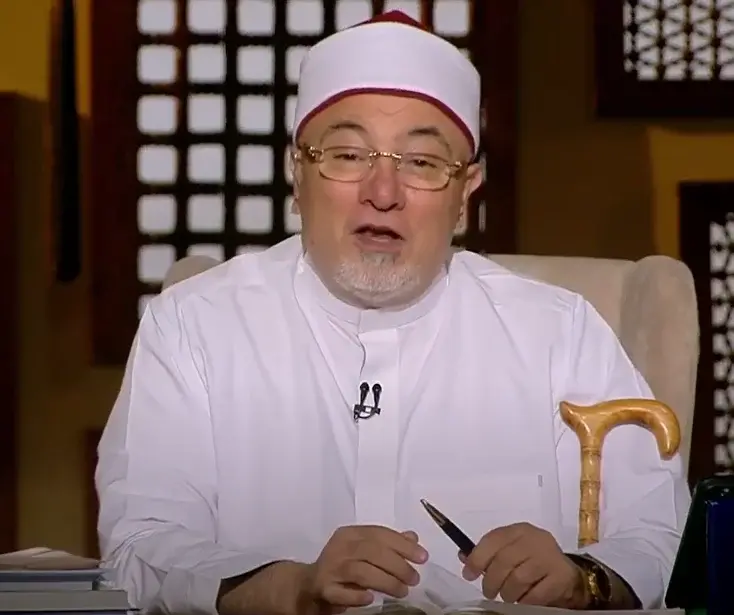

Sheikh Khaled El-Gendy, member of the Supreme Council for Islamic Affairs, stated that Al-Khidr (peace be upon him) was a prophet, not merely a saint, stressing that his actions can only be understood within the framework of divine revelation granted exclusively to prophets.
During his appearance on the program “La‘allahum Yafqahoon,” he explained that actions attributed to Al-Khidr, such as the killing of the boy, cannot be attributed to saints, as a saint does not act based on personal inspiration or intuition, but rather within human limits.
He emphasized that only prophets receive divine revelation that governs and legitimizes their actions, citing the story of Prophet Ibrahim (peace be upon him), who acted upon a divine command seen in a dream regarding the sacrifice of his son Ismail.
El-Gendy highlighted the fundamental difference between prophets and saints, explaining that prophets act under binding revelation, while saints do not hold such a status and cannot claim access to the unseen.
He also discussed the linguistic beauty of the Quranic narration, noting that the word “idh” in the verse describing Prophet Moses conveys a vivid sense of reliving the moment.
He added that the omission of the companion’s name, Joshua ibn Nun, reflects the Quran’s focus on the core event rather than secondary details.
He concluded that understanding the story of Moses and Al-Khidr requires recognizing the distinction between levels of knowledge and revelation, and avoiding incorrect comparisons between prophets and others.
For more details and the latest news, follow MASR Connect.