Ali Gomaa Explains the Meaning of Moderation in Islam: An Honor and a Responsibility for the Muslim Nation
Dr. Ali Gomaa explains that moderation (wasatiyyah) in Islam represents excellence, balance, and leadership, emphasizing that the Muslim nation is honored with the responsibility of contributing to human civilization.


Dr. Ali Gomaa, a member of the Council of Senior Scholars at Al-Azhar, explained that the concept of moderation (wasatiyyah) in Islam goes far beyond simply taking a middle path. Instead, it represents a divine honor accompanied by the responsibility of leading and contributing to human civilization.
The Meaning of "A Middle Nation"
In a post on his official Facebook page, Ali Gomaa said that the concept of moderation is derived from Allah's statement: "Thus We have made you a middle nation so that you may be witnesses over humanity and the Messenger may be a witness over you." (Qur'an 2:143) He explained that this verse places the Muslim nation in a distinguished position, similar to someone standing at the top of a mountain who can see those below while also being seen by them. This symbolizes the nation's role as both a witness and an example for humanity.
Moderation Means Excellence and the Best Choice
Ali Gomaa emphasized that in the Arabic language, the word "middle" (wasat) does not merely refer to being between two extremes. It also signifies the best, the finest, and the most excellent. He cited the Prophet Muhammad's ﷺ saying: "When you ask Allah, ask Him for Al-Firdaws, for it is the middle and the highest part of Paradise." He also referred to the Qur'anic verse: "From the average (best) of what you feed your families." (Qur'an 5:89) According to classical scholars, the word "average" here refers to the finest and highest quality.
The Meaning of "Witness" in the Verse
Ali Gomaa explained that the Arabic word "Shaheed" (witness) carries both the meanings of one who witnesses and one who is witnessed. Accordingly, the Muslim nation is expected to observe humanity through its values and guidance while also serving as a visible example that others can observe and learn from.
Moderation Calls for Participation in Human Civilization
Ali Gomaa stressed that moderation does not encourage isolation or withdrawal from the world. Instead, it requires Muslims to actively participate in human civilization by contributing to scientific, cultural, and intellectual progress. He described Islamic civilization as an open system that encourages interaction, exchange of knowledge, and constructive engagement with all people.
The Nation of Response and the Nation of Invitation
Ali Gomaa referred to Imam Al-Razi's distinction between:
The Nation of Response
Those who accepted the message of Prophet Muhammad ﷺ and embraced Islam.
The Nation of Invitation
All other people who have not yet accepted Islam but remain within the scope of its universal call. He explained that this understanding reflects Islam's openness and its continuous engagement with humanity through mutual learning and positive contribution.
Honor Always Comes with Responsibility
Ali Gomaa emphasized that every Qur'anic verse honoring the Muslim nation also imposes responsibilities. He cited Allah's words: "Indeed, this nation of yours is one nation, and I am your Lord, so fear Me." (Qur'an 23:52) He also referred to the verse: "You are the best nation produced for mankind." (Qur'an 3:110) According to Ali Gomaa, these verses honor Muslims while simultaneously obligating them to uphold justice, promote goodness, and contribute positively to society. He concluded by noting that even the angels' prostration before Prophet Adam (peace be upon him) represented both an honor and a responsibility, as Adam was entrusted with knowledge, cultivating the earth, and remaining mindful of Allah.
Ali Gomaa's View of Islamic Moderation
Ali Gomaa concluded that moderation in Islam is a comprehensive approach built on balance, excellence, openness, and active engagement with humanity. It calls on Muslims to serve as moral examples, contribute to civilization, and recognize that every divine honor comes with corresponding responsibilities.

Learn about the supplications for waking up from sleep that are reported in the Prophetic Sunnah, and the best prayers to say upon waking up to begin the day with peace of mind and remembrance of Allah.
Discover the best good deeds to perform during the Sacred Months, especially in Muharram, according to Egypt's Dar Al-Ifta and Al-Azhar Global Fatwa Center.
Discover the complete story of Prophet Solomon (Sulaiman), his extraordinary kingdom, miracles, wisdom, and how his death proved that only Allah knows the unseen.
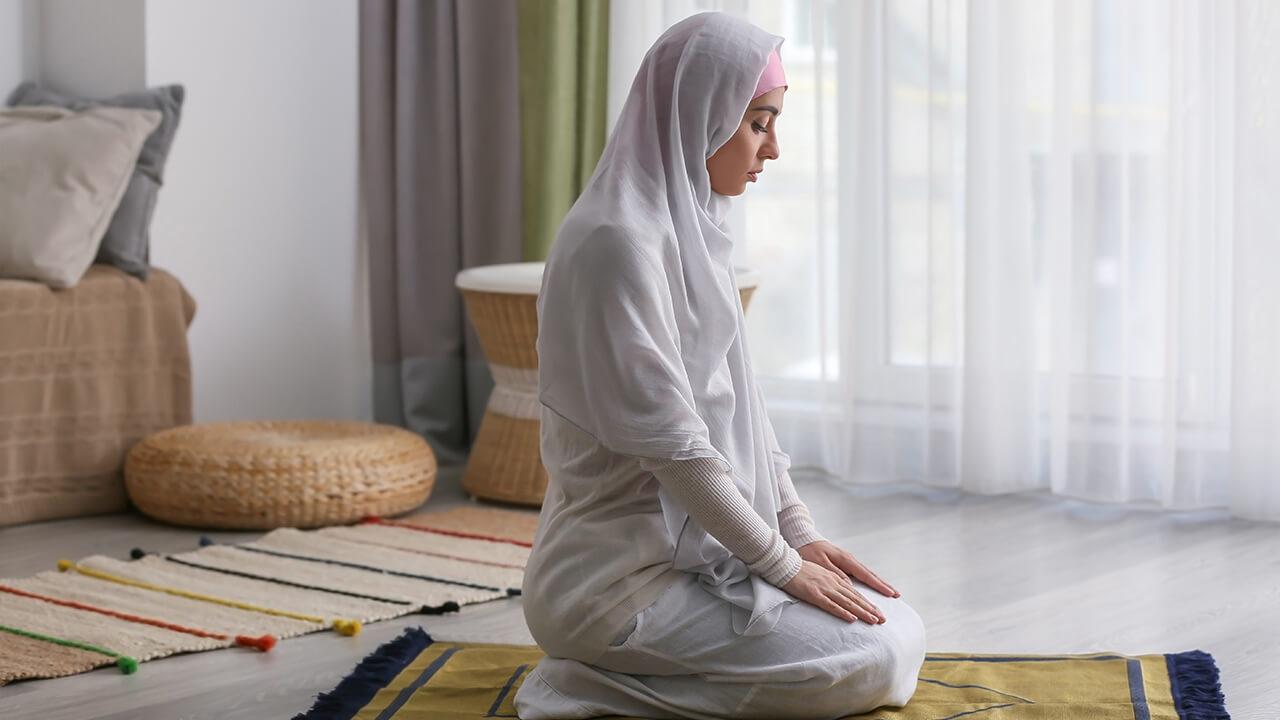
Learn the Islamic ruling on whether women must cover their feet during prayer, the opinions of leading scholars, and whether prayer remains valid without socks.
