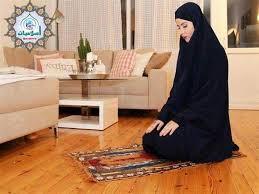

A hadith recently spread on social media states that when a woman completes her menstrual period, performs ghusl, and prays two rak’ahs reciting Al-Fatiha and Surah Al-Ikhlas three times in each rak’ah, her sins are forgiven and she receives the reward of sixty martyrs.
However, the Jordanian Fatwa Department confirmed that this narration has no basis in the Prophet’s Sunnah, and that the exaggerated promises of reward clearly indicate fabrication. The report only appears in the book Nuzhat al-Majalis wa-Muntakhab al-Nafais by Al-Safuri, which is not a reliable source of hadith.
The Egyptian Fatwa House explained that menstruation is a natural condition written by Allah upon the daughters of Adam, citing the hadith of Lady Aisha (may Allah be pleased with her) in which the Prophet ﷺ said: “This is something Allah has decreed for the daughters of Adam.”
The scholars agreed that once bleeding stops, ghusl becomes obligatory based on the Qur’anic verse:
“When they have purified themselves, then go to them as Allah has commanded you” [Al-Baqarah: 222], and the Prophet’s saying: “When menstruation begins, stop praying; when it ends, purify yourself and pray.”
Fatwa authorities emphasized that Islam eases obligations for menstruating women, excusing them from prayer, fasting, and other physical acts of worship during their period, as agreed upon by all major scholars.
They also urged Muslims to verify the authenticity of hadiths before sharing them, warning against spreading fabricated narrations that have no foundation in Islamic teachings.