
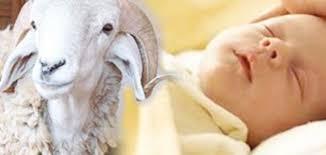

After the birth of a child, many parents are keen to perform Aqeeqah as a form of gratitude, yet a common question arises: must two sheep be sacrificed, or is one enough?
Islamic scholar Atiya Lasheen explained that Aqeeqah is confirmed by the sayings and actions of the Prophet ﷺ, who said:
“For a boy, two equal sheep, and for a girl, one sheep.”
He clarified that the preferred time for slaughter is the seventh day after birth. If not possible, it may be done on the fourteenth day, then the twenty-first, and if delayed further, it remains valid at any later time.
The Prophet ﷺ performed Aqeeqah for his grandsons Hasan and Husayn with two rams, which shows that two are recommended for a boy when the family can afford it.
However, for parents with limited or moderate income, sacrificing one sheep for a male child is permissible and sufficient, as long as the animal meets the proper age and health requirements similar to those of Udhiyah.
Conditions of Aqeeqah
The animal must meet the same standards as a sacrifice: proper age, free from defects, and from livestock such as sheep, cows, or camels. At minimum, one complete healthy sheep is sufficient.
Delaying Aqeeqah
Aqeeqah is a confirmed Sunnah. While the seventh day is preferred, delaying it due to circumstances is allowed, and the reward remains valid as long as it is performed before the child reaches adulthood.
Islam thus considers people’s circumstances, allowing flexibility while preserving the spiritual value of Aqeeqah.
For more religious news and updates, follow Masr Connect




