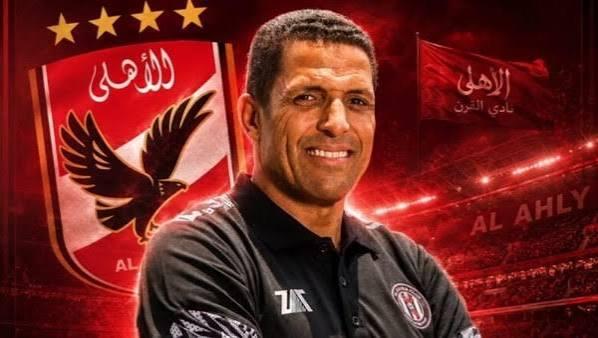

Hussein Amouta, the head coach of Al Ahly, faces a tactical dilemma on the left flank ahead of the team's match against ZED, with several absences affecting the position.
As a result, the choice of left-back could become one of the most important decisions in determining Al Ahly's tactical approach during the match.
Amouta has three main options: Tawfik Mohamed, Karim Fouad and Ahmed Nabil Kouka. Each player, however, would give Al Ahly a different tactical shape both during build-up play and in the attacking third.
Tawfik Mohamed.. The Most Attacking Solution
Tawfik Mohamed appears to be the most natural option from a tactical perspective, particularly because he is capable of playing as a genuine left-back.
His presence could provide Al Ahly with greater width and additional attacking power down the left side.
Playing behind Achraf Bencharki could also allow the Moroccan winger to move into the half-spaces and get closer to the penalty area, while the full-back pushes forward along the touchline to provide an attacking overlap.
This structure would give Al Ahly multiple attacking options on the left instead of relying solely on Bencharki's individual movements.
Karim Fouad.. A More Conservative Option
Karim Fouad represents a safer option for Amouta, although he would require a different tactical role because he is not a natural left-back.
The manager could use Fouad as an inverted full-back, allowing him to move into midfield during possession and support Marwan Attia in the build-up phase.
At the same time, Bencharki would be given more freedom to operate along the flank.
This approach could provide Al Ahly with greater protection against counterattacks, although it could reduce the team's attacking threat on the wing compared with using a natural left-back.
There are also concerns surrounding this option after Fouad's mistake in the previous match against Eastern Company ENPPI, which resulted in a penalty being awarded.
Ahmed Nabil Kouka.. A Third Tactical Option
Ahmed Nabil Kouka remains another option available to Amouta, particularly because of his ability to operate in multiple positions and move into midfield during build-up play.
However, using Kouka at left-back could require Bencharki to stay wider more often in order to preserve Al Ahly's attacking width on the left.
Kouka would give Amouta tactical flexibility, but the roles of the winger and midfielders would need to be clearly defined to maintain the balance between attacking build-up and defensive coverage.
Who Should Start at Left-Back?
Amouta's final decision will depend largely on the tactical approach he wants to use against ZED.
If he is looking for greater attacking power and wants to create space for Bencharki to move centrally, Tawfik Mohamed appears to be the clearest solution.
Karim Fouad and Ahmed Nabil Kouka, meanwhile, offer more conservative and balanced alternatives, with different responsibilities during possession and defensive transitions.
Therefore, Al Ahly's left-back dilemma is not simply about choosing one player. It is also about how Amouta restructures the entire flank and decides who will provide width, create overlaps and support the team's attacking build-up.
Who are the main left-back options for Al Ahly?
Tawfik Mohamed, Karim Fouad and Ahmed Nabil Kouka are the main options available to Hussein Amouta.
Why is Tawfik Mohamed considered the attacking option?
He can play as a natural left-back and provide greater width and attacking support behind Achraf Bencharki.
How could Amouta use Karim Fouad?
He could deploy Fouad as an inverted full-back who moves into midfield during possession.
What makes Ahmed Nabil Kouka an option?
His versatility allows him to play in different positions and move into midfield during build-up play.