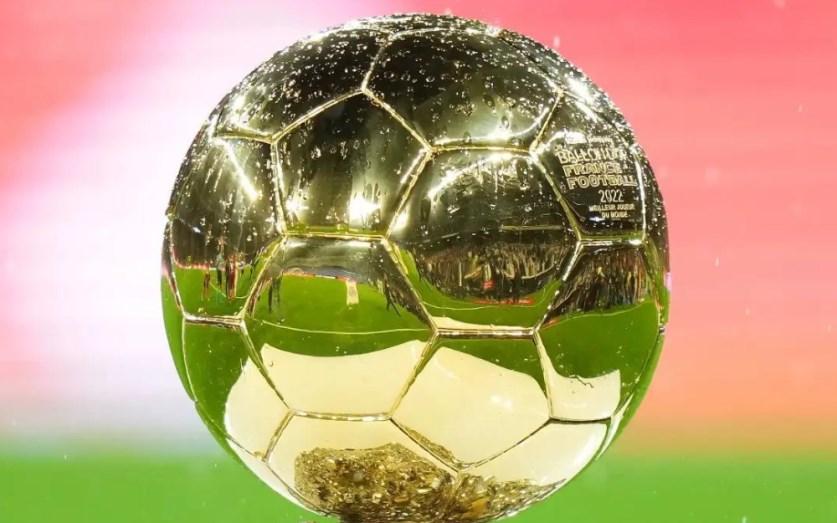

The race for the 2026 Ballon d’Or is entering a decisive stage, with several of the world’s biggest stars competing for the prestigious individual award.
With the World Cup and Champions League included in the evaluation period, the voting criteria could make individual performance and decisive impact particularly important in determining the winner.
What Are the Ballon d’Or 2026 Criteria?
The organizers of the Ballon d’Or published details of the criteria used by journalists participating in the voting process.
The criteria place the player’s individual performance and ability to make a decisive and impressive impact ahead of team achievements and trophies.
The three criteria are ranked as follows:
- Individual performance and decisive, impressive impact.
- Team performance and trophies won.
- Player level and sportsmanship.
The player’s overall career was also removed from the voting criteria, reinforcing the individual nature of the award.
Why Is Individual Performance So Important?
The current structure is not entirely new, as the Ballon d’Or criteria were significantly revised in March 2022.
Since then, individual performance has been placed ahead of collective achievements in the ranking of criteria.
This means that winning a major trophy does not automatically guarantee an advantage over another candidate.
Instead, voters must first consider who performed at the highest individual level and who had the greatest influence when their team or national side needed them most.
2026 World Cup Included in Ballon d’Or Evaluation
The Ballon d’Or evaluation period has also shifted from the calendar year to the sporting season.
The assessment period runs from August to July and includes performances for both clubs and national teams.
As a result, all matches from the 2026 FIFA World Cup are included in the Ballon d’Or evaluation for this edition.
There is no automatic rule awarding extra points simply because a player scores in a final. Likewise, a Champions League semifinal is not given a fixed mathematical advantage over a domestic league match.
However, the pressure and importance surrounding major matches can influence how voters assess a player’s decisive impact.
Rodri and Mbappé Offer Different Cases
Rodri represents a strong example of individual excellence combined with major international success after winning the World Cup with Spain and being named the tournament’s best player.
He appeared in all eight of Spain’s matches during their title-winning campaign and produced impressive numbers in the final against Argentina, completing 101 of 105 passes, winning 80% of his duels and creating two scoring opportunities.
Kylian Mbappé, meanwhile, offers a different argument based heavily on individual statistics.
Although he did not win the World Cup or Champions League, Mbappé finished as the World Cup’s top scorer with 10 goals in eight matches and also led the Champions League scoring charts with 15 goals in 11 appearances.
Those numbers could become highly significant if individual performance remains the primary factor in the voting process.
Kvaratskhelia and Vitinha Strengthen the Case for Individual Impact
Khvicha Kvaratskhelia is another strong example of individual impact in the Champions League.
The Georgian winger was named the competition’s best player after helping Paris Saint-Germain win the title, recording 10 goals and six assists in 16 appearances.
His teammate Vitinha offers another type of individual argument after being named UEFA’s best player in the Champions League final against Arsenal.
His performance in midfield highlighted how control, creativity and influence over the rhythm of a match can be just as important as scoring goals.
Ousmane Dembélé and Fabian Ruiz
Ousmane Dembélé also has a strong case based on his performances in major matches.
He scored France’s equalizer in the World Cup final and finished the tournament with six goals and two assists.
Those numbers provide an important argument when assessing individual performance and decisive influence.
Fabian Ruiz is another notable name after combining Champions League and World Cup success during the evaluation period.
Lamine Yamal Enters the Ballon d’Or Race
Lamine Yamal also has a compelling case for the 2026 award after being named the best player in La Liga for the 2025-26 season.
He helped Barcelona win the league title while recording 16 goals and 12 assists.
That combination of individual recognition and team success strengthens his position among the leading candidates.
His performances in European competition and with Spain at the World Cup will also be considered by the voters.
Ferran Torres and the Meaning of Decisive Impact
Ferran Torres provides another example of what the decisive-impact criterion can mean.
Torres scored the winning goal for Spain in the 106th minute of the World Cup final against Argentina, securing Spain’s second world title.
A moment like that demonstrates how a player can directly change the outcome of a major match.
However, one decisive goal is not enough on its own to win the Ballon d’Or, because the award evaluates a player’s entire season rather than a single match or moment.
Are Trophies Enough to Win the Ballon d’Or?
Winning major trophies does not automatically give a player an advantage under the current Ballon d’Or criteria.
Team achievements remain important, but they come after individual performance and decisive impact in the official order of evaluation.
Therefore, a player who wins fewer trophies can still compete strongly if his individual season is exceptional and he demonstrates greater influence and consistency than his rivals.
Ballon d’Or 2026 Nominees and Ceremony Dates
The Ballon d’Or 2026 nominee list is scheduled to be announced on September 8, 2026, with 30 nominees for the men’s award and 30 for the women’s award.
The Ballon d’Or ceremony is scheduled for October 26, 2026, in London.
With the World Cup included in the evaluation period, performances at the global tournament could play a major role in shaping the final race.
Who Will Win the Ballon d’Or 2026?
The 2026 Ballon d’Or race remains open, but the structure of the criteria puts individual performance, decisive impact and impressive displays at the center of the debate.
Players such as Mbappé, Yamal, Rodri, Kvaratskhelia and Dembélé have different arguments based on statistics, trophies and performances in high-pressure matches.
Ultimately, voters will have to determine which player was the best and most influential throughout the evaluation period—not simply which player collected the most trophies.
When will the Ballon d’Or 2026 nominees be announced?
The nominee list is scheduled to be announced on September 8, 2026.
When is the Ballon d’Or 2026 ceremony?
The ceremony is scheduled for October 26, 2026, in London.
What is the first Ballon d’Or criterion?
Individual performance and decisive, impressive impact.
Are team trophies enough to win the Ballon d’Or?
No. Team trophies are important, but individual performance comes first in the criteria.
Does the 2026 World Cup count toward the Ballon d’Or?
Yes. World Cup matches fall within the evaluation period for the 2026 award.