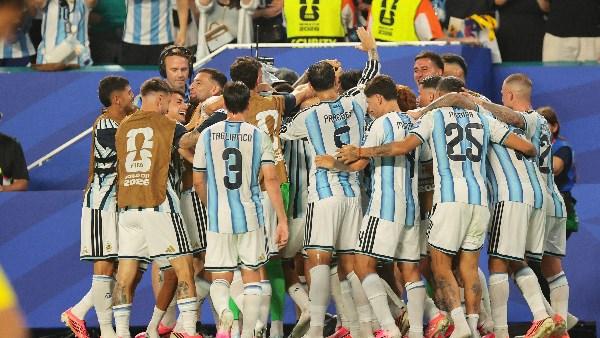

🇦🇷 Beyond Football.. Argentina’s Hidden Rituals Before the Final
Argentina’s preparations for the 2026 World Cup final against Spain are not limited to tactical plans and training sessions. Behind the scenes, the Tango squad follows a number of traditions and rituals that have become part of the team’s culture. ⚽✨
Many Argentine players and staff believe these habits provide confidence, comfort, and mental strength before major matches.
From religious stories to personal routines and team traditions, these rituals have become part of Argentina’s journey in international tournaments. 🏆🔥
⛪ The “Lady of Copacabana” Shrine Story
One of the most famous stories connected to Argentina is the legend of the “Lady of Copacabana” shrine, dating back to the 1986 World Cup-winning generation.
Reports suggest that Argentina’s players visited the shrine before winning the title and promised to return, but the promise was not fulfilled, leading to decades without another World Cup trophy.
The trophy finally returned to Buenos Aires in 2022 when Lionel Messi guided the new generation to World Cup glory in Qatar. ⭐🇦🇷
🍬 De Paul and Paredes’ Candy Ritual
One of the strangest traditions inside Argentina’s camp is the special habit shared by Rodrigo De Paul and Leandro Paredes.
The duo eat a specific number of candies before matches, a routine that started from De Paul’s childhood memories with his grandfather and later became a tradition they never abandon.
They believe this habit creates a positive mental state before difficult games. 🍬⚽
👟 Messi’s Blessed Boots Before 2022
Lionel Messi also became linked to one of the most famous stories combining faith and football.
Before the 2022 World Cup, Messi’s boots received a religious blessing at the Luján Cathedral, and the story became widely remembered after Argentina won the tournament.
The boots became connected with Messi’s historic journey that ended with Argentina’s third World Cup title. 🐐🏆
👣 Scaloni’s Right Foot Tradition
Argentina coach Lionel Scaloni also has his own ritual before matches.
He always enters the pitch with his right foot first, explaining that this habit has followed him since the beginning of his career and that he does not want to change it.
For Scaloni, small details can provide stability and confidence before important moments. 🔥
🌿 Palo Santo and Removing Negative Energy
Inside Argentina’s camp, players also use Palo Santo, a type of incense believed by some to remove negative energy and create calmness and focus.
This tradition reflects the spiritual atmosphere surrounding the team before major matches. ✨
🍗 Bilardo’s Chicken Superstition in 1986
The legendary coach Carlos Bilardo created one of football’s most famous superstitions during the 1986 World Cup.
Bilardo banned chicken from the players’ meals throughout the tournament because he believed it brought bad luck.
The decision became one of the most memorable stories connected with Argentina’s 1986 World Cup triumph. 🏆🔥
🏨 Same Hotel and Psychological Stability
Before the 2026 World Cup final, Argentina maintained some routines they believe helped previous successes.
The team stayed at the same hotel used during Copa America 2024 and kept similar daily routines.
The coaching staff believes stability in small details helps players stay focused and mentally prepared. ⭐
🥩 Asado.. Argentina’s Team Bonding Tradition
No discussion about Argentina’s squad atmosphere is complete without mentioning Asado, the famous Argentine barbecue.
Players gather around these meals in a family atmosphere that strengthens relationships and team spirit before important matches.
For Argentina’s players, Asado is more than food; it is a moment of unity. 🇦🇷🔥
⭐ Individual Rituals Among Argentina Stars
Alongside team traditions, several players maintain their own personal habits.
Goalkeeper Emiliano Martinez is known for decorating his hair with Argentina’s national colors during knockout rounds, showing his strong connection with the national team.
Argentine supporters also follow their own rituals, believing these habits bring luck before major games. 🧿⚽
✨ Conclusion
Between beliefs, memories, and personal traditions, Argentina carry a unique story into the 2026 World Cup final against Spain.
Some may see these rituals as simple habits, but for the Tango players they represent identity, confidence, and team spirit.
Ultimately, the answer will be decided on the pitch, as Messi and his teammates look to write another historic chapter in Argentine football history. 🏆🔥