
Mohamed Al Kamali.. An Arab Name Making History Inside FIFA 🏆
The 2026 FIFA World Cup witnessed one of the most controversial disciplinary cases after Emirati Mohamed Al Kamali became a central figure in the global football scene following his decision regarding United States striker Folarin Balogun’s punishment after his sending-off against Bosnia and Herzegovina. 🔥
Al Kamali is considered one of the prominent figures inside FIFA after becoming the first Arab and Asian personality to lead the FIFA Disciplinary Committee, a position that carries major responsibilities in handling sensitive cases related to the behavior of players, clubs, and national teams during major competitions.
Details of Balogun’s Controversy at World Cup 2026 ⚽📢
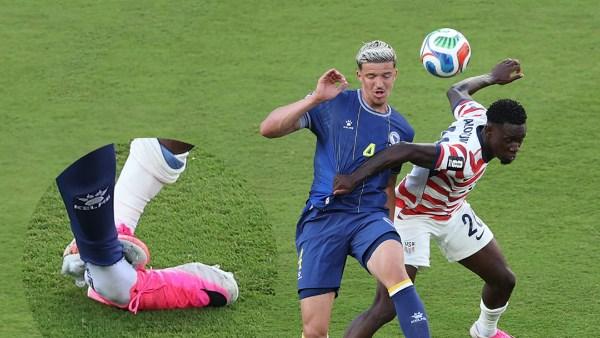
The story began during the United States’ match against Bosnia and Herzegovina at the 2026 FIFA World Cup, when Folarin Balogun received a red card after a strong challenge on an opposing player, leaving the pitch amid controversy and discussions.
However, the situation did not end with the sending-off, as the American player returned to the field during celebrations with his teammates, a move FIFA considered a violation of tournament regulations and disciplinary rules.
Because of this action, FIFA opened an official investigation to review the player’s case and determine the appropriate punishment according to the regulations governing major competitions.
Al Kamali’s Decision Creates Debate Inside FIFA 🔥
After reviewing the case, FIFA’s Disciplinary Committee decided to fine Balogun $40,000 and impose a one-match suspension.
However, the major surprise came when the suspension was postponed for one year, allowing the player to participate against Belgium, with the ban only being activated if he committed a similar violation during the probation period.
The decision attracted significant attention because of its timing and importance for the American national team, giving the player the opportunity to continue competing instead of missing the upcoming match.
How Did Mohamed Al Kamali Make the Decision? ⭐
Reports revealed that Mohamed Al Kamali, chairman of FIFA’s Disciplinary Committee, made the decision to suspend the execution of the ban individually without consulting the remaining members of the 18-person committee.
The committee’s internal regulations allow the chairman in certain cases to make specific decisions according to approved rules and legal standards, which was applied in Balogun’s case.
Al Kamali holds special importance within global football governance, not only because of his current position but also because he represents Arab and Asian presence in one of FIFA’s most important legal roles.
FIFA Explains the Nature of the Punishment 📢
FIFA clarified the details of the decision, confirming that Balogun’s red card was not canceled and that the player was not cleared of the incident.
The international football governing body explained that the decision only involved postponing the implementation of the suspension according to Article 27 of the Disciplinary Code, which allows this procedure in certain situations.
FIFA also confirmed that similar decisions have been applied in previous cases, meaning the measure was not a special exception for the American player.
America’s World Cup Journey Ends Despite Balogun’s Return 🏟️✨
Although Folarin Balogun benefited from the suspended punishment decision, the United States national team failed to continue its World Cup 2026 campaign after losing 4-1 to Belgium in the Round of 16.
Balogun’s participation against Belgium was one of the main consequences of the disciplinary decision before the American team’s tournament journey came to an end.
The Balogun case remains one of the most notable stories of World Cup 2026, not only because of the player’s controversial action but also because of the presence of an Arab figure at the heart of FIFA’s decision-making process.
A New Arab Presence in Global Sports Decision-Making 🌍🏆
Mohamed Al Kamali’s leadership of FIFA’s Disciplinary Committee represents an important step for Arab representation in international sports institutions, especially as global football organizations continue to witness greater diversity in leadership positions.
This development highlights the growing ability of Arab professionals to reach influential positions in world football administration and contribute to decisions shaping the future of the game and its regulations.
Ultimately, the Balogun case will remain an example of the important role played by legal and disciplinary committees in major tournaments, as modern football is not only about performances on the pitch but also about a system of decisions governed by precise rules and regulations. ⚽🔥