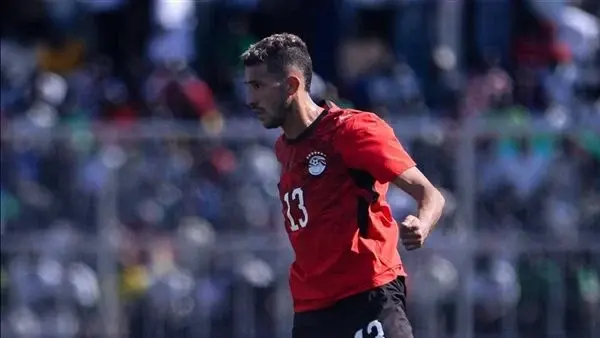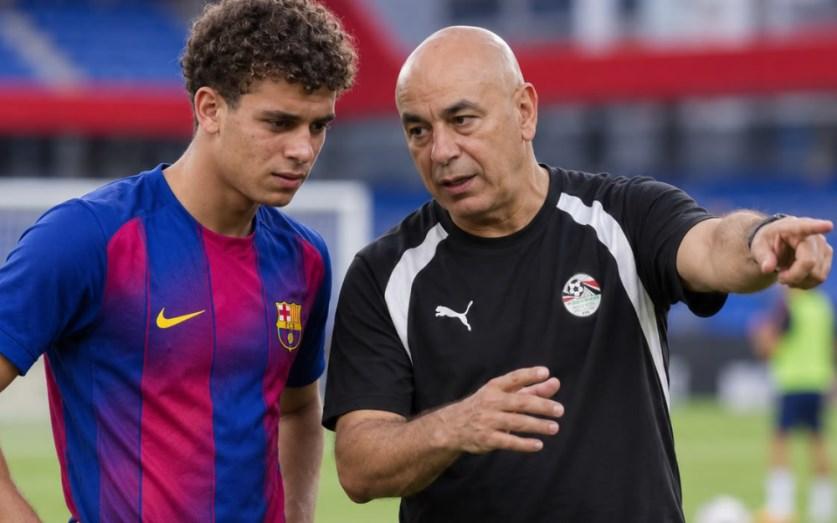

Hamza Abdelkarim scored his first international goal for Egypt against South Sudan after following up on a rebound from the goalkeeper to complete a 5-0 victory for the Pharaohs.
The goal raises an important question about the role Hossam Hassan can play in developing the young striker, particularly because Egypt’s head coach has decades of experience playing as a center-forward.
Hossam cannot give Hamza his natural scoring ability, but he can pass on the experience he gained throughout his career in movement inside the penalty area, dealing with defenders, exploiting half-chances and finding the right position before the ball arrives.
Hossam Hassan’s Experience as a Center-Forward
Hossam Hassan was one of the most prominent strikers in Egyptian football history, representing the classic number-nine profile with strong finishing ability and a notable capacity to score from difficult situations.
He finished his international career with 69 goals for Egypt and also scored 168 goals in the Egyptian league.
Hamza Abdelkarim, meanwhile, is beginning a completely different chapter of his career after moving to Barcelona and taking his first steps with the senior team.
He scored four goals during Barcelona’s preseason before making his official first-team debut in August 2026 and extending his contract until 2030.
Despite the differences between their generations and football schools, the two players share one important characteristic: both operate as center-forwards.
How Can Hossam Hassan Improve Hamza Abdelkarim’s Movement?
One of the most important skills for a goalscorer is not simply knowing how to shoot, but understanding where to be before the ball arrives.
A striker does not need to touch the ball constantly to influence a game. He needs to read attacks, anticipate passes and move at the right moment to escape defenders.
This is where Hossam Hassan’s experience could be particularly useful to Hamza.
Instead of simply asking a striker to move inside the penalty area, an experienced former forward can explain when to make the run, how to position himself behind a defender, when to change direction and where to wait for rebounds.
Hamza’s goal against South Sudan offers a practical example of the importance of such details. The goal did not require a complicated individual skill, but it required the striker to be in the right position to react to the goalkeeper’s rebound.
That does not mean Hossam Hassan taught Hamza how to score that specific goal. Rather, it illustrates the type of technical details an experienced striker can discuss with a young forward.
Aerial Ability and Dealing With Defenders
Hossam Hassan was known for his ability to attack crosses, whether through headers or by exploiting limited spaces between defenders.
That experience could help Hamza develop specific aspects of his game, including the timing of his jumps, the use of his body in physical duels and movement between center-backs.
Winning aerial situations is not simply about height or physical strength. It also involves reading the flight of the ball, timing the jump and choosing the right position before the defender.
Developing these details could give Hamza additional scoring solutions with both Egypt and Barcelona.
Dealing With Half-Chances
Another important area for a young striker is the ability to make the most of half-chances.
A forward who waits for a perfect opportunity can struggle against well-organized defenses. A striker who can make quick decisions and finish with minimal touches can turn difficult situations into genuine scoring opportunities.
This is another area where Hossam Hassan’s experience could help Hamza improve his decision-making inside the box.
When should he shoot first time? When should he control the ball? When should he use his body to protect possession? And when should he change direction instead of confronting the defender directly?
These details are not simply about scoring more goals in training. They are also about decision-making speed and the quality of the final action.
Such details could become important for Hamza as he looks for more opportunities with Barcelona’s first team.
Hamza Does Not Need to Become a Copy of Hossam Hassan
Learning from Hossam Hassan does not mean turning Hamza Abdelkarim into another version of the former Egypt striker.
Modern football has changed, and the role of a striker is no longer limited to staying inside the penalty area and waiting for chances.
Alongside his finishing ability, Hamza has qualities related to movement and linking play, while modern football also requires forwards to contribute to pressing and off-ball work.
Therefore, the real development lies in combining the two approaches.
Hamza can learn from Hossam Hassan how to move, position himself and finish inside the penalty area while maintaining the qualities needed for modern attacking football.
How Can Hossam Hassan’s Experience Become a Real Benefit?
Learning from an experienced striker cannot depend only on theoretical advice. It requires structured technical work.
During Egypt’s training camps, Hamza could work individually on his movement around the goal, review chances he failed to convert and study different options in various attacking situations.
Match minutes are also essential because players need to apply what they learn in real competitive situations.
The technical relationship between Hossam Hassan and Hamza Abdelkarim has already begun, with the young forward selected for Egypt’s 2026 World Cup squad and appearing in four matches before scoring his first international goal in September.
Hossam Hassan has also spoken about Hamza’s talent and the importance of being patient with his development, while leaving room for a greater role in the future.
The Challenge Facing Hossam Hassan and Hamza Abdelkarim
Hossam Hassan faces a dual task with Egypt: achieving results while also contributing to the development of a young striker who could become an important attacking option for the national team in the coming years.
Hamza, meanwhile, can benefit from two different football environments: the modern tactical education and daily European experience he receives at Barcelona, alongside the opportunity to learn from an Egyptian striker with extensive experience in the number-nine position.
Ultimately, Hamza Abdelkarim does not need to become the new Hossam Hassan.
He needs to absorb the experience that helped Hossam Hassan become a striker who knew how to find the goal.
The real measure of this relationship will come on the pitch, through Hamza’s movement, decision-making, finishing and ability to make a difference for Egypt.
Did Hamza Abdelkarim score his first international goal for Egypt?
Yes. Hamza scored his first international goal against South Sudan in Egypt’s 5-0 victory.
What can Hossam Hassan add to Hamza Abdelkarim’s development?
He can share experience related to movement inside the box, positioning, dealing with defenders, exploiting half-chances and finishing attacks.
Does Hamza need to imitate Hossam Hassan?
No. The objective is to benefit from Hossam’s experience while preserving Hamza’s own style and modern attacking qualities.
Why is off-ball movement important for a striker?
It helps a forward escape defensive marking, find space and reach the right position before the pass arrives.
Can Hamza benefit from Hossam Hassan while playing for Egypt?
Yes. Training camps and international matches can provide opportunities to apply specific technical details and turn them into practical decisions during games.