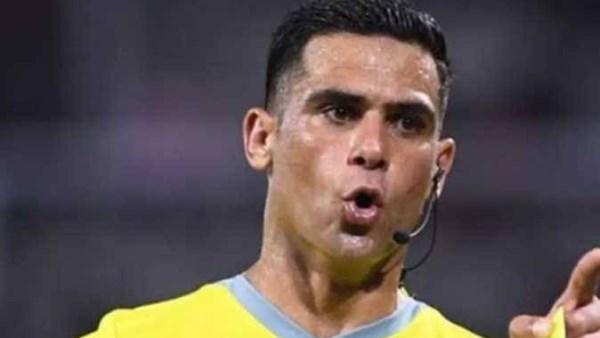

The controversy surrounding Mohamed Maarouf and the conversation that took place during the Al Ahly-ZED match has entered a new stage after Essam Abdel-Fattah, head of the refereeing committee, revealed details of his discussion with the international referee regarding the incident that sparked widespread debate in Egyptian football. ⚽🔥
Abdel-Fattah stressed that the refereeing committee will not issue a final judgment before listening to the recordings from the Video Assistant Referee room, emphasizing that the complete recording is the best way to establish the truth away from conflicting accounts.
The controversy began after information circulated about a conversation between Mohamed Maarouf and Wael Gomaa, Al Ahly’s team manager, during the ZED match, with the incident being linked to Al Ahly player Ali Mahmoud, who had already received a yellow card.
Mohamed Maarouf Denies the Circulating Account
Essam Abdel-Fattah revealed that he contacted Mohamed Maarouf directly to learn more about the incident, explaining that the referee denied the version that had circulated and confirmed that the conversation did not happen in the way it was presented in the media.
Abdel-Fattah said Maarouf explained that the content of the discussion was different, but the refereeing committee preferred not to settle the matter based only on the referee’s account while waiting to review the complete recordings.
The decision reflects the committee’s desire to handle the issue through evidence rather than impressions, particularly because it concerns an international referee and a match that already generated significant refereeing debate.
What Is Preventive Refereeing?
While discussing the possibility of a referee warning a player who has already received a yellow card, Abdel-Fattah explained the concept known as “preventive refereeing.”
This means that a referee may warn a booked player to avoid committing another offense that could result in a second yellow card and a sending-off.
He explained that this approach is one of the tools referees use to control matches and maintain player discipline, while also pointing out that it exists within the latest refereeing-related amendments.
However, Abdel-Fattah stressed that the key issue in the Mohamed Maarouf case is not whether such a warning can happen, but what was actually said during the match, which will be determined by the recordings. 🎥
Details of the Maarouf-Wael Gomaa Conversation
According to the account Mohamed Maarouf gave to Essam Abdel-Fattah, the conversation with Wael Gomaa was related to an Al Ahly objection to a particular incident and a request for a penalty.
Abdel-Fattah explained that Wael Gomaa spoke to the referee about a possible penalty for Al Ahly, while Maarouf responded that the incident did not warrant a penalty.
He also indicated that the conversation included a warning regarding the possibility of the player receiving a yellow card if he committed another offense, although this point requires review of the full recording to understand the exact context.
The Recordings Are the Deciding Factor
The head of the refereeing committee believes that the complete truth is contained in the VAR recordings, which is why the case will not be settled based on the account of one party.
The recordings are expected to reveal the exact words exchanged and the sequence of the conversation, helping determine whether the incident was misunderstood or whether there are additional details that did not appear in the circulating accounts.
Transparency is especially important in this case because continued debate without evidence could increase tension between clubs, referees and supporters. ⚖️
Refereeing Committee to Respond to ZED
Abdel-Fattah also addressed ZED’s statement and its objections to the refereeing during the match, stressing that the club has the right to express its position and submit complaints.
He explained that the refereeing committee will address the statement through an analysis of the refereeing incidents and respond to the points raised by the club within the official framework for handling complaints.
This indicates that the controversy surrounding Al Ahly vs ZED extends beyond the Mohamed Maarouf-Wael Gomaa incident and includes several refereeing decisions that ZED believes affected the course of the match.
A New Page With All Clubs
Essam Abdel-Fattah also revealed that he received a call from Saif Zaher, stressing that the conversation did not involve the Ali Mahmoud incident or the current controversy.
He explained that the communication took place respectfully and covered certain issues and problems connected to a match from the previous season, while emphasizing that the current refereeing committee wants to open a new page with all clubs.
This message reflects the committee’s desire to reduce tension and restore calmer relations with the clubs, particularly as the league competition continues.
A Crisis Awaiting Resolution
For now, Mohamed Maarouf’s account and the accounts of other parties remain part of the ongoing discussion, but the decisive step will be reviewing the complete recordings.
If the recordings confirm the referee’s account, a significant part of the controversy will come to an end. If they reveal different content, the case could enter a new stage requiring further clarification.
✨ The Mohamed Maarouf-Wael Gomaa controversy is approaching a decisive moment after Essam Abdel-Fattah revealed the referee’s account, emphasizing that the VAR recordings will remain the final authority in determining exactly what happened during the match.
📢 Do you expect the VAR recordings to settle the Mohamed Maarouf controversy once and for all? Share your prediction and opinion in the comments. ⚽🔥