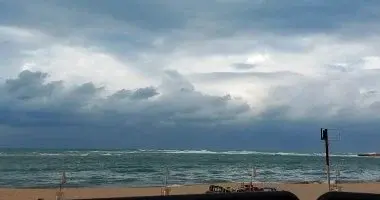

Egypt is set to face a harsh winter weather wave ❄️ as a polar low-pressure system impacts the country, bringing a noticeable drop in temperatures, strong winds, and varying rainfall across several regions.
Dr. Mahmoud Shaheen, Director of Forecasting and Early Weather Warning at the Egyptian Meteorological Authority, stated that the country will be affected on Friday by a polar low causing a sharp temperature decline and active winds that intensify the feeling of cold.
He added that the system will bring rainfall of varying intensity to the northern coasts and the Nile Delta, with possible extension to Greater Cairo and northern Upper Egypt. Maximum temperatures in Cairo are expected to reach around 18°C, while minimum temperatures may drop below 10°C.
The weather shift coincides with the start of the month of Toba, which begins on Friday and marks the peak of winter in Egypt, traditionally associated with the coldest waves of the year.
Meteorologists warned against being misled by brief sunshine, noting that Toba is often characterized by cold winds, occasional dust activity, and significantly lower nighttime temperatures, urging citizens to wear heavy winter clothing.
The Meteorological Authority expects rapid weather instability on Friday, including strong winds, varying rainfall, and a clear drop in temperatures across most areas.
Moderate to heavy, sometimes thunderous rain is expected over Alexandria and the northern Delta, with potential flash floods in parts of northern and central Sinai, possibly accompanied by hail in some areas.
Moderate rain may also affect Matrouh, Sallum, and southern Delta regions, while light to moderate rain is expected in Greater Cairo and Canal cities, and lighter rainfall in southern Sinai and northern Upper Egypt.
Strong winds are forecast across the country, with speeds ranging from 40 to 60 km/h, potentially raising dust and sand in some regions. Severe sea disturbances are expected in the Mediterranean, with waves exceeding five meters, as well as rough conditions in the Red Sea and the Gulfs of Suez and Aqaba.
The Authority warned of reduced visibility due to dust, along with thunder and lightning in areas affected by storm clouds.