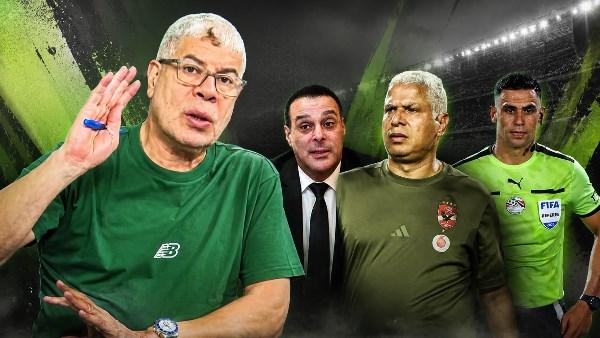

Media personality Ahmed Shobeir has revealed new details surrounding the controversy over an alleged conversation between international referee Mohamed Maarouf and Al Ahly team manager Wael Gomaa during the Egyptian Premier League match between Al Ahly and ZED.
The latest developments come after widespread debate over a claim involving Al Ahly player Ali Mahmoud and an alleged discussion concerning the possibility of the player receiving a second yellow card.
The incident has become one of the most discussed refereeing issues in the early stages of the season, particularly because several different accounts have circulated. The official recordings could now provide the decisive answer. ⚽🔥
Shobeir Reveals His Contact With Essam Abdel-Fattah
Ahmed Shobeir said during his radio comments that he contacted Essam Abdel-Fattah regarding the incident in order to determine the truth behind the alleged conversation involving Mohamed Maarouf and Wael Gomaa.
According to Shobeir, Abdel-Fattah told him that the circulating account was almost certainly incorrect.
Shobeir quoted the former refereeing official as saying: “99.99% of the alleged conversation between referee Mohamed Maarouf and Wael Gomaa is untrue.”
The statement has increased anticipation surrounding the recordings, particularly because listening to the actual conversation would provide a more reliable reference than the different accounts being circulated.
Mohamed Maarouf Denies the Story
Shobeir also revealed that Essam Abdel-Fattah contacted Mohamed Maarouf to ask him directly about the allegations.
According to Shobeir, Maarouf completely denied the claims attributed to him in the alleged conversation.
The referee’s denial provides a direct response from one of the people who was reportedly involved in the alleged exchange.
The recordings could now determine whether the conversation actually took place and what was said.
Wael Gomaa Also Denies It
The denial was not limited to Mohamed Maarouf. Shobeir said Essam Abdel-Fattah also contacted Wael Gomaa to verify the story.
According to Shobeir, Al Ahly’s team manager also denied the allegation and described the claims attributed to him as having “no basis whatsoever.”
Shobeir said: “He also told me that he spoke to the referee, who completely denied it, and he spoke to Wael Gomaa, who said the whole thing was nonsense with no basis whatsoever.”
The two people allegedly involved in the conversation have therefore both rejected the version that has been circulating.
Recordings Could Settle the Dispute
Ahmed Shobeir believes the recordings involving the refereeing team could finally resolve the controversy, particularly because communications within the refereeing system are recorded through the established procedures.
Listening to the recordings would provide a direct way to determine whether the alleged conversation happened and whether any discussion took place between the referee and the Al Ahly official.
The recordings could therefore allow the relevant authorities to respond clearly to the reports and speculation surrounding the incident. 🎥⚖️
Essam Abdel-Fattah Plans to Reveal the Truth
Shobeir indicated that Essam Abdel-Fattah confirmed that the refereeing committee would listen to the recordings and work toward clarifying the facts publicly.
The move comes as the controversy has expanded beyond a simple refereeing decision and developed into claims concerning an alleged conversation between a referee and an Al Ahly official.
Official clarification could therefore play an important role in ending the conflicting versions of events.
Shobeir: We Are Waiting to Hear the Conversation
Ahmed Shobeir suggested that the controversy could soon reach its decisive stage after referring to the possibility of listening to and discussing the recordings publicly.
He said: “Today we will bring out the conversations, listen to them and tell the people.”
The statement reflects the growing anticipation surrounding the file and the possibility that the recordings could provide a final answer.
Controversy Began With Al Ahly vs ZED
The Al Ahly-ZED match was already surrounded by refereeing controversy, particularly following objections to several decisions made during the game.
After the match, reports emerged about an alleged conversation between Mohamed Maarouf and Wael Gomaa concerning Ali Mahmoud.
The story quickly became a major media issue and generated different reactions.
Al Ahly ultimately won the match 2-0, but the refereeing debate continued after the final whistle.
Conflicting Accounts Increased the Tension
One of the main reasons the controversy has continued is the existence of different versions of what happened.
While details of an alleged conversation between the referee and Wael Gomaa were circulated, Gomaa publicly denied the incident, while Mohamed Maarouf also reportedly rejected the claims.
With several statements contradicting the original account, the recordings have become the clearest potential method of establishing what actually happened.
Why Are the Recordings Important?
The importance of the recordings lies in their ability to provide direct evidence of communications involving match officials rather than relying on second-hand accounts or personal interpretations.
Should the recordings confirm that the alleged conversation did not take place, the controversy could be significantly reduced.
If they reveal a different exchange, however, further clarification and potentially additional investigation could follow.
This is why the Egyptian football community is closely following the expected review of the recordings.
Al Ahly Await the Outcome
Al Ahly are also expected to follow developments closely, particularly because Wael Gomaa has clearly denied the alleged conversation.
The club’s position could depend on what the official recordings reveal and whether the relevant authorities issue further findings.
At the same time, Al Ahly continue preparing for their upcoming matches and the remainder of the Egyptian Premier League campaign. 🔴
Refereeing Committee Faces an Important Test
The incident comes during a period of increased discussion surrounding Egyptian refereeing at the beginning of the season, placing additional attention on how the committee handles the case.
The refereeing authorities will need to clarify the facts and address claims in a way that protects confidence in the officiating system.
Providing explanations of incidents where regulations permit could also help reduce tensions between clubs, supporters and the media.
Can the Recordings End the Controversy?
The answer will depend on what the official recordings reveal, especially after both Mohamed Maarouf and Wael Gomaa denied the alleged conversation.
If the recordings support their statements, the controversy is likely to lose much of its momentum.
However, if the recordings reveal information that differs from the accounts already given, a new phase of investigation and discussion could begin.
The coming hours may therefore prove important in determining the future of one of the most talked-about incidents at the beginning of the Egyptian Premier League season.
The Truth Awaits the Recordings
The Mohamed Maarouf-Wael Gomaa case has now reached a crucial stage, with both parties denying the circulating allegations while officials confirm that recordings can be reviewed.
The priority is to establish the facts clearly and move beyond speculation, particularly because the case involves refereeing and match management.
✨ Ahmed Shobeir says both Mohamed Maarouf and Wael Gomaa denied the alleged conversation involving Ali Mahmoud, while the refereeing committee is expected to review the recordings and reveal the truth in an effort to end the controversy.
📢 Do you think the recordings will end the Mohamed Maarouf-Wael Gomaa controversy, or could they create a new debate? Share your opinion in the comments. ⚽🔥