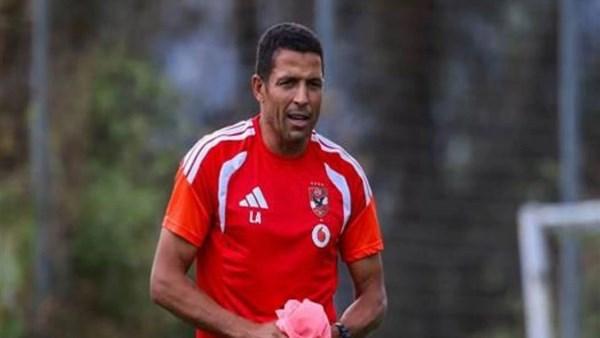

Media personality Ahmed Shobier has raised an important issue inside Al Ahly after discussing the large number of players taking part in first-team training sessions, arguing that having 34 players could represent a genuine challenge for the coaching staff led by Hossam Ammouta. 🦅🚨
Shobier’s comments come as Al Ahly attempt to build a strong squad capable of competing across multiple competitions. However, the large number of players in training could create particular challenges for the coaching staff, whether in terms of daily monitoring, tactical preparation or carrying out the training program effectively.
Shobier believes that regardless of a coach’s experience, it becomes difficult to give full attention to such a large group of players, especially because training involves much more than completing drills. It also requires monitoring individual and collective details, assessing player levels and checking how effectively instructions are being followed. 🔥⚽
🚨 Shobier: 34 Players Is a Very Large Number
Ahmed Shobier stressed that having 34 players in an Al Ahly training session represents a very large number for a coaching staff.
He explained that the figure could make it difficult for Hossam Ammouta to monitor every player closely, especially because each player requires continuous assessment regarding physical and technical levels as well as his understanding of the manager’s ideas.
Shobier also suggested that the large number could affect the structure of the training session itself, because splitting the squad into several training groups could make it harder for the coaching staff to follow every detail taking place on the pitch.
For that reason, he believes the situation requires greater organization and more structured training sessions so every player receives an appropriate opportunity to develop and compete. ⭐
🧠 Why Is a Large Squad a Technical Problem?
Training a large group of players does not simply mean having more footballers on the pitch. It creates several challenges for the coaching staff.
The manager needs time to assess the players, monitor their movement, correct mistakes, provide individual instructions and work on collective tactical elements.
As the number of players increases, it becomes more difficult to give every footballer enough attention, especially players trying to establish themselves, those returning from injury or newcomers adapting to the team.
That is why Shobier believes the situation requires more structured training management and a focus on the players needed for each specific stage. ⭐
⚽ 13 Players Left Out of the Arab Contractors Squad
Shobier also pointed out that 13 players were left out of Al Ahly’s squad for the Arab Contractors match, despite those players reportedly being available in terms of technical or physical readiness.
This opens another discussion about the size of the current squad, particularly because having many players while a significant number remain outside matchday squads makes competition for playing time even tougher.
It also shows that the coaching staff have many options, but at the same time need to manage the group carefully to prevent some players from feeling marginalized or disconnected from the technical plans.
🦅 Al Ahly Have Plenty of Options
On the positive side, having a large squad gives Al Ahly greater ability to deal with injuries, suspensions and fixture congestion.
A long season requires alternatives in different positions, particularly when the team is competing in several tournaments within short periods.
Injuries and various circumstances can also lead to several players being unavailable at any given time, meaning a deep squad can provide valuable solutions for the coaching staff.
The problem begins, however, when a large squad becomes an obstacle to the training process rather than an advantage. 🔥
📢 Shobier: “Structure the Training”
Ahmed Shobier delivered clear advice to the coaching staff, suggesting that the solution could be to structure training sessions more efficiently and focus on the players the manager needs at each stage.
He explained that he understands the presence of injuries and different circumstances within the squad, but believes organizing the group according to actual needs could produce greater benefits from training.
This approach could involve dividing players into smaller groups so each unit receives sessions suited to its physical condition and technical role.
⭐ Ammouta Faces the Challenge of Managing the Squad
Having 34 players makes squad management one of Hossam Ammouta’s biggest challenges.
The manager does not only need to select the starting lineup. He must also keep every player ready and motivated, particularly because some members of the squad may not receive regular playing opportunities.
That task requires continuous and clear communication with the players so each member understands his role and position within the team’s overall plan.
🔥 Competition Can Be a Positive Weapon
Despite the concerns about the squad size, strong competition within the team can also become a positive factor.
When a player knows several teammates are competing for his position, he is naturally encouraged to work harder during training to protect his place.
Competition can therefore raise levels of readiness and provide the coaching staff with multiple options during difficult matches.
⚠️ But a Large Squad Requires Smart Management
Having a large number of players does not automatically guarantee success because the value of the squad depends on how effectively it is managed.
The manager needs to balance regular starters, substitutes, young players and those returning from injuries while maintaining squad unity and avoiding frustration among players who do not play regularly.
🏆 Al Ahly Prepare for Important Matches
The debate comes as Al Ahly prepare for important fixtures during the season, making physical and technical preparation among the coaching staff’s main priorities.
In such circumstances, training sessions become one of the most important tools a manager uses to build the lineup and identify the players who are in the best condition.
For that reason, organizing training efficiently can have a direct effect on the team’s performances in official matches.
🧩 13 Players Outside the Squad.. What Does It Mean?
Leaving 13 players out of one matchday squad does not necessarily mean that they have been permanently removed from the manager’s plans. It may simply depend on tactics, the nature of the opponent or the coaching staff’s specific match selections.
However, having large numbers of players repeatedly outside matchday squads can make the issue of playing time a continuous topic of discussion inside the team.
🧠 Focus Matters More Than Numbers
The central message from Shobier’s comments is that training quality matters more than simply having a large number of players.
A smaller, more focused group can give the coaching staff greater opportunity to work on details, while other players can be managed through separate programs suited to their individual needs.
Such an approach could allow Al Ahly to gain the maximum benefit from their large squad without reducing training quality.
📈 The Real Challenge for the Coaching Staff
Ammouta’s challenge is not simply choosing 11 players for a match. It is managing a system containing dozens of players, each with different ambitions and expectations.
The better the coaching staff organize the group and keep everyone motivated, the greater the chances of maximizing the value of the squad’s depth.
🏁 Conclusion
Ahmed Shobier’s comments have opened an important discussion inside Al Ahly regarding the large number of players attending training sessions. He believes that having 34 players could make it harder for Hossam Ammouta to give everyone the necessary level of attention. 🦅🔥⚽
At the same time, a deep squad gives Al Ahly many options for dealing with injuries and fixture congestion. However, maximizing that depth depends on smart management, well-organized training sessions and clearly defined roles.
📢 Do you agree with Shobier that 34 players is too many for an Al Ahly training session? Do you think structuring training and dividing players into smaller groups would be the best solution? Share your opinion. 🏆⚽🔥