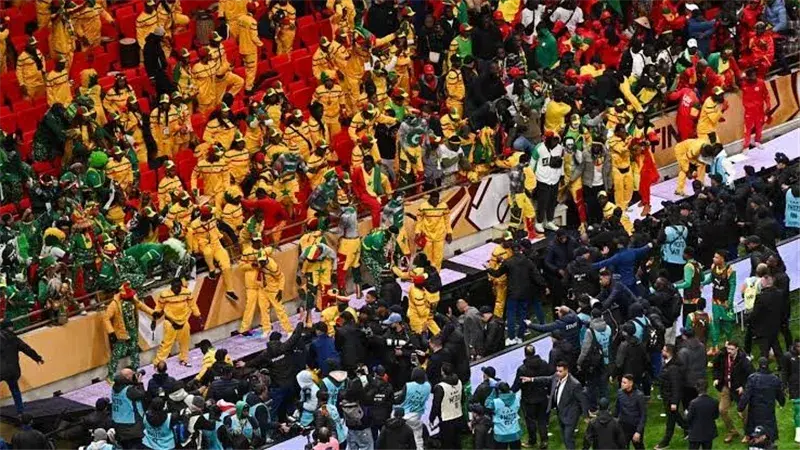

The opening round of the 2026 FIFA World Cup officially concluded, marking the beginning of a historic edition featuring 48 national teams competing across the United States, Canada, and Mexico. The new expanded format has added more intensity and unpredictability to the tournament 🌍⚽
Arab teams entered the competition with high expectations, delivering a mixture of strong performances, valuable draws, and disappointing defeats. However, the overall picture suggests a growing competitiveness of Arab football on the world stage.
🟡 Morocco vs Brazil 🇲🇦🔥
Morocco started the Arab campaign with a strong performance against Brazil, securing a 1-1 draw. The Atlas Lions showed tactical discipline and resilience, earning a valuable point against one of the tournament favorites.
🟡 Egypt vs Belgium 🇪🇬✨
Egypt delivered one of the most impressive Arab performances of the round, holding Belgium to a 1-1 draw. The Pharaohs demonstrated defensive organization and strong collective discipline, earning widespread praise.
🟡 Tunisia struggles 🇹🇳⚠️
Tunisia suffered a heavy 5-1 defeat against Sweden, exposing defensive weaknesses and leading to immediate technical discussions about restructuring ahead of the next matches.
🟡 Gulf teams stability 🇶🇦🇸🇦
Qatar drew 1-1 with Switzerland, while Saudi Arabia secured a similar result against Uruguay, showing balanced performances and tactical discipline against strong opposition.
🟡 Iraq, Jordan & Algeria challenges 🇮🇶🇯🇴🇩🇿
Iraq lost 4-1 to Norway, Jordan fell 3-1 to Austria, and Algeria suffered a 3-0 defeat against Argentina. Despite the losses, these matches provided valuable experience against top-level opponents.
📊 Arab Teams Round 1 Results:
Qatar vs Switzerland: 1-1
Morocco vs Brazil: 1-1
Sweden vs Tunisia: 5-1
Belgium vs Egypt: 1-1
Saudi Arabia vs Uruguay: 1-1
Iraq vs Norway: 1-4
Jordan vs Austria: 1-3
Algeria vs Argentina: 0-3
🔵 Tactical Analysis 📊
The first round highlighted improved physical and tactical readiness among Arab teams, but also exposed weaknesses in finishing and defensive concentration against elite teams.
🔚 Conclusion
Despite mixed results, Arab teams showed promising signs and remain capable of competing for qualification in the upcoming rounds of the 2026 World Cup.