
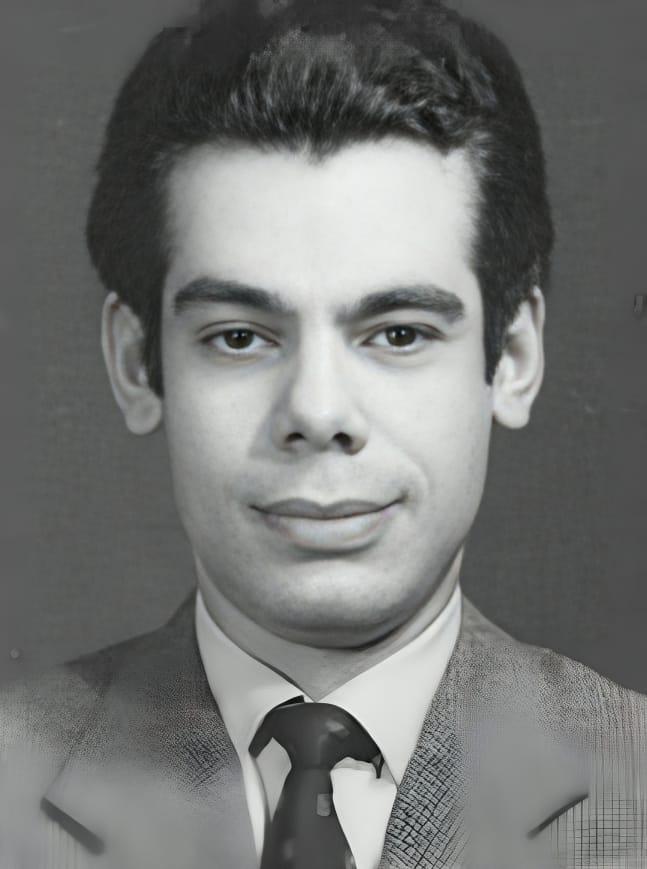
Magdy Rizk
Magdy Rizk
Contact
Available NowOverview
Egyptian Set Designer
Description
🎭 Magdy Rizk
Egyptian Set Designer
🗓️ Date of Birth:
May 8, 1939
🕊️ Date of Death:
September 4, 2011
🌍 Nationality:
Egyptian
🏙️ Place of Birth:
Egypt
🏠 Origin:
Shubra district, Cairo
🎨 Artistic Career:
His passion for theater arts began early through active participation in school theater, where he acted in several plays during his academic years.
In 1958, he joined the Leonardo da Vinci Institute of Fine Arts in Cairo for independent studies.
He earned a Bachelor’s degree in Applied Arts in 1963.
Upon graduation, he joined the Television Theater Troupes, and became Director of Stage Administration and set executor at the newly established Hakim Theater in 1963.
🏛️ Theatrical Works (Set & Costume Design):
With Hakim Theater Troupe:
🚂 Qatr Al-Tarheela (The Deportation Train)
🍽️ Al-Buffet
⚫ Al-Soud (The Blacks) (1967)
🐉 Enta Elli Atalt El Wahsh (You Killed the Beast) (1969)
🌑 Noor El-Zalam (Light of Darkness) (1971)
👑 Malek Yabhath An Wazefa (A King Looking for a Job) (1972)
With Modern Theater Troupe:
👥 Wahed Wala Etneen (One or Two)
🧓 Eyat El Ustaz Rabie (Mr. Rabie’s Clinic) (1972)
💍 Gawaz Ala Wara' Talaq (Marriage on Divorce Paper) (1973)
🧸 Hena Ara'es Btetross (Here, Dolls are Lined Up) (1985)
💃 Musical & Folkloric Performances (Scenography):
With the Musical Folklore Troupe:
🌙 Layla Min Alf Layla (A Night from One Thousand and One Nights) (1976)
🇪🇬 Masr Baldna (Egypt, Our Country) (1978)
🌸 Nawar El-Kheir (Spring of Goodness) (1979)
💖 El Ashra El Tayba (The Good Ten) (1983)
👩🦱 Rabha Rabha (1987)
🐒 Aalam Gorod Gorod (World of Monkeys) (1990)
🧑⚖️ Ashab El-Maali (Their Excellencies) (1992)
With the Under 18 Troupe:
👕 Qamees El-Saada (The Shirt of Happiness) (1993)
🐦 Ahlam El-Asafeer (Birds’ Dreams) (1994)
🏺 Om El-Dunya (Mother of the World) (1995)
🌿 Hob El-Romman (Pomegranate Love)
🏅 Artistic Legacy:
Magdy Rizk is regarded as one of the pioneers of theatrical set design in Egypt. He played a key role in shaping the visual identity of numerous state theater productions and folkloric shows, leaving a lasting legacy in the Egyptian theater scene.

Suggested Results

Biography of the Iconic Actor Adel Emam

Amr Saad's Biography

is one of the most prominent artistic and media figures in Egypt and the Arab world.

one of the greatest actresses in Egypt and the Arab world