
Treatment of Delayed Pregnancy and the Main Steps for Evaluating Infertility Causes | Dr. Moneira El-Maghraby in Alexandria
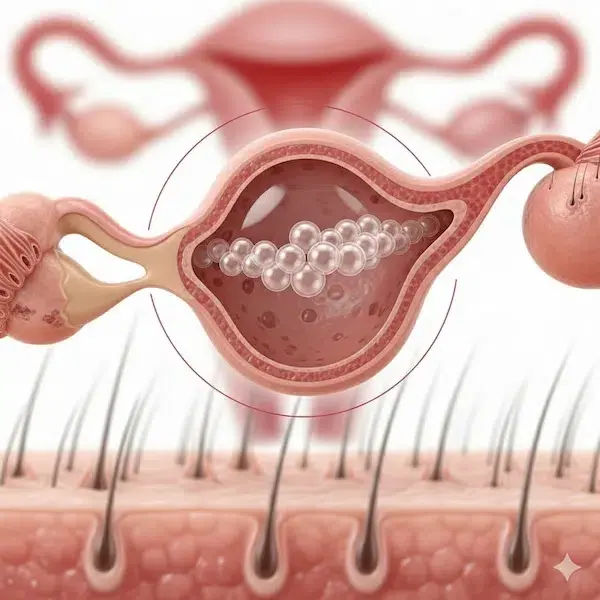
Delayed pregnancy can be a source of concern for couples, especially when pregnancy does not occur after a period of trying. The causes vary from one case to another and may be related to ovulation, hormones, the uterus, or the fallopian tubes. Factors related to the male partner may also play a role.
For this reason, treatment of delayed pregnancy does not depend on one specific step or a fixed treatment for everyone. It begins with evaluating the possible causes and identifying the factors affecting fertility before developing an appropriate treatment plan.
📍 Dr. Moneira El-Maghraby Contact Information
Address:
62 Mansour El-Qady Street, off Khaled Ibn El-Waleed Street, Sidi Bishr Bahary, next to El-Ghaly Pharmacy, Alexandria.
📞 Phone:
01555909344
💬 WhatsApp:
01555909344.jpg)
When Is Pregnancy Considered Delayed?
The evaluation of delayed pregnancy depends on the woman's age, the medical history of both partners, and different fertility factors. In some cases, medical evaluation may be appropriate earlier, particularly when there are irregular menstrual cycles or known conditions that may affect fertility.
Therefore, there is not one fixed period that applies to every couple. The need for evaluation depends on the individual health circumstances of each case.
What Causes Delayed Pregnancy?
Delayed pregnancy may result from several factors affecting either partner. Possible causes include:
- Ovulation disorders.
- Polycystic ovary syndrome.
- Certain hormonal disorders.
- Uterine conditions.
- Blockages or problems affecting the fallopian tubes.
- Endometriosis in some cases.
- Reduced ovarian reserve or age-related changes in fertility.
- Certain factors related to sperm quality in the male partner.
In some cases, more than one factor may be involved at the same time, which is why comprehensive evaluation can help identify the factors affecting fertility.
How Is the Cause of Delayed Pregnancy Diagnosed?
Evaluation usually begins by reviewing the medical history of both partners, menstrual cycle regularity, previous pregnancies, and any previous surgeries or medical conditions that may affect fertility.
Depending on the case, the doctor may recommend several tests, such as evaluating ovulation and hormone levels, examining the uterus and fallopian tubes when necessary, and assessing certain fertility factors in the male partner.
Not every couple needs every available test. The appropriate investigations are determined according to the medical history, symptoms, and initial evaluation.
Can Ovulation Disorders Cause Delayed Pregnancy?
Yes. Ovulation disorders can make pregnancy more difficult because conception depends on the release of an egg at the appropriate time.
Ovulation problems may be associated with PCOS, certain hormonal disorders, or other factors. Identifying the cause of the ovulation disorder is therefore an important part of developing a treatment plan.
How Is Delayed Pregnancy Treated?
Treatment depends on the underlying cause. If delayed pregnancy is related to an ovulation disorder, the treatment plan may focus on improving or regulating ovulation according to the individual case.
In other cases, treatment may target a uterine or fallopian tube problem or a hormonal disorder. Some couples may require more advanced assisted reproductive options.
Therefore, there is no single treatment suitable for all cases of delayed pregnancy. The appropriate approach depends on the evaluation results and the factors affecting fertility.
Can Medication Be Used to Treat Delayed Pregnancy?
In some cases, medications may be used to address fertility-related problems, such as certain ovulation disorders. However, the medication, dosage, and duration vary depending on the individual condition.
Ovulation-inducing or hormonal medications should not be used without medical supervision, as treatment depends on the underlying cause and test results.
When Are Assisted Reproductive Methods Considered?
Some cases may require assisted reproductive methods when simpler treatment or management of the underlying cause is not sufficient to achieve pregnancy, or when specific fertility factors are present.
The appropriate method depends on factors such as the woman's age, the cause of delayed pregnancy, test results, and fertility factors affecting both partners.
Does Delayed Pregnancy Only Mean There Is a Problem With the Woman?
No. Factors related to the male partner can also contribute to delayed pregnancy. For this reason, fertility evaluation should involve both partners, particularly when there is no clear cause affecting the woman.
Evaluating both partners helps avoid focusing on only one possible factor and provides a more complete understanding of the potential causes.
Does Age Affect Fertility?
Age can affect fertility, particularly as a woman gets older, as ovarian function and egg reserve may change over time.
For this reason, the timing of fertility evaluation and the available treatment options may vary from one woman to another depending on age, medical history, and other fertility factors.
When Should You See a Doctor About Delayed Pregnancy?
The need for evaluation varies from one case to another. However, irregular menstrual cycles, known ovulation or hormonal disorders, or a medical history that may affect fertility can be reasons to begin evaluation earlier.
Continued difficulty conceiving despite trying is also a reason to evaluate both partners to identify possible causes and determine appropriate options.
Treatment of delayed pregnancy begins with identifying the underlying cause, as delayed conception may result from factors involving ovulation, hormones, the uterus, fallopian tubes, or factors related to the male partner. Treatment therefore varies from one case to another.
Comprehensive medical evaluation can help identify the factors affecting fertility and determine the appropriate approach according to the needs of each couple.