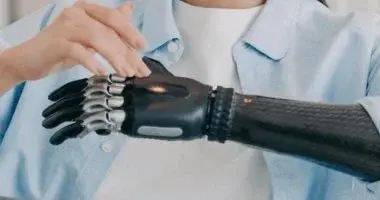

In a promising leap forward, researchers in Mexico have developed an innovative prosthetic arm that could transform the lives of amputees by enabling more natural movement through a remarkably simple system.
The new device, known as “E-Redi,” operates using a single muscle sensor, marking a significant advancement over traditional prosthetics that often rely on complex systems, making them difficult to use and sometimes leading users to abandon them altogether.
The research team focused on creating a solution that balances simplicity and functionality, allowing users to adapt quickly without extensive training or complicated setups, making it more practical for everyday use.
Designed using 3D printing technology, the prosthetic integrates its motors within the forearm in a compact and efficient way, offering a more streamlined appearance and improved usability. This design also helps train the brain to control the arm more naturally, making it feel closer to a real limb.
Looking ahead, this innovation opens the door for future enhancements, including potential voice-controlled features, which could further simplify interaction and improve user experience.
Beyond its technological significance, the project carries a strong human dimension, as individuals with personal experiences of limb loss contributed to its development, ensuring the design meets real-world needs.
This advancement highlights how technology, when guided by human-centered design, can restore independence and bring new hope to those seeking a better quality of life.
For more details and the latest updates, follow the Egypt Connect website