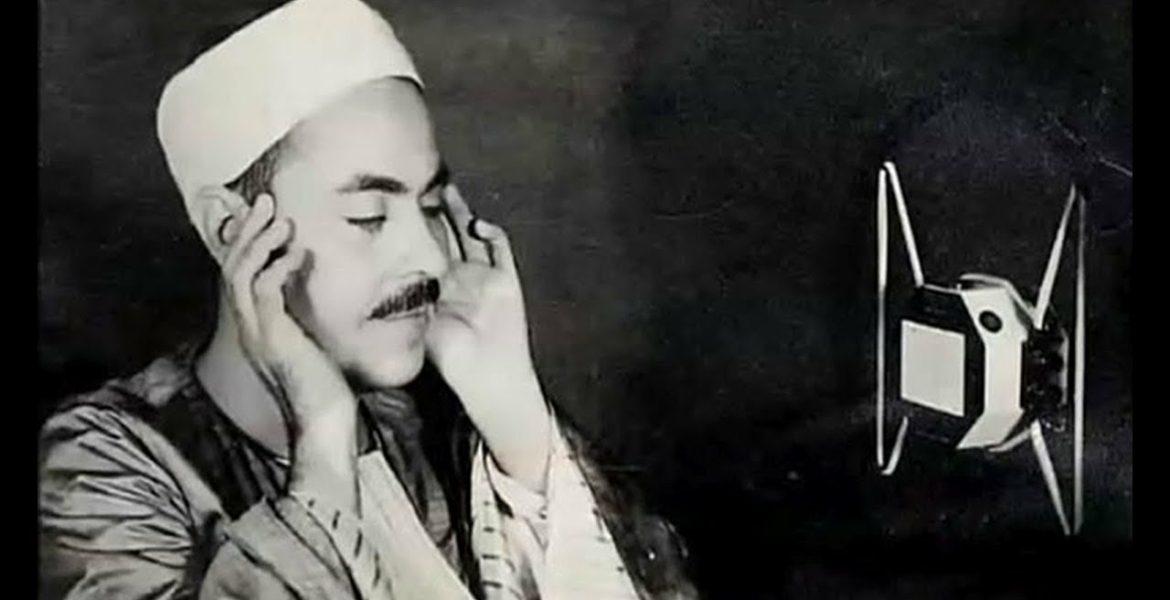
On this day in 1950, the world lost the great reciter Sheikh Muhammad Refaat, one of the pioneers of Quran recitation in Egypt and the Islamic world, whose voice left a timeless impact on hearts.
The Al-Azhar Global Fatwa Center stated that Sheikh Muhammad Refaat is considered one of the most prominent figures in Quranic recitation, and he was given the title “The Celestial Harp” due to the spiritual and angelic beauty of his voice.
Early Life and Beginnings
Sheikh Muhammad Refaat was born on May 9, 1882, in Cairo. He lost his sight at the age of two, but the Quran became the light of his life.
He began memorizing the Quran at the age of five and studied Tajweed and Quranic readings under prominent scholars until he became certified in the science of recitation. His talent appeared early.
After losing his father at a young age, he became responsible for his family and began reciting in religious gatherings while still a teenager, starting his journey toward fame.

Career and Egyptian Radio Opening
In 1918, he became a reciter at Fadel Pasha Mosque in Sayyida Zainab, Cairo, where his fame spread widely.
He was the first to open Egyptian Radio in 1934 with a recitation from Surah Al-Fath, after a fatwa from Al-Azhar permitting Quran broadcasting.
He was also invited by the BBC Arabic service to record the Quran, and after a religious consultation, he agreed and recorded Surah Maryam.
Titles and Status
Sheikh Muhammad Refaat was known by many titles:
- The Celestial Harp
- The Nightingale of Radio
- The Golden Voice
- The Angelic Voice
His voice was known for deep humility and emotional impact.
Humanitarian Side
He was known for his kindness and compassion toward the poor and needy.
In one story, he was deeply moved while reciting the verse about orphans and later supported an orphan girl financially until she was married.

Illness and Death
In 1943, he suffered from a throat illness that stopped him from reciting. He spent all his savings on treatment until he became poor, yet he refused donations, saying his famous words:
“The reciter of the Quran is never humiliated.”
He passed away on May 9, 1950, on his birthday, at the age of 68, leaving behind a lasting spiritual legacy.
Lasting Legacy
Sheikh Muhammad Refaat remains a legendary figure in Quran recitation history, inspiring generations of reciters with his unique style and deeply spiritual voice.

FAQ
Who is Sheikh Muhammad Refaat?
He is one of the most famous Quran reciters in Egypt and the world, known as “The Celestial Harp.”
When was he born and when did he die?
He was born on May 9, 1882, and died on May 9, 1950.
Why was he called The Celestial Harp?
Because of his spiritual, emotional, and angelic voice.
What is his greatest achievement?
He was the first to open Egyptian Radio with Quran recitation in 1934.
Where was he buried?
He was buried near Sayyida Nafisa Mosque in Cairo, as he wished.