
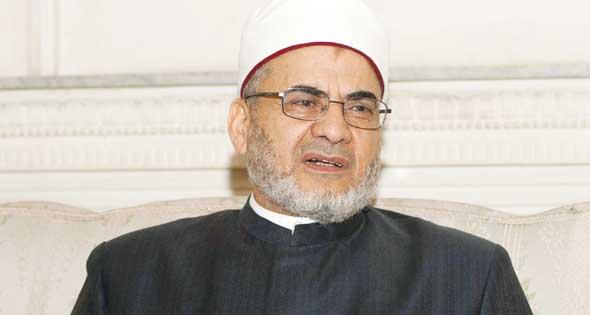

Dr. Seif Ragab Qazamel, head of the Gharbia branch of the World Organization for Al-Azhar Graduates and former dean of the Faculty of Sharia and Law, warned citizens against turning to fortune-tellers and future predictors ahead of the New Year.
He stressed that Islamic law places the protection of human intellect at its highest priority, as reason forms the foundation of accountability and awareness. Any attempt to distort or suspend rational thinking, he noted, contradicts religious values and the objectives of Sharia.
Dr. Qazamel explained that prohibition extends beyond physical intoxicants to include moral and intellectual distractions—particularly superstition and illusion—which cloud judgment and weaken discernment.
He pointed out that the Prophetic tradition firmly rejected reliance on charms or practices lacking inherent benefit, emphasizing that such dependence only breeds weakness and distances individuals from true reliance on God.
He strongly criticized the media’s hosting of astrologers and fortune-tellers, warning that spreading their claims fuels ignorance and erodes social values. He noted that even listening to such assertions without belief is sinful, as knowledge of the unseen belongs solely to God.
Modern practices such as tarot reading, horoscope predictions, and star-based forecasts were described as evolved forms of forbidden divination, capable of leading individuals into psychological and behavioral disorders, and in extreme cases, self-harm or violence under deceptive beliefs.
Dr. Qazamel concluded by affirming that working in or profiting from these fields is religiously prohibited, calling for exposing their falsehood and urging society to uphold sound reason and protect faith from concealed forms of superstition.




