
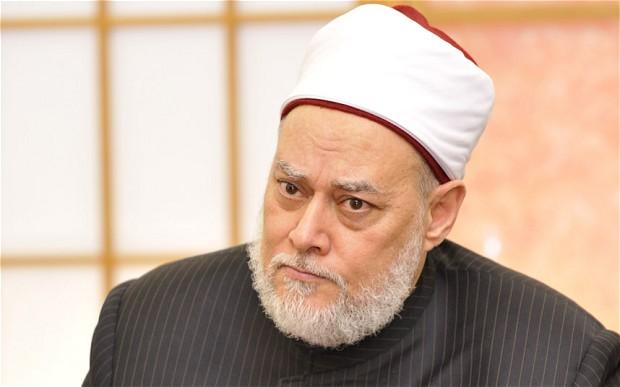

Dr. Ali Gomaa, a member of Al-Azhar's Council of Senior Scholars, said that the Prophet Muhammad ﷺ left Muslims a comprehensive hadith containing profound guidance for Muslim life and relationships with others.
The Hadith of “Those Who Show Mercy”
Ali Gomaa explained that scholars referred to this narration as “Hadith al-Awwaliyyah”, or the “hadith of priority,” because it is among the narrations that a scholar transmits from those before him and passes on to students and later generations.
The Prophet ﷺ said:
“Those who show mercy will be shown mercy by the Most Merciful. Show mercy to those on earth, and the One above the heavens will show mercy to you.”
Another reported wording is understood as:
“The One in heaven will have mercy upon you.”
The Meaning of “Show Mercy to Those on Earth”
Ali Gomaa explained that the different grammatical readings of the narration convey a subtle meaning.
With the reading “may He have mercy upon you,” the meaning is that when a person shows mercy to those on earth, Allah grants him mercy. This is consistent with the prophetic teaching:
“Whoever does not show mercy will not be shown mercy.”
With the other reading, the wording carries the meaning of a supplication for mercy, encouraging people to develop the motivation to show mercy to themselves and to those around them.
Mercy Includes Muslims and Non-Muslims
Ali Gomaa emphasized that the Prophet's instruction, “Show mercy to those on earth,” is broad in meaning.
It includes Muslims and non-Muslims, the righteous and the sinful, and, as he explained, everything found on earth.
The Prophet ﷺ also described himself by saying:
“I am only a mercy bestowed.”
His message therefore represents mercy for the worlds, with its meaning extending throughout human life.
Mercy Extends to All Creation
Ali Gomaa explained that the Prophet ﷺ taught Muslims that the universe glorifies Allah, worships Him, and submits to Him.
He emphasized that creatures and even inanimate objects have forms of interaction that human beings may not fully understand.
For this reason, the relationship between people and the world around them should be based on mercy and cultivation rather than destruction.
The Quran says:
“And to Allah prostrates whatever is in the heavens and whatever is on the earth of creatures and the angels, and they are not arrogant. They fear their Lord above them.”
Surrender to Allah and Live in Harmony
Ali Gomaa pointed out that everything in the universe has submitted to Allah, worships Him, and glorifies Him.
Therefore, human beings should entrust their affairs to Allah and live in harmony with the order of creation.
He explained that the believer should seek to follow this direction rather than oppose the natural order established by Allah.
The Story of the Palm Trunk
Ali Gomaa referred to the well-known story of the palm trunk upon which the Prophet ﷺ used to deliver his sermons.
When a pulpit was made for him and he stopped standing on the trunk, it cried out and made a sound that moved the Prophet ﷺ.
He came down from the pulpit, embraced the trunk, and it became still.
Ali Gomaa explained that this story offers a lesson in mercy and teaches people to treat creation with compassion, even when they do not understand how its forms of glorification take place.
Mercy Is the Foundation of Love and Development
Ali Gomaa emphasized that mercy is not merely an emotional response. Rather, it forms the foundation of many important human and social values.
According to his explanation, mercy is the foundation of love, cooperation, development, generosity, and every form of goodness.
He also pointed to the opening phrase:
“In the name of Allah, the Most Merciful, the Especially Merciful.”
This beginning highlights the central place of mercy in the Islamic understanding presented in the source material.
A Call to Show Mercy
Ali Gomaa concluded by calling on people to show mercy toward one another, emphasizing that mercy contributes to healthier hearts and communities.
Mercy encourages people to cooperate, give, care for others, and approach life and creation with a spirit of building rather than destruction.
Show mercy to one another, for mercy is the foundation of love, cooperation, development, generosity, and every form of goodness.
What does the hadith “Those who show mercy will be shown mercy” mean?
It teaches that showing mercy to those on earth is connected to receiving Allah's mercy.
Who is included in the command to show mercy?
According to Ali Gomaa's explanation, it includes Muslims and non-Muslims, the righteous and sinners, and all that exists on earth.
How is mercy connected to development?
Mercy encourages people to care for and cultivate the world around them rather than destroy it.
Why is the hadith called “Hadith al-Awwaliyyah”?
Ali Gomaa explained that scholars used this designation because it is among the narrations transmitted by scholars from earlier generations to their students.
Why is mercy important in human life?
According to Ali Gomaa, mercy is a foundation for love, cooperation, development, generosity, and many forms of goodness.




