
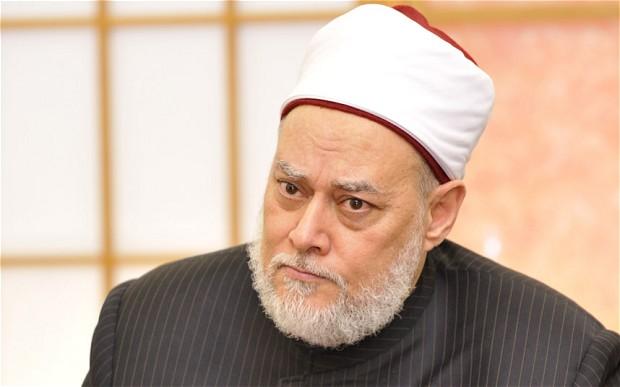

Dr. Ali Gomaa, a member of Al-Azhar’s Council of Senior Scholars, stated that Allah Almighty says in the Quran:
“If only, when they wronged themselves, they had come to you, sought Allah’s forgiveness, and the Messenger had sought forgiveness for them, they would have found Allah Most Relenting, Most Merciful.”
In a post published on his official social media page, Gomaa explained that the Prophet Muhammad, peace and blessings be upon him, responds to greetings sent to him by members of his Ummah during his Barzakh life.
The Prophet ﷺ Responds to Those Who Send Greetings
The Hadith About Responding to Greetings
Dr. Ali Gomaa cited a narration attributed to Abu Hurairah, may Allah be pleased with him, in which the Messenger of Allah ﷺ said:
“There is no one who sends greetings upon me except that Allah returns my soul to me so that I may return his greeting.”
Gomaa explained that this narration indicates that the Prophet ﷺ responds to those who greet him.
The Prophet’s Life and Mission After His Passing
Ali Gomaa emphasized that Prophet Muhammad ﷺ is the Seal of the Prophets and that his prophethood remains established until the Day of Judgment.
His passing occurred according to Allah’s established way for His creation, after the completion of the religion and Islamic law.
Gomaa also noted that the Prophet ﷺ was given the choice and chose the Highest Companion, and that Allah returns his soul so that he may respond to greetings from his Ummah.
The Narration “My Life Is Good for You”
Dr. Ali Gomaa also mentioned a narration attributed to the Prophet ﷺ:
“My life is good for you: you speak and matters are brought to you, and my death is good for you: your deeds are presented to me. Whatever I find good, I praise Allah for it, and whatever I find otherwise, I seek Allah’s forgiveness for you.”
He emphasized that although the Prophet ﷺ has passed away from this worldly life, his Sharia and guidance remain among the Muslim Ummah until the Day of Judgment.
The Quranic Verse About Seeking Forgiveness
Ali Gomaa also referred to Allah’s statement:
“If only, when they wronged themselves, they had come to you, sought Allah’s forgiveness, and the Messenger had sought forgiveness for them, they would have found Allah Most Relenting, Most Merciful.”
He explained that, in the context of his discussion, the verse relates to coming to the Prophet ﷺ, seeking forgiveness, and asking Allah for His mercy and forgiveness.
The Story of the Bedouin at the Prophet’s Grave
Dr. Ali Gomaa also cited a well-known account mentioned by Ibn Kathir in his Quranic commentary, which he attributed to earlier scholars.
What Did the Bedouin Say at the Prophet’s Grave?
According to the account, Al-Utbi was sitting near the grave of the Prophet ﷺ when a Bedouin came and said:
“Peace be upon you, O Messenger of Allah. I heard Allah say: ‘If only, when they wronged themselves, they had come to you...’ I have come to you seeking forgiveness for my sin and seeking your intercession with my Lord.”
The Bedouin then recited poetry praising the Prophet ﷺ, including:
“O best of those whose bones were buried in the earth,
through their fragrance the earth and hills became pure.”
He also said:
“May my soul be sacrificed for a grave in which you reside;
within it are chastity, generosity, and noble character.”
The Bedouin then left.
Al-Utbi’s Dream of the Prophet ﷺ
The account states that Al-Utbi later fell asleep and saw the Prophet ﷺ in a dream. He said to him:
“O Utbi, go after the Bedouin and give him the glad tidings that Allah has forgiven him.”
This account is mentioned in classical works of Quranic commentary in connection with the verse, and Ibn Kathir included it among reports transmitted from earlier scholars.
Sending Blessings Upon the Prophet ﷺ
These meanings highlight the importance of sending blessings and peace upon Prophet Muhammad ﷺ and honoring his status in the hearts of Muslims.
Muslims continue to send blessings and peace upon the Messenger ﷺ as an expression of love, reverence, and adherence to his guidance and teachings.
Does the Prophet ﷺ respond to those who send greetings upon him?
A narration states: “There is no one who sends greetings upon me except that Allah returns my soul to me so that I may return his greeting.” Dr. Ali Gomaa cited this narration in his statement.
What did Ali Gomaa say about the Prophet’s Barzakh life?
He explained that the Prophet ﷺ responds to greetings from his Ummah in his Barzakh life and that his Sharia and guidance remain with the Muslim Ummah until the Day of Judgment.
Which Quranic verse did Ali Gomaa cite?
He cited: “If only, when they wronged themselves, they had come to you, sought Allah’s forgiveness, and the Messenger had sought forgiveness for them...”
What is the story of the Bedouin at the Prophet’s grave?
Ibn Kathir mentioned an account attributed to Al-Utbi in which a Bedouin came to the Prophet’s grave, sought forgiveness, and asked for intercession. Al-Utbi later reported seeing the Prophet ﷺ in a dream and receiving the message that Allah had forgiven the Bedouin.
Why is sending blessings upon the Prophet ﷺ important?
Sending blessings and peace upon the Prophet ﷺ is an expression of love and reverence for him and reflects a Muslim’s commitment to his guidance and teachings.




