
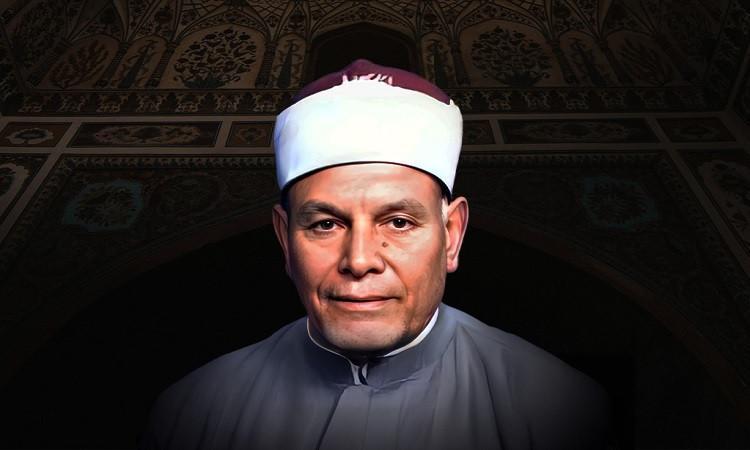

Today marks the death anniversary of Sheikh Atiya Saqr, one of the most prominent scholars and preachers who left a deep impact on the history of fatwa issuance and Islamic da‘wa in Egypt and beyond. Sheikh Saqr was known for his dedication to serving religion, promoting moderate thought, and issuing fatwas based on comprehensive Islamic sciences while considering people’s circumstances across different times and places. His career was a blend of scholarship, preaching, teaching, and authorship, making him a symbol of intellectual moderation and enlightened thought in the Islamic world.
Early Life and Education of Sheikh Atiya Saqr:
Sheikh Atiya Saqr was born in the village of Bahna Bay, Zagazig district, Al-Sharqia governorate, on November 22, 1914. He memorized the Qur’an by the age of nine and perfected his recitation by age ten. In 1928, he joined the Zagazig Religious Institute, then studied at the Faculty of Usul al-Din at Al-Azhar University, where he obtained his higher degree in 1941, specializing in preaching, and received a diploma in Da‘wa and guidance in 1943.
Early Career in Da‘wa and Fatwa Work:
After graduation, Sheikh Saqr was appointed an imam and preacher at the Ministry of Awqaf, then moved to work in preaching at Al-Azhar in 1945, traveling between Egyptian cities. He was promoted to preaching inspector in 1955, then supervisor, and also worked as a French translator, deputy head of the Missions Department in 1969, lecturer at the Higher Department of Islamic and Arabic Studies, assistant secretary of the Islamic Research Academy, and later director of the office of the Grand Imam of Al-Azhar in 1970.
International Da‘wa and Scholarly Visits:
Sheikh Atiya Saqr contributed to spreading moderate da‘wa and enlightened thought through official visits to many countries, including Kuwait (1972–1979), Indonesia (1971), Libya (1972), Bahrain (1976), Algeria (1977), as well as later visits after retirement to the United States, Pakistan, Bangladesh, Iraq, Senegal, Nigeria, Benin, France, Britain, Malaysia, Brunei, and Singapore.
Post-Retirement Roles and Community Contributions:
After retiring in November 1979, Sheikh Saqr continued serving da‘wa and fatwa work. He served as an advisor to the Minister of Awqaf, member of the Supreme Council for Islamic Affairs, member of the Islamic Research Academy, then chaired the Fatwa Committee at Al-Azhar, the International Center for the Sunnah and Seerah, and the committee for the Fiqh Encyclopedia. He was also elected to the Egyptian Parliament in 1984 and appointed to the Shura Council in 1989.
Cultural and Scholarly Contributions:
Sheikh Saqr had a wide presence in religious media, radio, and television, and published articles and fatwas in newspapers and magazines. He authored approximately 40 books, including:
-
Encyclopedia of the Best Words in Fatwas and Rulings (7 volumes)
-
The Family under Islamic Care
-
Religious and Social Guidelines
-
Islam Facing Challenges
-
The Significance of Worship in Islam
-
Abridged Biography of the Prophet
-
The Art of Delivering Sermons
Recognition and Honors:
Sheikh Saqr was awarded the First-Class Order of Science and Arts in 1983 and the First-Class Medal of Excellence in 1989, recognizing his distinguished scholarly and da‘wa career.
Death and Legacy:
Sheikh Atiya Saqr passed away on the morning of December 9, 2006, leaving a scholarly, da‘wa, and cultural legacy that continues to influence successive generations in Egypt and abroad, remaining an example of moderate Islamic scholarship and enlightened thought.




