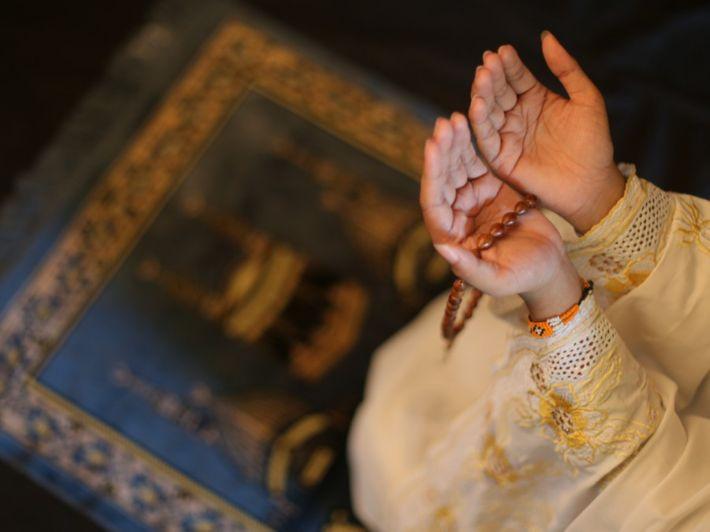

The authentic morning adhkar are a collection of Quranic verses, supplications, and prophetic remembrances that Muslims are encouraged to recite in the morning.
They include affirming the oneness of Allah, praising Him, seeking forgiveness, asking for protection, and seeking well-being in this life and the Hereafter.
The time for morning adhkar begins after Fajr, and it is recommended to recite them early in the day.
Ayat al-Kursi
Ayat al-Kursi is recited once:
“Allah—there is no deity except Him, the Ever-Living, the Sustainer of all. Neither drowsiness nor sleep overtakes Him. To Him belongs whatever is in the heavens and whatever is on earth. Who could possibly intercede with Him without His permission? He fully knows what is ahead of them and what is behind them, but no one can grasp any of His knowledge—except what He wills. His Throne encompasses the heavens and the earth, and the preservation of both does not tire Him. And He is the Most High, the Most Great.”
Surah Al-Ikhlas and the Two Mu'awwidhat
Surah Al-Ikhlas, Surah Al-Falaq, and Surah An-Nas are each recited three times in the morning.
Surah Al-Ikhlas:
“Say, He is Allah, the One. Allah—the Sustainer needed by all. He has never had offspring, nor was He born. And there is none comparable to Him.”
Surah Al-Falaq:
“Say, I seek refuge in the Lord of the daybreak from the evil of everything He has created, and from the evil of the night when it falls, and from the evil of those who blow on knots, and from the evil of an envier when they envy.”
Surah An-Nas:
“Say, I seek refuge in the Lord of humanity, the King of humanity, the God of humanity, from the evil of the lurking whisperer, who whispers into the hearts of humanity, from among jinn and humanity.”
Sayyid al-Istighfar
Sayyid al-Istighfar is recited once:
“O Allah, You are my Lord. There is no deity except You. You created me and I am Your servant. I uphold Your covenant and promise as best I can. I seek refuge in You from the evil of what I have done. I acknowledge Your blessings upon me, and I acknowledge my sin, so forgive me, for none forgives sins except You.”
“We Have Entered the Morning and the Kingdom Belongs to Allah”
This remembrance is said once:
“We have entered the morning and the kingdom belongs to Allah. Praise belongs to Allah. There is no deity except Allah alone, without partner. To Him belongs the kingdom and to Him belongs all praise, and He has power over everything. My Lord, I ask You for the good of this day and the good that follows it, and I seek refuge in You from the evil of this day and the evil that follows it. My Lord, I seek refuge in You from laziness and the evils of old age. My Lord, I seek refuge in You from punishment in the Fire and punishment in the grave.”
“I Am Pleased With Allah as My Lord”
This remembrance is said three times:
“I am pleased with Allah as my Lord, with Islam as my religion, and with Muhammad ﷺ as my Prophet.”
The Testimony of Tawhid
This remembrance is said four times:
“O Allah, I have entered the morning calling You to witness, and calling the bearers of Your Throne, Your angels, and all Your creation to witness that You are Allah. There is no deity except You alone, without partner, and that Muhammad is Your servant and Messenger.”
Supplication for Forgiveness and Well-Being
It is said once:
“O Allah, I ask You for forgiveness and well-being in this world and the Hereafter. O Allah, I ask You for forgiveness and well-being in my religion, my worldly affairs, my family, and my wealth. O Allah, conceal my faults and calm my fears. O Allah, protect me from before me, from behind me, from my right, from my left, and from above me, and I seek refuge in Your greatness from being unexpectedly harmed from beneath me.”
Seeking Refuge From Evil
This supplication is said once:
“O Allah, Knower of the unseen and the visible, Creator of the heavens and the earth, Lord and Sovereign of everything, I bear witness that there is no deity except You. I seek refuge in You from the evil within myself, from the evil of Satan and his association, and from committing wrong against myself or bringing it upon another Muslim.”
Seeking Help Through Allah’s Mercy
The supplication says:
“O Ever-Living, O Sustainer, by Your mercy I seek help. Set right all of my affairs and do not leave me to myself even for the blink of an eye.”
The Remembrance of Tawhid
Among the remembrances of the day is:
“There is no deity except Allah alone, without partner. To Him belongs the kingdom and all praise, and He has power over everything.”
There is an established virtue for saying this remembrance one hundred times during the day, while reports also mention fewer repetitions in morning and evening remembrances.
Glorifying and Praising Allah
The remembrance:
“Glory be to Allah and praise be to Him”
is said one hundred times.
It is among the great remembrances that Muslims are encouraged to repeat throughout the day.
Supplication for Health and Well-Being
Among the morning supplications is:
“O Allah, grant health to my body. O Allah, grant health to my hearing. O Allah, grant health to my sight. There is no deity except You. O Allah, I seek refuge in You from disbelief and poverty, and I seek refuge in You from the punishment of the grave. There is no deity except You.”
It is said three times.
Supplication for Beneficial Knowledge and Provision
After the Fajr prayer, the following supplication may be said:
“O Allah, I ask You for beneficial knowledge, good provision, and accepted deeds.”
A Comprehensive Supplication for Good
Among the comprehensive supplications is:
“O Allah, I ask You for all good, immediate and later, what I know of it and what I do not know. And I seek refuge in You from all evil, immediate and later, what I know of it and what I do not know.”
It combines asking Allah for every form of good and seeking refuge from every form of evil.
When Should Morning Adhkar Be Recited?
The time for morning adhkar begins after Fajr. It is recommended to recite them early in the day, while a person who did not recite them immediately after Fajr may still recite what they can during the morning.
Is It Necessary to Recite All Morning Adhkar?
No. Morning adhkar are recommended acts of worship and are not obligatory. A Muslim may recite whatever is easy for them while striving to observe the prescribed wording and repetition where applicable.
What are the authentic morning adhkar?
They include Ayat al-Kursi, Al-Ikhlas, Al-Falaq, An-Nas, Sayyid al-Istighfar, and various prophetic supplications for protection, well-being, forgiveness, and tawhid.
When should morning adhkar be recited?
Their time begins after Fajr, and it is recommended to recite them early in the morning.
How many times are Al-Ikhlas and the two Mu'awwidhat recited?
Al-Ikhlas, Al-Falaq, and An-Nas are each recited three times in the morning.
How many times is Sayyid al-Istighfar recited?
It is recited once in the morning.
Are morning adhkar obligatory?
No. Morning adhkar are recommended acts of worship and are not obligatory.