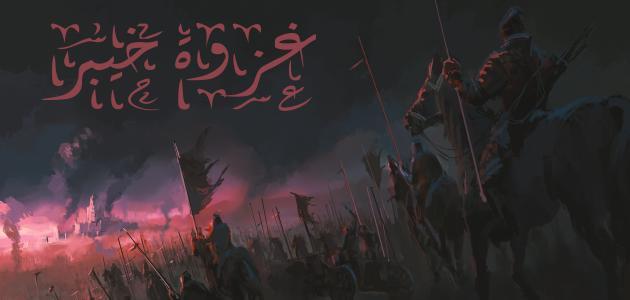
The Battle of Khaybar was one of the major military campaigns during the lifetime of Prophet Muhammad, peace and blessings be upon him. It took place in the seventh year after the Hijra, when the Prophet traveled with his companions toward Khaybar. The campaign ended with the conquest of its fortresses and the return of the Muslims to Medina.
When Did the Battle of Khaybar Take Place?
The Battle of Khaybar took place in the seventh year after the Hijra. The Prophet Muhammad traveled toward Khaybar with his companions, particularly those who had accompanied him at Hudaybiyyah.
Namilah ibn Abdullah al-Laythi was appointed to oversee Medina in the Prophet’s absence, while the banner was given to Ali ibn Abi Talib, may Allah be pleased with him.
Umm Salama, one of the Prophet’s wives, also accompanied the expedition.
The Muslim Army Heads Toward Khaybar
As the Prophet prepared to leave for Khaybar, some people in Medina attempted to frighten the Muslims by emphasizing the strength of Khaybar’s inhabitants.
The Muslim army continued its journey and reached an area known as al-Raji'. The Prophet chose a route that would prevent the people of Khaybar from easily receiving support from their allies among the Ghatafan.
During the journey, Amir ibn al-Akwa' entertained the army with his poetry. The Prophet prayed for him, and Amir later died during the battle after being accidentally wounded by his own sword.
The Muslims Reach Khaybar
When the Prophet approached Khaybar, he prayed to Allah for its goodness and protection from its evil.
The Muslims arrived at night, but the Prophet did not attack until morning. When the people of Khaybar went out to their work and saw the Muslim army, they rushed back to their fortresses.
The Prophet then began the campaign against the fortified positions of Khaybar.
The Conquest of Khaybar's Fortresses
The Muslims first captured Fort Na'im, where Mahmud ibn Maslamah was killed.
The campaign continued as the Muslims conquered several fortresses, including al-Sa'b ibn Mu'adh, al-Zubayr and the fortresses of al-Shaqq.
One of the most important and heavily fortified positions was Qamus.
Before the decisive stage of the battle, the Prophet Muhammad told his companions that he would give the banner to a man through whom Allah would grant victory.
Ali ibn Abi Talib and the Conquest of Khaybar
The following morning, the Prophet called Ali ibn Abi Talib, who was suffering from an eye problem.
The Prophet prayed for him and wiped his eyes, after which Ali recovered. He was then given the banner and fought until Allah granted victory through him.
Ali played a prominent role in the conquest of Khaybar, including the confrontation with Marhab, one of the notable fighters of Khaybar.
Safiyyah bint Huyayy
Safiyyah bint Huyayy was among those taken after the conquest of Qamus.
The Prophet freed her and later married her, making her one of the Mothers of the Believers.
The Peace Agreement with Khaybar
After the conquest of several fortresses, the Prophet moved toward the fortresses of al-Watih and al-Sulalim.
Their inhabitants eventually requested peace. An agreement was reached under which their lives would be protected, while the Muslims would gain control over the land and property according to the terms of the agreement.
The people of Khaybar later requested permission to remain on their lands and cultivate them, receiving a share of the agricultural produce.
The Poisoned Sheep Incident
After the fighting had ended, Zaynab bint al-Harith, the wife of Sallam ibn Mishkam, presented the Prophet with a poisoned sheep.
The Prophet was informed about the poison after eating from it. Bishr ibn al-Bara ibn Ma'rur also ate from the sheep and later died from its effects.
The incident left an effect on the Prophet that continued afterward.
The Spoils of Khaybar
Allah granted the Muslims substantial spoils following the conquest of Khaybar.
The Prophet distributed the spoils among the Muslims. Ja'far ibn Abi Talib and those who had returned from Abyssinia were also given shares.
Abu Hurayrah and a group of people who had embraced Islam also joined the Muslims and received a share.
Among the rulings associated with the campaign was the prohibition of eating domestic donkeys.
The Martyrs of Khaybar
Several companions were martyred during the Battle of Khaybar, including:
- Mahmud ibn Maslamah.
- Bishr ibn al-Bara ibn Ma'rur.
- Amir ibn al-Akwa'.
- Al-Aswad, the Abyssinian shepherd who embraced Islam during the campaign and was martyred.
Wadi al-Qura and the Return to Medina
After Khaybar, the Prophet traveled toward Wadi al-Qura and invited its people to Islam.
When they refused, the Muslims conquered the area and obtained its spoils.
The Prophet then returned to Medina after the successful campaign at Khaybar, marking an important development in the history of the early Muslim community.
Key Lessons from the Battle of Khaybar
The Battle of Khaybar contains several important lessons, including:
- The importance of taking practical measures while relying on Allah.
- The value of consultation and experience.
- The importance of patience and perseverance.
- The role of wise leadership during difficult circumstances.
- The belief that ultimate victory comes from Allah.
- The importance of following legitimate leadership and instructions.
- The remarkable examples of sacrifice and courage demonstrated by the companions.
Conclusion
The Battle of Khaybar remains an important chapter in the Prophetic biography. Its events included the conquest of heavily fortified positions, remarkable examples of courage among the companions, and developments that had a lasting impact on the early Muslim community.
The campaign also highlights the importance of preparation, patience, strategic planning and reliance upon Allah, while reminding believers that success ultimately comes by His permission.