
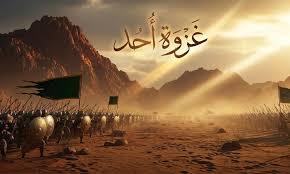

When Did the Battle of Uhud Take Place?
The Battle of Uhud took place in Shawwal during the third year after the Hijrah, near Mount Uhud.
Mount Uhud holds a special place in the Prophetic tradition. The Prophet Muhammad, peace and blessings be upon him, said: “Uhud is a mountain that loves us and we love it.”
The Battle of Uhud was one of the major events in the Prophet’s biography. It brought the Muslims face-to-face with Quraysh and included important events that left a lasting impact on the early Muslim community.
Why Did the Battle of Uhud Take Place?
The Battle of Uhud came after the defeat of Quraysh at the Battle of Badr, where several of its prominent leaders were killed.
Seeking revenge, the sons of those killed at Badr encouraged Quraysh to prepare for another confrontation with the Muslims.
They also called for using the wealth from the caravan that had escaped during the Battle of Badr to finance the military campaign.
Quraysh then began preparing a large army and marched toward Medina with weapons, fighters and women who were intended to encourage the soldiers.
The Quraysh Army Heads Toward Uhud
Quraysh marched with an army of approximately 3,000 men and 200 horses.
Khalid ibn al-Walid commanded the right wing, while Ikrimah ibn Abi Jahl commanded the left wing.
Abu Amir also joined the Quraysh forces after leaving Medina and opposing the Prophet Muhammad, peace and blessings be upon him.
Abu Sufyan encouraged the Banu Abd al-Dar to fight, while Hind bint Utbah and other women encouraged the army through poetry and chants.
The Prophet’s Vision Before the Battle
Before the Battle of Uhud, the Prophet Muhammad, peace and blessings be upon him, saw a vision in which cattle were being slaughtered. He also saw a defect in his sword and saw himself placing his hand inside a strong shield.
The Prophet interpreted the vision as indicating that some of his companions would be killed and that a member of his household would also be killed.
He interpreted the strong shield as representing Medina.
Consultation With the Companions
The Prophet Muhammad, peace and blessings be upon him, consulted his companions about how to confront Quraysh.
His initial preference was to remain inside Medina and defend the city, as the Muslims knew its streets and surroundings better than the attacking forces.
However, some companions who had missed the Battle of Badr strongly wanted to go out and confront Quraysh.
After the Prophet put on his armor, he made clear that once a prophet puts on his battle armor and prepares to confront the enemy, he should not turn back until the battle begins.
The Withdrawal of the Hypocrites
The Prophet Muhammad, peace and blessings be upon him, marched with the Muslim army.
On the way, Abdullah ibn Ubayy ibn Salul and his followers withdrew from the army. Their number was approximately one-third of the force.
The Prophet continued toward Mount Uhud with the remaining companions and prepared them for battle.
The Muslim Battle Plan
The Prophet Muhammad, peace and blessings be upon him, established a clear strategy for the battle.
He appointed Abdullah ibn Jubayr over fifty archers and instructed them to remain in their positions and protect the rear of the Muslim army.
They were told not to leave their positions even if it appeared that the Muslims had won, unless they received the Prophet’s permission.
The Prophet also gave his sword to Abu Dujana and asked him to fulfill its right by fighting with determination.
The Beginning of the Battle of Uhud
At the beginning of the battle, the Muslims gained the upper hand, and the Quraysh forces began retreating.
Some Muslim fighters then pursued the retreating forces, believing that the battle had effectively been won.
However, a group of archers left their assigned positions, seeking the spoils of war despite the Prophet’s explicit instructions.
Khalid ibn al-Walid took advantage of the opening and led the cavalry around the Muslim forces.
The course of the battle changed, and the Muslims suffered heavy losses.
The Prophet’s Injury and the Martyrs
The Prophet Muhammad, peace and blessings be upon him, was injured during the battle. His face was wounded, his lip was injured and his tooth was broken.
A rumor also spread among the Muslims that the Prophet had been killed.
Several companions were martyred during the Battle of Uhud, including Hamza ibn Abd al-Muttalib, the Prophet’s uncle.
Hamza was killed by Wahshi ibn Harb, and his body was mutilated by Hind bint Utbah.
Among the other prominent martyrs were Musab ibn Umayr, Sa'd ibn al-Rabi', Abdullah ibn Haram, Hanzala, known as the one washed by the angels, and Abdullah ibn Jahsh.
Approximately seventy Muslims were martyred at Uhud.
The Companions’ Courage at Uhud
The Battle of Uhud witnessed remarkable examples of courage and sacrifice among the companions.
Abu Dujana was among those who protected the Prophet, placing himself between him and the incoming arrows.
Qatada fought until his eye was injured, and the Prophet returned it to its place.
Abu Talha continued fighting until his hand was severely affected.
Nusaybah bint Ka'b, also known as Umm Umarah, was among those who defended the Prophet during the battle.
The Martyrdom of Hamza
The martyrdom of Hamza ibn Abd al-Muttalib was one of the most painful events for the Prophet Muhammad, peace and blessings be upon him.
The Prophet grieved deeply over the death of his uncle Hamza, then observed patience and followed the divine command to avoid mutilation.
The martyrs of Uhud were buried at the battlefield. Because of the large number of martyrs, some were buried together in the same grave.
Hamza was buried with Abdullah ibn Jahsh, while Amr ibn al-Jamuh was buried with Abdullah ibn Haram.
The Prophet After the Battle
After being injured, the Prophet Muhammad, peace and blessings be upon him, withdrew toward a section of the mountain.
Abu Sufyan later approached and boasted about what had happened.
The Muslims responded that Allah is the Most High and Most Great and confirmed that the Prophet was alive and could hear him.
The two sides then agreed to meet again the following year at Badr.
Despite their wounds, the Prophet and the companions who had fought at Uhud went out in pursuit of Quraysh and reached Hamra al-Asad.
This demonstrated that the Muslims had not been broken or weakened by the events of Uhud.
Major Lessons From the Battle of Uhud
The Battle of Uhud demonstrated the importance of obedience, discipline and patience during difficult circumstances.
It also revealed the courage and steadfastness of the companions and showed the consequences of abandoning clear instructions.
Allah Almighty said:
“Indeed, those of you who turned back on the day the two armies met—it was Satan who caused them to slip because of some of what they had earned. But Allah has already forgiven them. Indeed, Allah is Forgiving and Forbearing.” [Qur’an 3:155]
Key Lessons From the Battle of Uhud
Obedience and Discipline
The events of Uhud demonstrated that disobeying clear instructions can change the course of events, even when victory appears close.
Patience and Steadfastness
The battle showed the importance of remaining steadfast during hardship, especially after the false report that the Prophet had been killed.
Sacrifice and Courage
The companions provided remarkable examples of sacrifice and courage while defending the Prophet Muhammad, peace and blessings be upon him.
Trial and Spiritual Testing
The Battle of Uhud was not simply a military confrontation. It was also a test that highlighted the importance of faith, patience and steadfastness.
When did the Battle of Uhud take place?
The Battle of Uhud took place in Shawwal during the third year after the Hijrah.
Where did the Battle of Uhud take place?
The battle took place near Mount Uhud, close to Medina.
How large was the Quraysh army at Uhud?
The Quraysh army numbered approximately 3,000 men and included around 200 horses.
How many Muslims were martyred at Uhud?
Approximately 70 Muslims were martyred during the Battle of Uhud.
Who were among the most prominent martyrs of Uhud?
Among the prominent martyrs were Hamza ibn Abd al-Muttalib, Musab ibn Umayr, Abdullah ibn Jahsh, Sa'd ibn al-Rabi' and Hanzala, may Allah be pleased with them.




