

The question of whether a father may eat food purchased by his children without asking permission can arise in families where adult children work, earn salaries, and continue living with their parents.
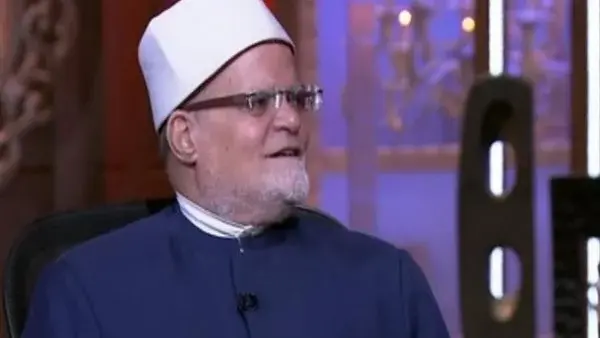
Dr. Attia Lasheen, a member of the Azhar Fatwa Committee, explained the ruling concerning parents eating their children’s food, distinguishing between the child’s ownership and permission that may be explicit or understood through family custom.
Does a Child Own Their Money and Food?
Dr. Attia Lasheen explained that the basic principle is that a child’s property belongs to the child.
Therefore, no one may take or use the child’s property without consent unless there is explicit or implicit permission or an established family custom that allows such use.
Being someone’s child does not automatically make everything they own the property of their parents.
Can Parents Eat Their Child’s Food When They Live Together?
If an adult child continues to live with their parents and regularly purchases food for personal use, there may be no objection to the parents eating from it if sharing food is an established family practice and the child does not object.
Permission does not always have to be expressed verbally. It can sometimes be understood from custom and circumstances.
If the child knows that the parents regularly eat from the food and does not object, this may indicate consent.
When Can a Parent Not Eat the Child’s Food?
If the child has clearly set aside food for personal use and indicates that they do not want anyone else to eat it, or is storing it for a particular need, the parents should not consume it without permission.
A child’s ownership does not disappear simply because of the parent-child relationship.
Does Permission Have to Be Explicit?
Not necessarily. Permission can be explicit or understood through customary practice and circumstances.
For example, if a child routinely shares food with the parents and knows that they eat from it without objecting, this may constitute customary permission.
However, if the child clearly indicates that they do not consent, their wishes should be respected.
Do Parents Have Rights Regarding Their Children’s Property?
Dr. Attia Lasheen cited the prophetic statement:
“The best thing you consume is what you earn, and your children are part of your earnings.”
This emphasizes the importance of kindness, support, and honoring parents.
However, it does not mean that a child’s property automatically becomes the unrestricted property of the father simply because of the parent-child relationship.
The child retains ownership while parents have rights related to kindness, care, and financial support according to their circumstances and needs.
Honoring Parents Is a Major Responsibility
When children grow older and become financially capable, while their parents need financial support or care, one of the greatest forms of honoring parents is to meet their needs and provide for them appropriately, particularly during old age or incapacity.
The Quran says:
“And your Lord has decreed that you worship none but Him, and honor your parents. If one or both of them reach old age in your care, do not say to them even ‘uff,’ nor repel them, but speak to them gracious words.” [Quran 17:23]
Honoring parents includes not only kind speech but also care, assistance, and meeting their needs according to one’s ability and their circumstances.
Advice for Working Children Living With Their Parents
Dr. Attia Lasheen advised working children who continue to live with their parents to show kindness by sharing their food and resources with them.
One practical form of kindness is to offer parents some of the food they have purchased, helping them avoid embarrassment and bringing happiness to their hearts.
Parents have often made significant sacrifices for their children, and returning that kindness with generosity is an important form of gratitude.
Conclusion
A father or mother should not take or eat food belonging to an adult child without permission when the child has clearly reserved it for personal use and does not consent.
However, if the child lives with the parents and the family custom is to share food, or the child knows that the parents eat from their food and does not object, this may constitute customary consent.
In all circumstances, honoring and caring for parents remains a major responsibility. A working child is encouraged to share food and financial resources with parents according to their ability, particularly when the parents are in need.
Can a father eat his child’s food without permission?
Not if the food belongs to the child, has been reserved for personal use, and the child has not given permission.
Can a father eat his child’s food if the child does not object?
Yes, if there is explicit consent or consent understood through established family custom and circumstances.
Does a child’s money automatically belong to the father?
No. The basic principle is that the child owns their property.
Are children required to financially support their parents?
When parents are in need and their children are able to provide support, financial care can be part of the children’s duty of honoring and caring for them, according to the circumstances.
What is a good way for a working child to honor their parents?
A child can honor their parents by helping them, caring for them, and sharing food and financial resources according to their ability, especially when the parents need support.




