Can Smartwatches Be Used to Determine Prayer Times? Egypt's Dar Al-Ifta Explains

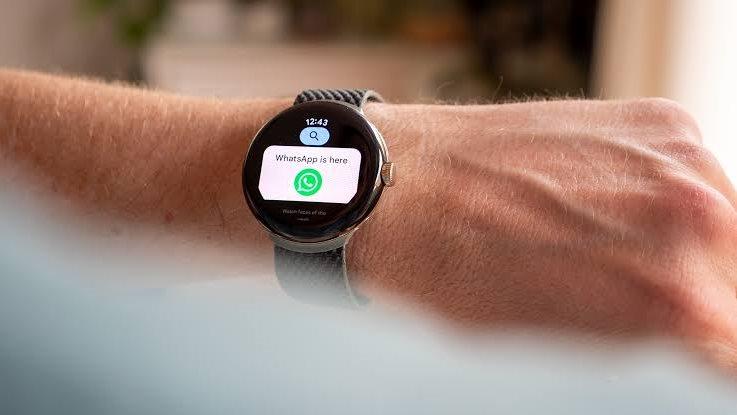
Egypt's Dar Al-Ifta has clarified that Muslims may rely on smartwatches and mobile applications to determine prayer times and Ramadan iftar, provided they are accurate and configured correctly.
  Tue , August 04 2026 / 12:49 PM Updated At: 2026-08-04 12:49:33

Many Muslims wonder whether it is permissible to rely on smartwatches and electronic applications to determine prayer times and the time to break the fast during Ramadan, especially in places where it is difficult to hear the call to prayer (adhan). In this regard, the Egyptian Dar al-Ifta clarified the Islamic ruling on this matter, stating that using these modern tools is permissible under specific conditions.

Is it permissible to rely on smartwatches to determine prayer times?

The Egyptian Dar al-Ifta received a question from a citizen asking whether it is permissible to rely on smartwatches and electronic applications to determine the times of the daily prayers and the time to break the fast, particularly since he lives in a house near his farm, far from the city, and is not always able to hear the adhan.

Dar al-Ifta responded on its official website that it is permissible in Islamic law to rely on smartwatches and electronic applications for determining prayer times and the time of iftar, provided that they are based on schedules prepared by qualified specialists and are accurately set according to the official local time of the user's country or city.

Prayer times are prescribed in Islamic law

Dar al-Ifta emphasized that every prayer has a fixed time prescribed by Islamic law, citing the Qur'anic verse:

"Indeed, prayer has been decreed upon the believers at specified times."
(Qur'an 4:103)

It also cited a hadith narrated by Imam Muslim, in which the Prophet Muhammad ﷺ explained the beginning and end of the times of the five daily prayers, confirming that each prayer should be performed within its prescribed time.

How do smartwatches determine prayer times?

Dar al-Ifta explained that astronomers and specialists in prayer time calculations have established precise standards based on the Islamic signs indicating the beginning of each prayer time. These standards have been converted into accurate astronomical tables, which are then used by prayer-time applications and smartwatches.

A means of determining the time—not a source of legislation

Dar al-Ifta pointed out that smartwatches do not determine prayer times on their own. Rather, they display prayer schedules prepared by experts using precise astronomical calculations. Therefore, they are simply a tool for identifying when the prayer time begins, not a source of Islamic rulings.

Conditions for relying on smartwatches

Dar al-Ifta stated that the permissibility of using smartwatches and electronic devices depends on the following conditions:

They must be based on calculations prepared by qualified specialists

The applications or watches should rely on prayer schedules developed by experts in astronomy and prayer time calculations.

They must be correctly set according to the user's local time

The smartwatch or application must be configured to the correct time zone and location of the city or country where the user resides to ensure accurate prayer and iftar times.

Ruling on using smartwatches during Ramadan

Dar al-Ifta explained that the same ruling applies to determining the times of iftar (breaking the fast) and imsak (the beginning of the fasting period) during Ramadan. It is permissible to rely on smartwatches as long as they are accurate and updated according to the local time.

Summary of the Fatwa

The Egyptian Dar al-Ifta concluded that relying on smartwatches and electronic applications to determine prayer times and the time to break the fast is permissible under Islamic law, provided that these tools are based on calculations prepared by qualified specialists and are accurately set according to the user's local time. If they are inaccurate or outdated, they should not be relied upon.

Is it permissible to use a smartwatch to determine prayer times?

Yes. It is permissible if the smartwatch is correctly configured according to the local time and relies on accurate prayer schedules.

Can prayer-time applications be used to determine the time of iftar?

Yes. They may be relied upon if they are based on accurate astronomical calculations and official prayer schedules.

Does a smartwatch replace hearing the adhan?

A smartwatch can be relied upon to determine when the prayer time begins, especially in places where the adhan cannot be heard.

What is the most important condition for using a smartwatch to determine prayer times?

It must rely on schedules prepared by qualified specialists and be correctly configured according to the user's local time.

Is it permissible to use any prayer-time application?

Yes, provided that the application is trustworthy, accurate, and displays the correct prayer times based on the user's geographical location.

Aug 05
دعاء لحماية الأولاد

Learn about the so-called “miracle dua for children” and the best Islamic prayers for children’s guidance, protection, and righteousness.

Aug 05
سفينة سيدنا نوح علية السلام

Discover the story of Prophet Noah after the flood, his departure from the Ark, its landing on Mount Judi, and the beginning of human life again.

Aug 05
هيكل سليمان

Explore the history of Solomon’s Temple in Jerusalem, including its construction, destruction, the Second Temple period, and the ongoing archaeological debate.
Aug 05
علي جمعة

Dr. Ali Gomaa, former Grand Mufti of Egypt and member of Al-Azhar’s Senior Scholars Council, explained the story of Abu Lahab and the reported relief from punishment connected to the Prophet Muhammad’s ﷺ birth.