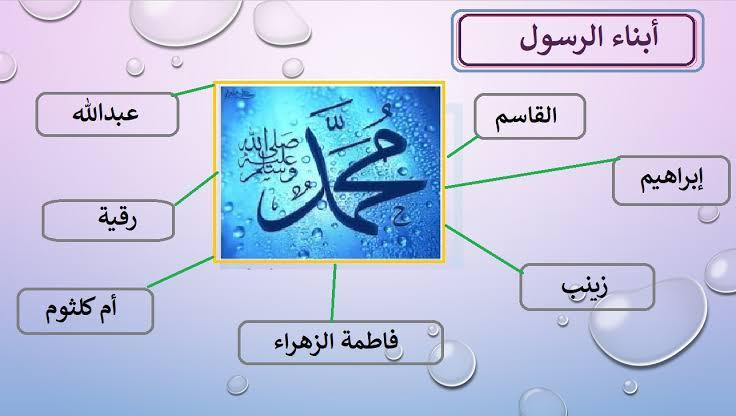

Prophet Muhammad ﷺ had seven children, according to the well-known position among scholars of Prophetic biography: three sons and four daughters.
All of his children were born to Khadijah رضي الله عنها, except Ibrahim, whose mother was Maria al-Qibtiyya رضي الله عنها.
His sons were Al-Qasim, Abdullah, and Ibrahim, while his daughters were Zaynab, Ruqayyah, Umm Kulthum, and Fatimah رضي الله عنهم all.
All of his sons died during his lifetime. Three of his daughters also died before him, while Fatimah رضي الله عنها lived for approximately six months after his death.
The Prophet’s Marriage to Khadijah رضي الله عنها
The Prophet ﷺ married Khadijah رضي الله عنها in Makkah when he was twenty-five years old, around fifteen years before the beginning of his Prophethood.
She remained beside him until Allah honored him with revelation. She believed in him, supported him, and became one of the most important figures in the early history of Islam.
Khadijah رضي الله عنها died three years before the Hijrah, during a deeply difficult period in the Prophet’s life.
The Prophet’s Daughters
The Prophet ﷺ had four daughters: Zaynab, Ruqayyah, Umm Kulthum, and Fatimah رضي الله عنهن.
All four accepted Islam and eventually migrated to Madinah. Each of them played an important role in the history of the early Muslim community.
Zaynab رضي الله عنها
Zaynab رضي الله عنها was the eldest daughter of the Prophet ﷺ. Before Islam, she married Abu al-As ibn al-Rabi', who was the son of her maternal aunt Halah bint Khuwaylid.
Zaynab رضي الله عنها accepted Islam, while her husband remained a non-Muslim for a period of time. She initially remained in Makkah rather than migrating with the Prophet ﷺ.
Abu al-As later accepted Islam and migrated to Madinah, after which the Prophet ﷺ reunited him with Zaynab رضي الله عنها.
Zaynab died in the eighth year after the Hijrah. She left behind her young daughter Umamah, whom the Prophet ﷺ was known to carry during prayer, placing her down when he prostrated and carrying her again when he stood.
Ruqayyah رضي الله عنها
Ruqayyah رضي الله عنها married Uthman ibn Affan رضي الله عنه. The couple migrated to Abyssinia when the persecution of Muslims in Makkah became severe.
Uthman and Ruqayyah were among the early Muslims who migrated to Abyssinia to protect their faith.
They later migrated to Madinah, where Ruqayyah suffered the loss of her young son Abdullah and subsequently became ill with fever.
When the Muslims went to the Battle of Badr, the Prophet ﷺ instructed Uthman رضي الله عنه to remain with his wife and care for her. Ruqayyah رضي الله عنها died around the time the Muslims returned from Badr with news of victory.
Umm Kulthum رضي الله عنها
After Ruqayyah رضي الله عنها died, the Prophet ﷺ married his second daughter, Umm Kulthum, to Uthman ibn Affan رضي الله عنه.
Uthman therefore married two daughters of the Prophet ﷺ, first Ruqayyah and then Umm Kulthum, which earned him the famous title Dhu al-Nurayn, meaning “the possessor of two lights.”
Umm Kulthum رضي الله عنها remained married to Uthman until her death in Sha'ban of the ninth year after the Hijrah. She did not have children and was buried beside her sister Ruqayyah.
Fatimah رضي الله عنها
Fatimah رضي الله عنها was the youngest daughter of the Prophet ﷺ. She married Ali ibn Abi Talib رضي الله عنه in the second year after the Hijrah.
They had Al-Hasan, Al-Husayn, Zaynab, and Umm Kulthum رضي الله عنهم.
Fatimah رضي الله عنها closely resembled her father ﷺ in her manner of walking and speaking. When she entered his presence, he would stand for her, kiss her, and seat her in his place.
The Prophet ﷺ said:
“Fatimah is a part of me; what harms her harms me.”
Fatimah رضي الله عنها was the last of his daughters to die. She lived for approximately six months after the Prophet ﷺ and died in the eleventh year after the Hijrah.
The Sons of Prophet Muhammad ﷺ
Al-Qasim رضي الله عنه
Al-Qasim was the first son of the Prophet ﷺ and was the reason for his kunya, Abu al-Qasim.
He was born before Prophethood and died at approximately two years of age.
Abdullah رضي الله عنه
Abdullah was the son of the Prophet ﷺ and Khadijah رضي الله عنها. He was also known as Al-Tayyib and Al-Tahir.
He was born after the beginning of Prophethood and died while still very young.
Ibrahim رضي الله عنه
Ibrahim was the youngest and final son of the Prophet ﷺ. His mother was Maria al-Qibtiyya رضي الله عنها.
He was born in Madinah in the eighth year after the Hijrah and died in the tenth year while still very young.
His death was deeply painful for the Prophet ﷺ. He cried, but he also demonstrated patience and submission to Allah, saying:
“The eyes shed tears and the heart grieves, but we say only what pleases our Lord.”
Lessons From the Lives of the Prophet’s Children
The lives of the Prophet’s children reveal an important human dimension of his biography. He experienced the pain of losing children just as he had experienced the loss of his parents.
The deaths of his sons at a young age were profound trials, yet the Prophet ﷺ remained patient and steadfast in his faith.
Their stories also offer comfort to parents who have lost children or who have been deprived of offspring. The Prophetic tradition teaches that the prophets faced the greatest trials, followed by those closest to them in righteousness.
One of the most powerful lessons is that natural grief does not contradict patience or faith. The Prophet ﷺ wept when Ibrahim died, while still accepting Allah’s decree and speaking only words that pleased Him.
How many sons did Prophet Muhammad ﷺ have?
He had three sons: Al-Qasim, Abdullah, and Ibrahim رضي الله عنهم.
How many daughters did Prophet Muhammad ﷺ have?
He had four daughters: Zaynab, Ruqayyah, Umm Kulthum, and Fatimah رضي الله عنهن.
Who were the mothers of the Prophet’s children?
All of his children were from Khadijah رضي الله عنها except Ibrahim, whose mother was Maria al-Qibtiyya رضي الله عنها.
Who was the youngest daughter of the Prophet ﷺ?
Fatimah رضي الله عنها was his youngest daughter and lived for approximately six months after his death.
Why was Uthman ibn Affan called Dhu al-Nurayn?
He was called Dhu al-Nurayn because he married two daughters of the Prophet ﷺ, Ruqayyah and Umm Kulthum رضي الله عنهما.